

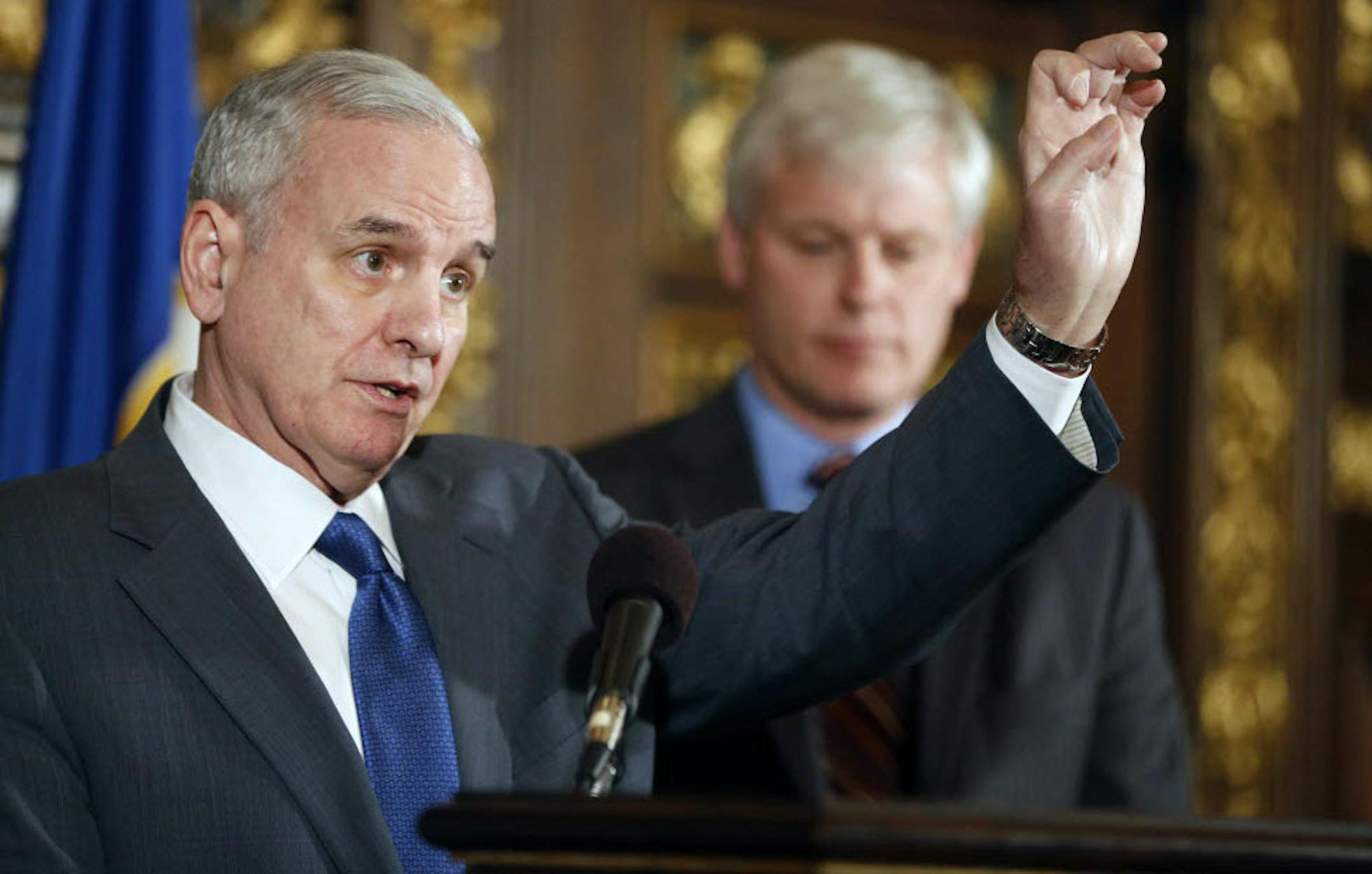
No sales tax on clothing or haircuts. No alcohol tax hike. No income tax increase for 98 percent of filers. On Sunday, after four months of launching a flotilla of tax ideas, the Legislature's DFL majorities and Gov. Mark Dayton unveiled a final 2014-15 state budget outline that, on the revenue side of the ledger, is more notable for its omissions than its contents.
There's plenty to like on the spending side of their balance sheet. The DFL plan pumps an additional $725 million into public education from preschool through graduate school. That's enough to reverse the deep higher-education cuts of the past two years; ease the squeeze that has some of the state's public schools operating only four days a week; pay for all-day kindergarten, and offer preschool scholarships to low-income families.
The plan also includes measures to close a nagging $627 million budget gap, the residue not only of the Great Recession but also of a dozen years of legislative failure to balance the budget in a lasting way.
But the plan's tax features are a disappointment. They raise revenue in a way that puts Minnesota's economic competitiveness at risk.
Particularly worrisome is a new marginal tax bracket that will apply to the state's top 2 percent of incomes. The rate attached to that bracket remains to be set by a House-Senate conference committee, but it is almost certain to be among the nation's highest, especially after an anticipated temporary surcharge for top earners "blinks on" to get state aid payments to schools back to their normal schedule. After four years of payment delays, ending the "school shift" is an $860 million one-time expense.
Tax ideas that would have allowed for a lower income tax rate, including clothing and alcohol taxes, were rejected because they would have fallen on the middle class. While that decision is true to Dayton's 2010 campaign promises, it comes at an economic price. Making Minnesota an income tax outlier among the states won't be helpful in attracting and sustaining private-sector investment.
In addition, like a bad penny, a bad tax policy idea that disappeared two months ago turned up again Sunday. Applying the state sales tax to some currently untaxed business-to-business purchases will be part of the plan, Senate Majority Leader Tom Bakk announced. He was not specific about which items or services would become taxable, nor about how the revenue thus raised would be used, other than for "significant economic development."
Regardless of how the money would be used, taxing business inputs is not sound policy. It layers hidden taxes into the cost of goods and services and takes a toll on wages and job creation in the affected industries. Those costs will affect low- and middle-class Minnesotans as surely as a clothing sales tax would. But the spurned clothing tax would have had the virtue of transparency, and could have been offset for low-income earners by a refundable tax credit, as the Senate tax bill provided.


