In heavy woods, and under the cloak of night, trying to catch bats in their element might seem like a fool's errand. Yet the effort might just provide answers that help save some of a threatened Minnesota species from certain death.
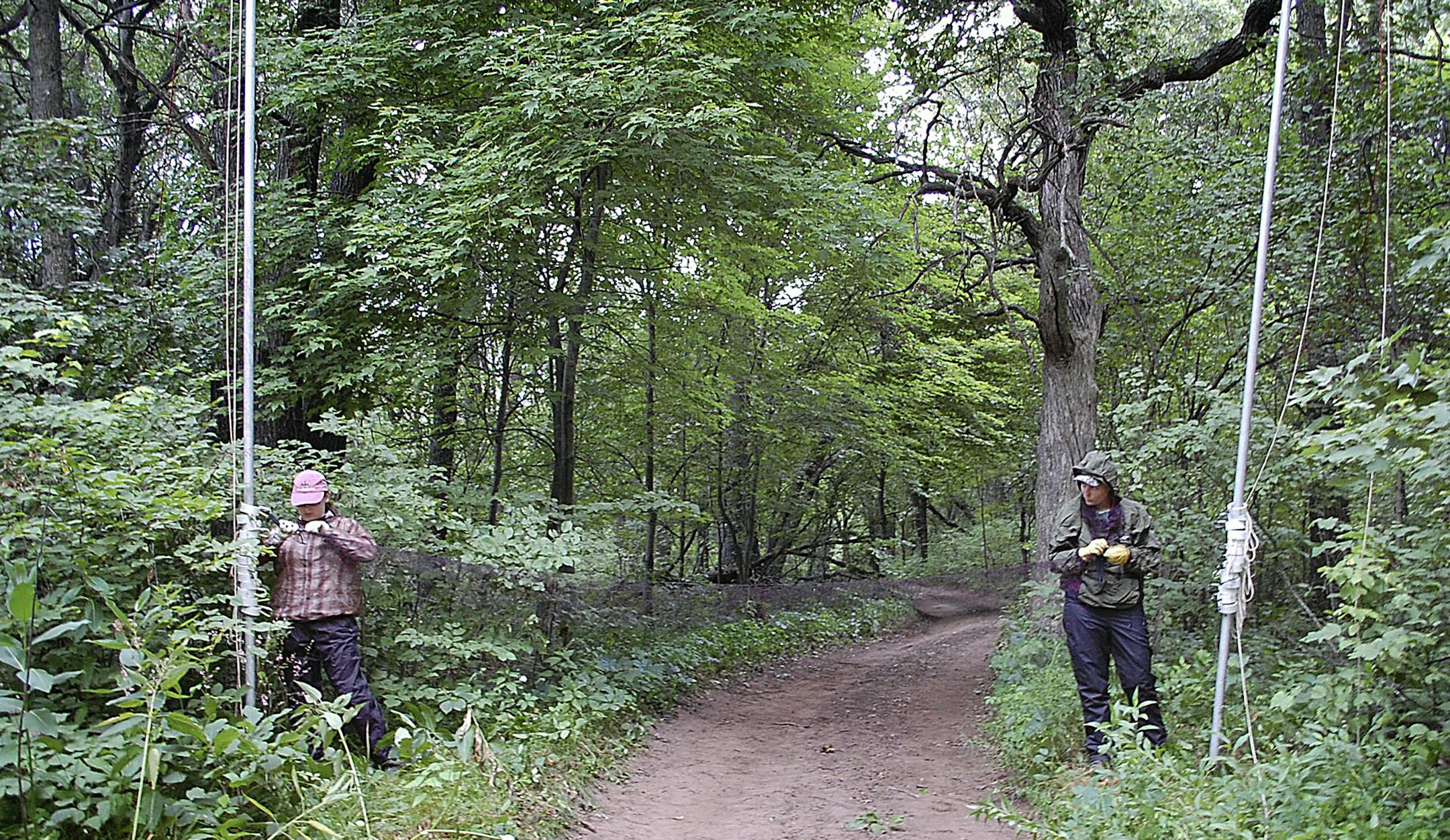
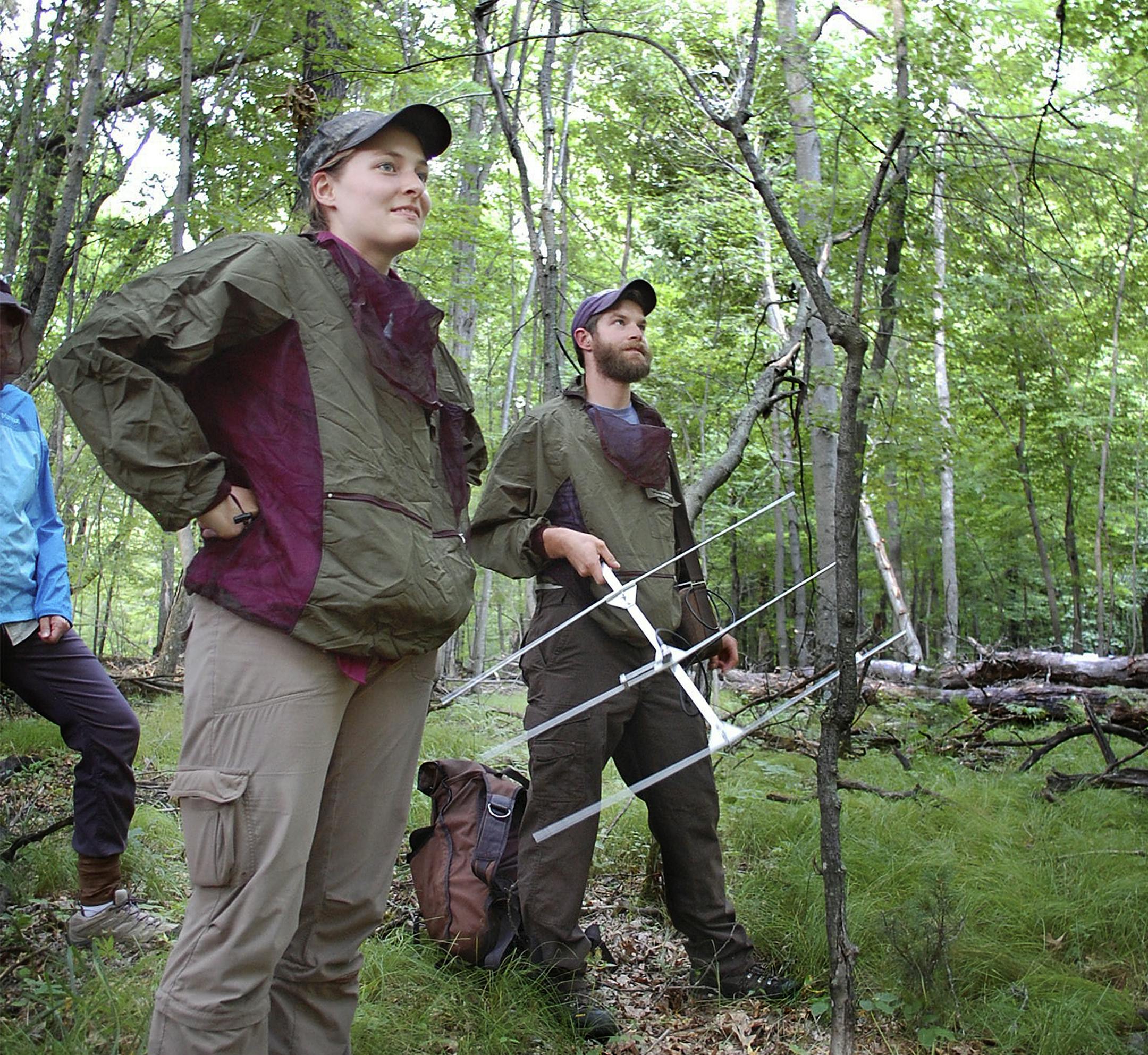
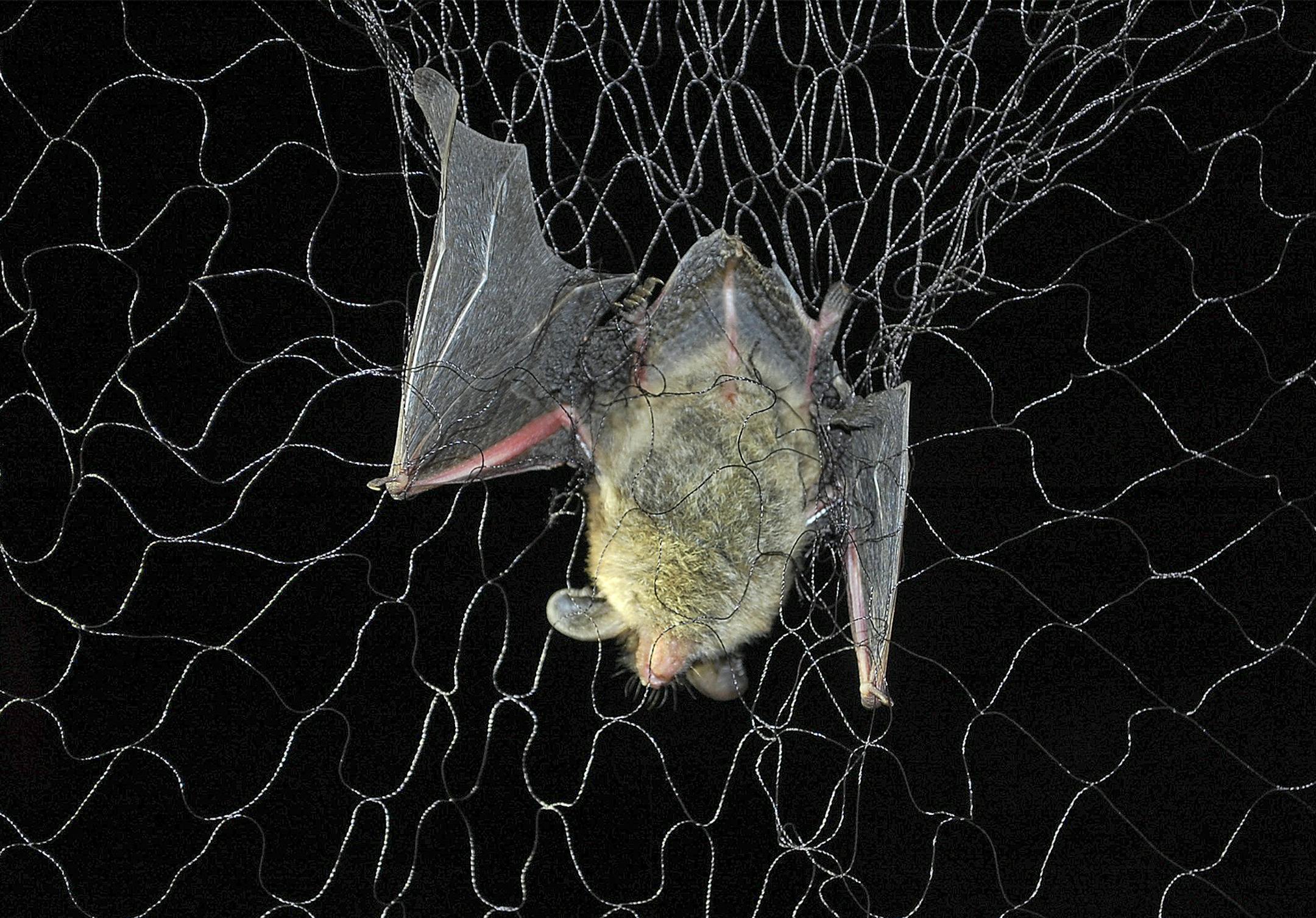
That underlying motivation surfaced when wildlife researchers from the state Department of Natural Resources and the University of Minnesota Duluth gathered deep in some hardwood stands in East Bethel, Minn., on a night in early July. With thunderstorms threatening, teams of bat chasers set off along service roads. At three locations, they raised a combination of ultrafine mesh nets 25 feet in the air, anticipating bats on the move as the light drained from the woods.
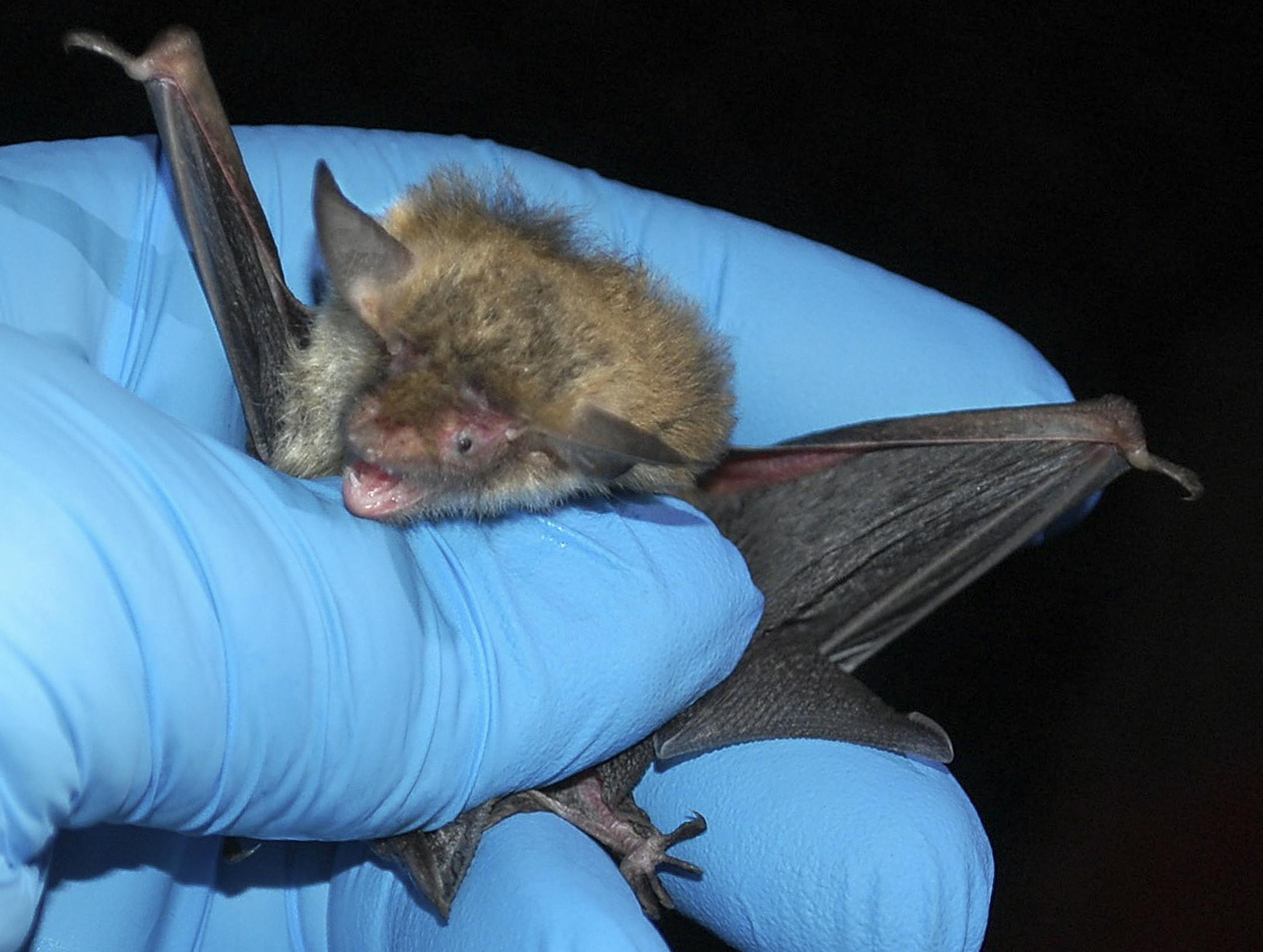
They hoped most to capture — and then track — the northern long-eared bat, one of seven species in the state, and the one under the most duress. A deadly fungal disease called white-nose syndrome has killed millions of bats in the eastern United States and eastern Canada. Minnesota species have been victimized, too.
Researchers are halfway into a three-year study. They're hoping to learn more about the northern long-eared's summer routine, and what kinds of trees it uses to raise its young in the summer. Identifying those trees and protecting that habitat might be the best chance at saving some of the species — and others — as the fungus becomes more lethal here. And it will, most observers agree.
"What we hear is people say, 'We want data from Minnesota,' " said Rich Baker. "We want to figure it out in Minnesota."
Baker has a keen interest as endangered species coordinator for the Minnesota DNR, and it's hoped that spending several days buried in the woods of Cedar Creek Ecosystem Science Reserve in East Bethel might provide some clues.
The Cedar Creek reserve sits on the northern edge of the metro area. The site was a new location — and the southernmost — for netting and tracking in Minnesota thus far. Owned by the University of Minnesota, the 5,000-acre Cedar Creek was something of an ideal, controlled setting. And yet for researchers, catching bats, attaching minute radio transmitters and then tracking their whereabouts and roosts is delicate and challenging work.
It's bats' indoor habitat where the trouble is centered. The northern long-eared bat is one of four Minnesota species that hibernates in caves, making them susceptible to the white-nose fungus that has been wreaking havoc in their ranks. The disease is named for the white powdery substance that appears on the face and wings of infected bats. It has reportedly killed as many as 6 million of the creatures across North America and, judging from counts at known hibernation sites, the U.S. Fish and Wildlife Service estimates that the disease has killed up to 99 percent of the northern long-eared population in the northeastern United States. It was first documented in a cave in 2006 in New York state.