
Minnesota Attorney General Keith Ellison sues TikTok, arguing app harms kids

Attorneys general in other states have also sued the company, arguing that the app’s algorithm targets young people and creates social media addiction.

The Minnesota Star Tribune
August 19, 2025 at 8:33PM
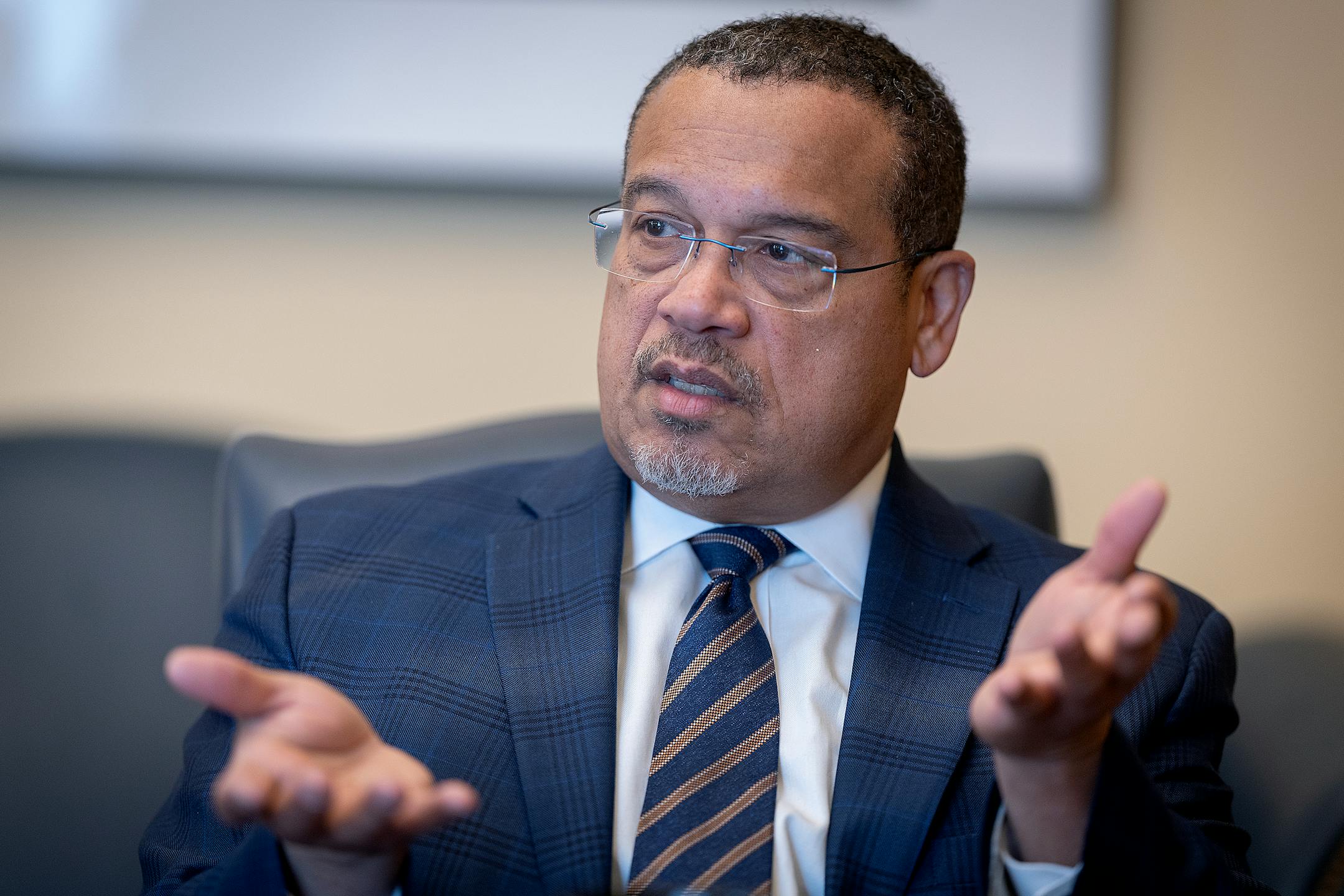
Minnesota Attorney General Keith Ellison says TikTok has designed its app to target minors, creating social media addiction in children and harming their mental health. (Elizabeth Flores/The Minnesota Star Tribune)

Minnesota is joining a growing number of states suing TikTok, accusing the social media giant of designing a platform that’s addictive and harmful to children.

Attorney General Keith Ellison announced the lawsuit in a news conference at his Minnesota Capitol office Tuesday, calling TikTok “digital nicotine” that creates an urge to endlessly scroll videos to maximize advertising profits. Children are particularly vulnerable to the app’s design, Ellison said.

“Just like big tobacco designs its products to addict...TikTok is working to create TikTok addicts, and the worst part is it’s working,“ Ellison said. ”TikTok is profiting, making big money, and our kids are paying a heavy price.”

The lawsuit filed in Hennepin County District Court is the latest example of attorneys general — Democratic and Republican — suing the tech giant. Almost half of U.S. states, from liberal California to deep red Mississippi, have filed suit against TikTok on similar grounds.

Congress voted overwhelmingly last year to require Chinese tech giant ByteDance, TikTok’s parent company, to sell the app, arguing it posed a national security risk. Former President Joe Biden signed the legislation, but President Donald Trump’s administration has repeatedly delayed enforcement.

A TikTok spokesperson said Ellison’s lawsuit was based on “misleading and inaccurate claims” that don’t recognize safety measures the company has implemented for children.

“Teen accounts on TikTok come with 50+ features and settings designed to help young people safely express themselves, discover and learn,” the company said, adding that a pairing tool allows parents to view or customize children’s content and privacy settings, as well as filter content and pause a child’s access to the app.

The app is used by an estimated 63% of teens age 13 to 17 in the United States, according to the Pew Research Center. Ellison accuses TikTok of knowingly ignoring the danger of its platform and repeatedly misrepresenting the app’s safety. He said it’s difficult for parents to get children to close TikTok and put down their phones.

“None of this is by accident,” Ellison said. “It’s all a design of the product. TikTok has created a dangerously addictive platform that exploits the unfinished reward systems in our children’s brains.”

TikTok uses an algorithm to feed users short-form video content in an “infinite scroll” format that allows them to swipe through content continuously. Ellison said the app’s design can cause compulsive and excessive use to the point that children are “mentally, physically and financially injured.” The platform’s live-streaming feature and ability for users to pay content creators directly, Ellison said, is used to financially and sexually exploit minors.

Research shows compulsive use of social media can lead to increased irritability and anxiety, a higher risk of suicide and disrupted sleep.

Jodi Dworkin, a professor of family and social science at the University of Minnesota, said while social media can help young people connect with friends or people who are like them, algorithms can get teens hooked and lead to “doom scrolling.” Teens’ brains are not fully developed, she said, and are stimulated by scrolling in ways that can make it difficult to stop.

“There’s a lot of risks associated with it that could be better protected by the way sites are developed, by the way young people are using it, by how we teach young people to use it and be critical consumers of that information,” Dworkin said.

“There’s a lot of risks associated with it that could be better protected by the way sites are developed, by the way young people are using it, by how we teach young people to use it and be critical consumers of that information,” Dworkin said.

The lawsuit claims TikTok violated Minnesota consumer protection laws and seeks monetary damages, including a $25,000 fine per violation. Ellison said the money would help the state address the harm that TikTok has created. He did not say how many violations he thought the company may have committed. The lawsuit also seeks a court order barring TikTok from the “deceptive and unfair or unconscionable” actions described in the lawsuit.

Sean Padden, a health teacher in Roseville Area Schools, spoke alongside Ellison and said he has seen TikTok harm his students’ ability to pay attention, encourage them to participate in dangerous “challenges” and expose them to inappropriate content. States including Texas are also suing TikTok over exposing children to explicit content.

“Many of my students report witnessing sexually suggestive material, racist propaganda, AI-generated misinformation, cyberbullying and being subjected to unrealistic comparisons despite the use of parental controls and/or safety measures that were put into place,” Padden said.

Ellison’s office sued Meta in federal court in 2023, alleging similar violations based on the design of Instagram and Facebook.

The lawsuit is not about impinging on users’ freedom of speech, Ellison said, though he expects the company to respond with that accusation.

“My bottom line is that Minnesota will protect our kids, full stop,” said Ellison, a Democrat. “I’m taking them to court. We’re not trying to shut them down, but we are insisting that they clean up their act.”

Because of its foreign parent company, TikTok has been a political football for federal lawmakers.

Trump has repeatedly delayed enforcement of legislation that would ban TikTok in the U.S. if ByteDance does not sell the app, despite bipartisan support in Congress and his own attempts to ban TikTok during his first term.

Asked about the federal wrangling over TikTok, Ellison would not take a position on the company’s foreign ownership.

about the writer

about the writer

Allison Kite

Reporter

Allison Kite is a reporter for the Minnesota Star Tribune.

See Moreicon