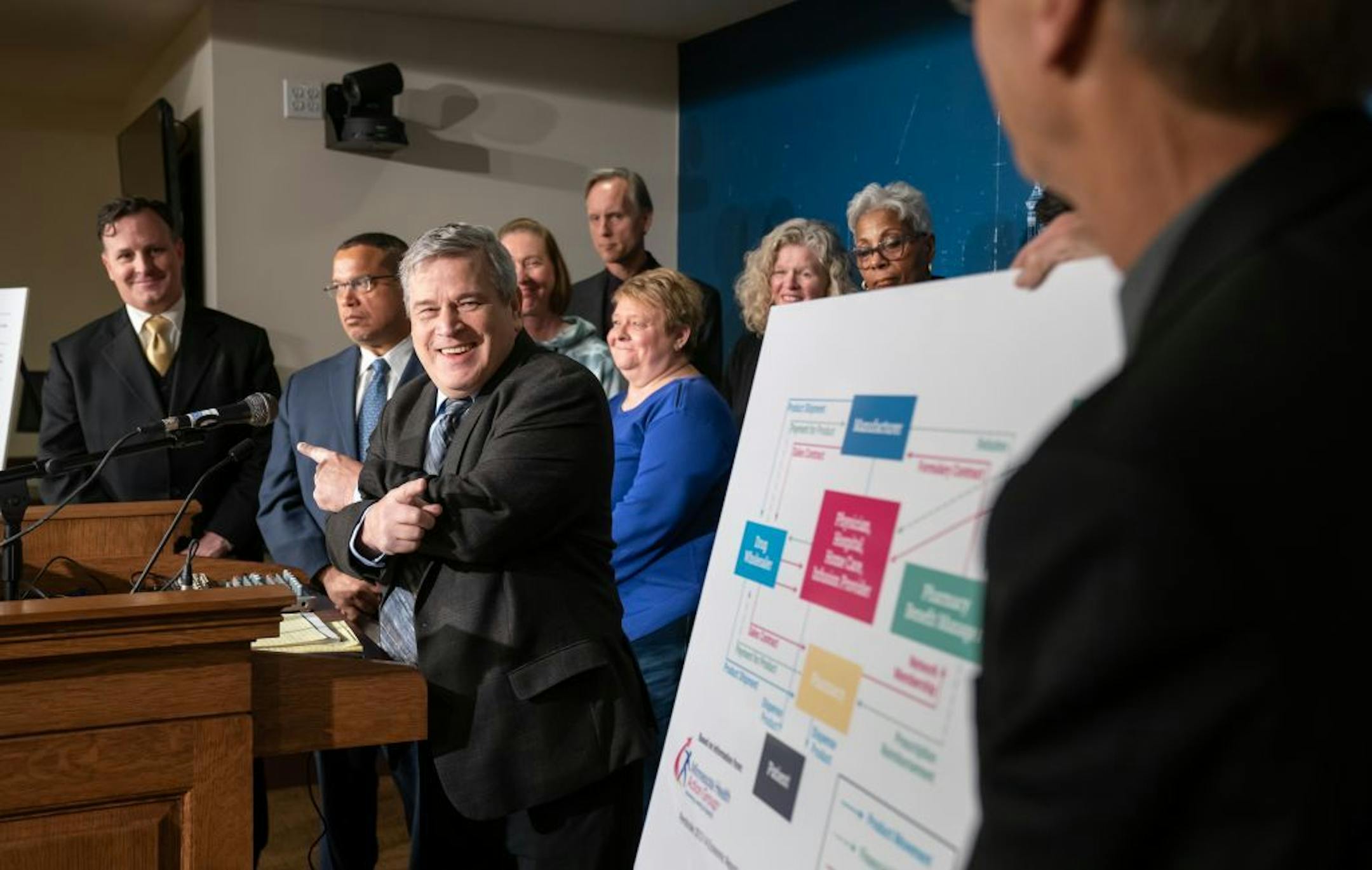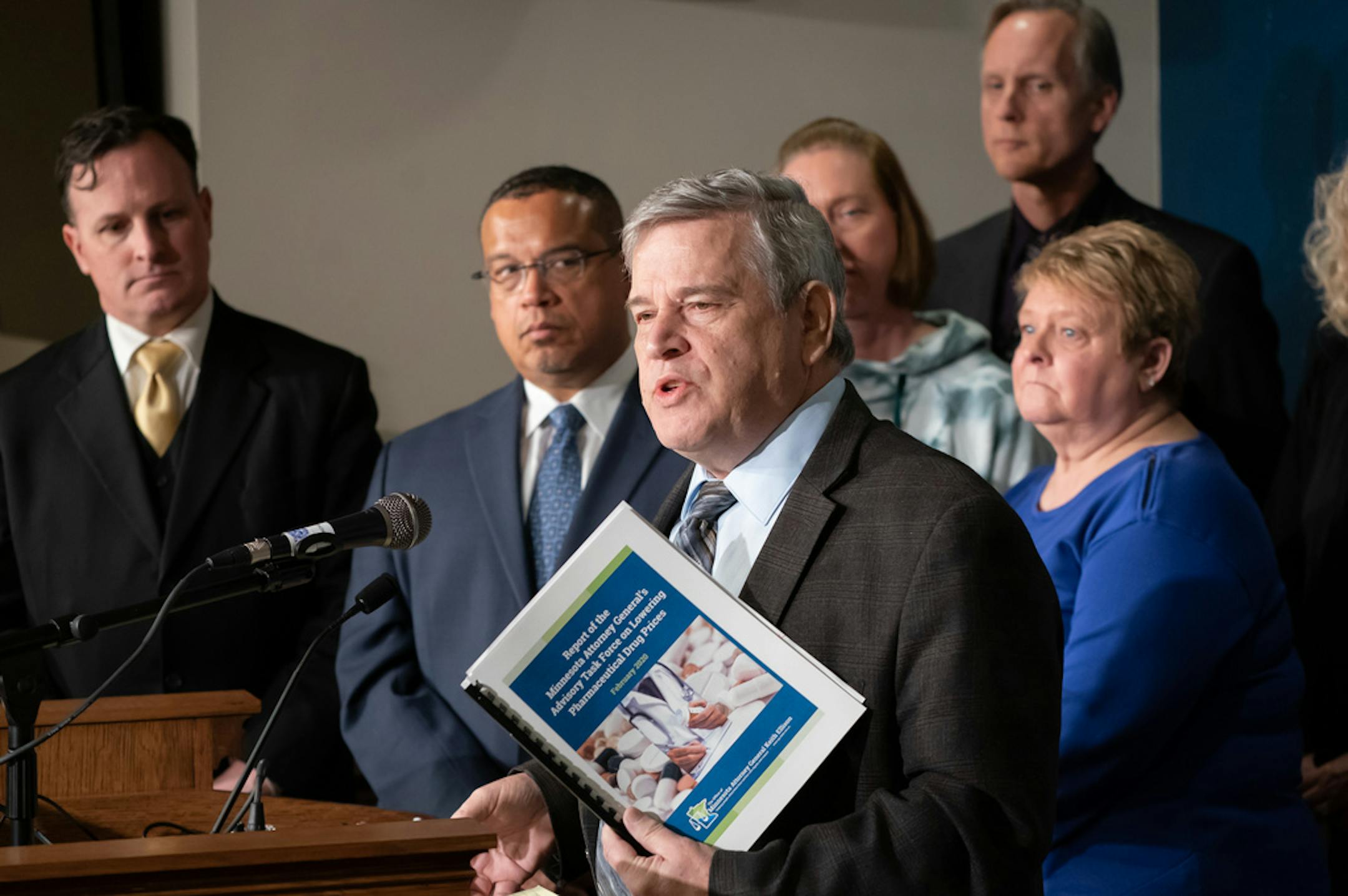
State Attorney General Keith Ellison released sweeping recommendations for addressing prescription costs Wednesday, including the creation of a commission that could investigate industry practices and cap the prices of some drugs.
The 14 proposals Ellison highlighted were developed by a bipartisan task force that he led. The group's 93-page report is going to the Legislature early in its annual session. Other proposals by the group include efforts to identify a prime vendor for several critical drugs and developing legislation to prevent manufacturers from overcharging for drugs.
The fate of the drug pricing commission and other potentially controversial recommendations remains unclear.
"Today is a critical moment on the debate around the affordability of prescription drugs," Ellison said. "This is not a Democratic or Republican issue. It's not a party issue. It's a people issue."
He called the task force report the first of its kind in laying out comprehensively the roles of all major players in the pharmaceutical drug industry in Minnesota. Prior studies and reports have focused on specific segments of that market and how they contribute to high prices, he said.
The House Commerce Committee heard a bill later Wednesday outlining how the 11-member Prescription Drug Accountability Commission would function. A similar bill introduced last year by Sen. Scott Jensen, R-Chaska, didn't receive a hearing. He wasn't given a reason but said he is confident his bill can get a hearing this session in the Republican-led Senate.
The commission would have the power to investigate, review and publish information on prescription prices. It would be able to take action to hold drug companies accountable for unreasonable or unlawful pricing practices, including by capping or setting maximum reimbursement prices for drugs under certain circumstances. The commission could also refer matters to Ellison's office for potential enforcement action.
Several legislators raised concerns about the proposal during Wednesday's committee hearing. Rep. Marion O'Neill, R-Maple Lake, questioned whether politics would play a role in the makeup of the commission because the governor is allowed to appoint three members.