

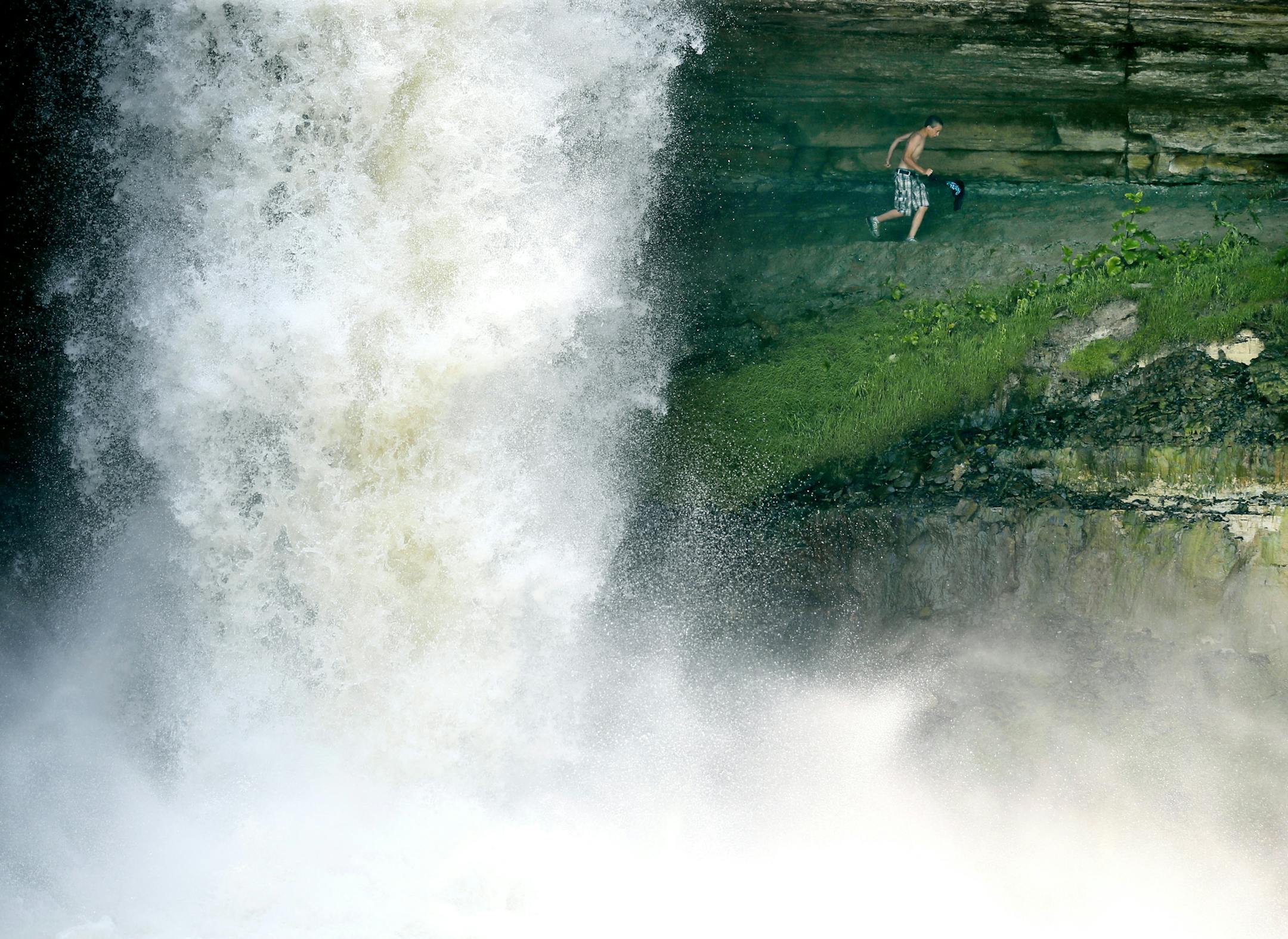
The relentless rain of this spring and early summer has made Minnehaha Creek resemble a thrill ride of sorts, with water whipping around bends, gushing rapids and downed trees blocking some stretches.
The popular Twin Cities creek is so dangerously high that it's flowing at double the volume of what's deemed safe, prompting the Minnehaha Creek Watershed District to advise canoeists and kayakers to stay away just days before the long July 4th weekend.
"I've never seen it anywhere close to where it's at now," said Patrick Meehan, who lives three blocks from the creek in south Minneapolis.
He and his wife are avid canoeists on the creek, but have canceled this week's paddling plans after seeing the high-water warning. It just wouldn't be fun battling the swift current and dodging downed trees, he said. "Even the best canoeists will be fighting it," he said.
The 22-mile creek flows from Lake Minnetonka to the Mississippi River. The Watershed District says paddling on the creek is safe when water leaves the lake dam at a rate between 75 and 150 cubic feet per second. Anything over 150 cubic feet per second is deemed dangerous. This weekend, the flow reached 300 cubic feet per second, dropping to 250 cubic feet per second by Monday.
"It's definitely user-beware," said Watershed District spokeswoman Telly Mamayek, adding that canoeists and kayakers should use extreme caution if they venture out on the creek or consider rescheduling their treks. "People like to be on the creek … but people need to be mindful of the conditions."
Danger highest on rivers
Across Minnesota, lakes and rivers are swollen from the repeated rains this spring and summer. On Monday, the state Department of Natural Resources warned boaters statewide to use caution over the long weekend. A no-wake zone was issued by the DNR on the St. Croix River from Taylors Falls to Prescott, Wis.
The high water levels are especially dangerous on rivers and large streams, where swift currents and extra debris can make boating more treacherous and increase the likelihood of capsizing.


