

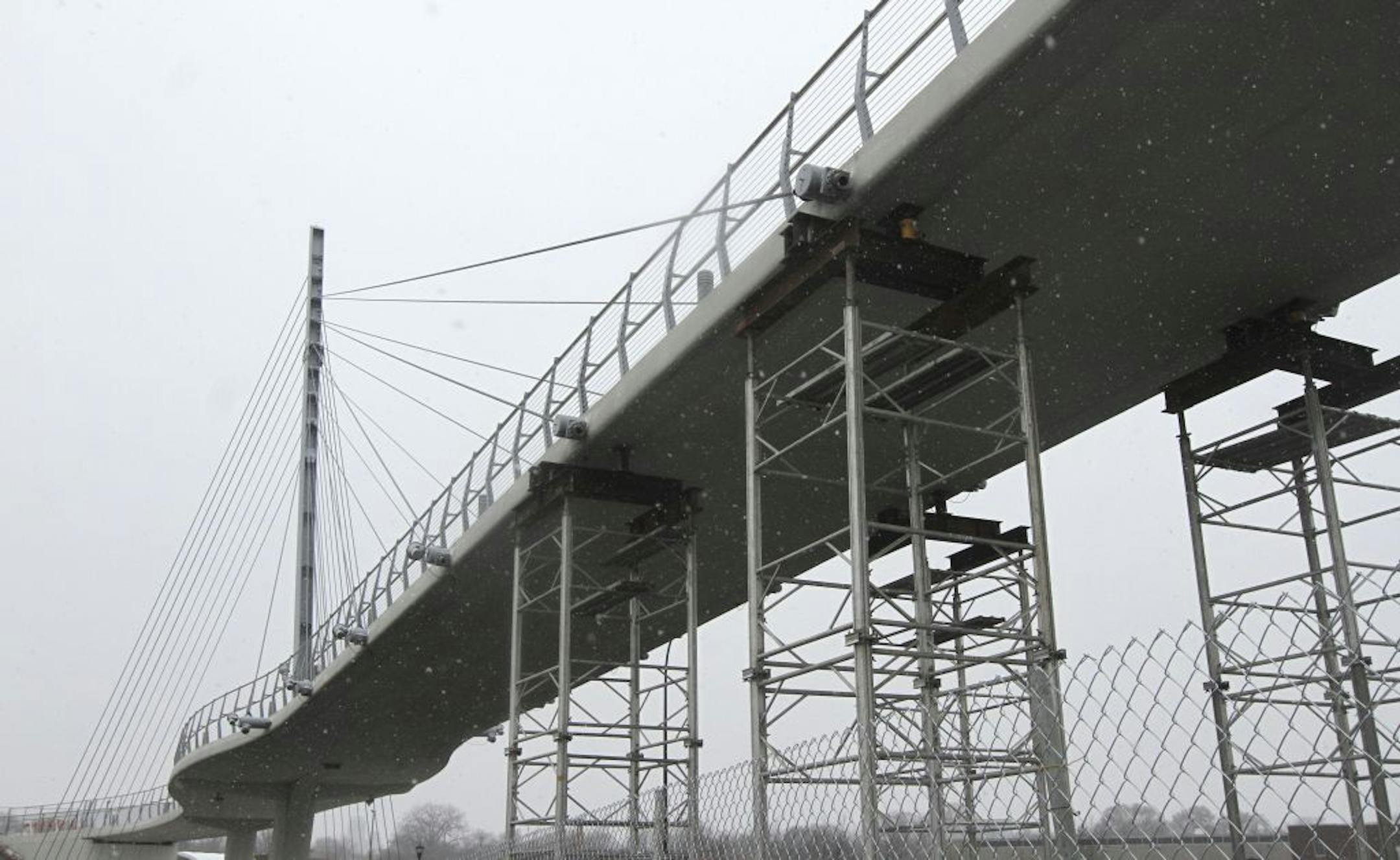
Minneapolis will pay $75,000 to an engineering firm assigned with investigating why cable anchors on the Martin Olav Sabo Bridge failed in February, under an agreement approved Tuesday morning by the city's Transportation and Public Works Committee. The agreement between the city and Hennepin County splits the cost of the $150,000 contract for Wiss, Janney, Elstner Associates. The Illinois company was also retained by the state to probe the cause of the fatal I-35W bridge collapse in 2007. Hennepin County oversaw construction of the $5.1 million bicyclist and pedestrian bridge, which opened in November 2007, and transferred ownership to Minneapolis in 2008.A report to the transportation committee by Heidi Hamilton, deputy director of Public Works, said the cost of the work exceeds the department's available bridge maintenance budget and that extra funds may be requested. The department is working with the city attorney's office to determine options for recovering the cost of the work and the general response to the bridge failure.On February 19, a pair of cables fell from the mast, prompting a shutdown of the bridge, roadblocks and disruptions of light rail service. A second set of cables was removed after cracks were discovered in the cable anchor linking them to the mast.The span remains closed, and Hamilton said engineers are still determining whether it is safe to open the bridge before the cables are replaced.
Minneapolis will pay $75,000 to firm investigating bridge failure
The agreement between the city and Hennepin County splits the cost of the $150,000 contract for Wiss, Janney, Elstner Associates to probe why cable anchors failed.
April 3, 2012 at 6:35PM

about the writer
mayarao

It’s too soon to tell how much the immigration crackdown is to blame.
