

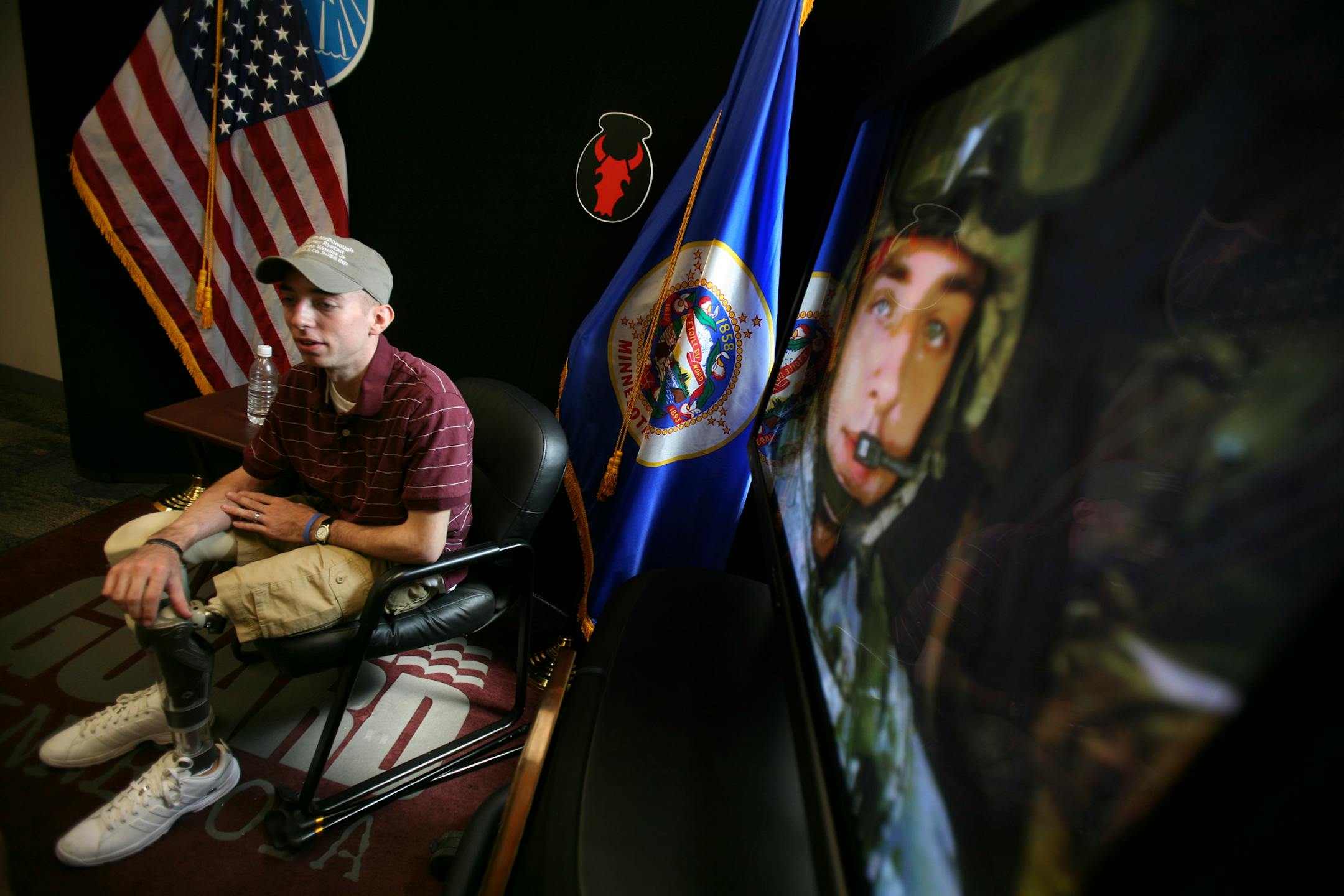
Years after people lose arms or legs to wartime injuries or in car accidents, they can still feel them hurt or tingle. Doctors don't fully understand this "phantom limb pain," but researchers at the Minneapolis Veterans Medical Center are determined to improve treatment.
Occupational therapist Tonya Rich said as many as 80% of patients experience the pain after amputations necessitated by traumatic injuries or vascular diseases.
"It's a very real pain that can very much ... impact their day-to-day life," she said.
Solutions unveiled Wednesday as part of the medical center's research week included a mobile at-home therapy app and a brain imaging study to discover the origins of phantom pain. Results of a survey of 50 veterans also showed the challenges ahead because the duration, intensity and type of pain varied substantially.
"It's like if you walked to a concrete wall and took your shoe off and kicked it as hard as you can. Over and over and over again," one veteran told interviewers.
Another likened the condition to "pouring soda into a glass and watching it fizz. It goes all the way down to the toes. It starts at the lower end of the stump and goes to the toes that aren't there."
Experts disagree on the roots of the disorder and whether they are physical, mental or some combination of the two. The Minneapolis medical center conducted MRI scans of veterans with phantom limb pain to look for distinct features in their brains. Results will soon be published.
"We don't have this mechanism question answered," Rich said. "So this is just to help explore and say, 'OK, can we help put some of the pieces of this together?' Because the theories [on the origins of phantom limb pain] just butt heads all the time."


