

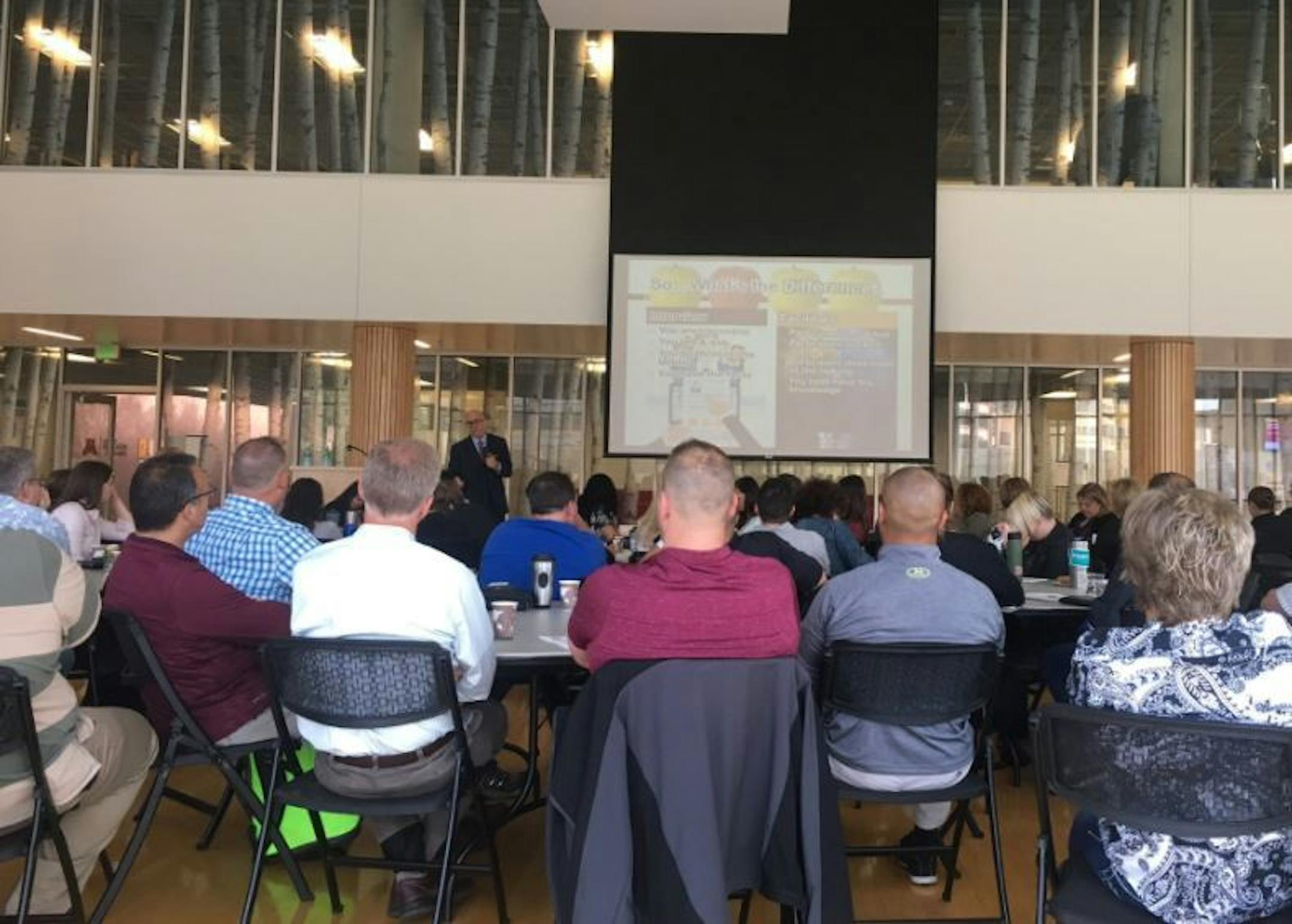
Russell Strand held up a 100-piece puzzle box as a metaphor for a typical criminal case, each piece inside representing a specific memory a victim has of the crime that investigators try to put together.
But when victims experience trauma, he said, their puzzle requires a different approach.
"What happens in trauma is this," he said, throwing a dozen pieces in the air. What victims don't get, he said, is the puzzle box — with its picture of the complete puzzle.
Strand used the example to illustrate the reasoning behind his specialized method of interviewing and working with victims of trauma and sexual assault, which he taught Tuesday to about 125 Minneapolis and University of Minnesota police officers. Prosecutors from Ramsey and Hennepin counties also attended the program.
The training comes at a time when sexual assault on college campuses has been in the national spotlight, and as Minneapolis prepares for more sex trafficking when the city hosts the Super Bowl next year.
Strand, a retired U.S. Army special agent and former chief of behavioral sciences, education and training at the Army's military police school, developed his victim-centric approach after working with victims and learning how trauma affects their brains.
He said the typical "who, what, when, where, why and how" questions that investigators ask are difficult for trauma victims to answer because the brain's prefrontal cortex often shuts down during traumatic events, leaving victims with only experiential details.
It doesn't make sense, he said, that investigators are trained to seek information that victims often don't remember.


