
Minneapolis to examine police stop, arrest data

Council member says studying information on misdemeanor arrests and police stops will help with city's equity goals.

January 6, 2015 at 7:28PM
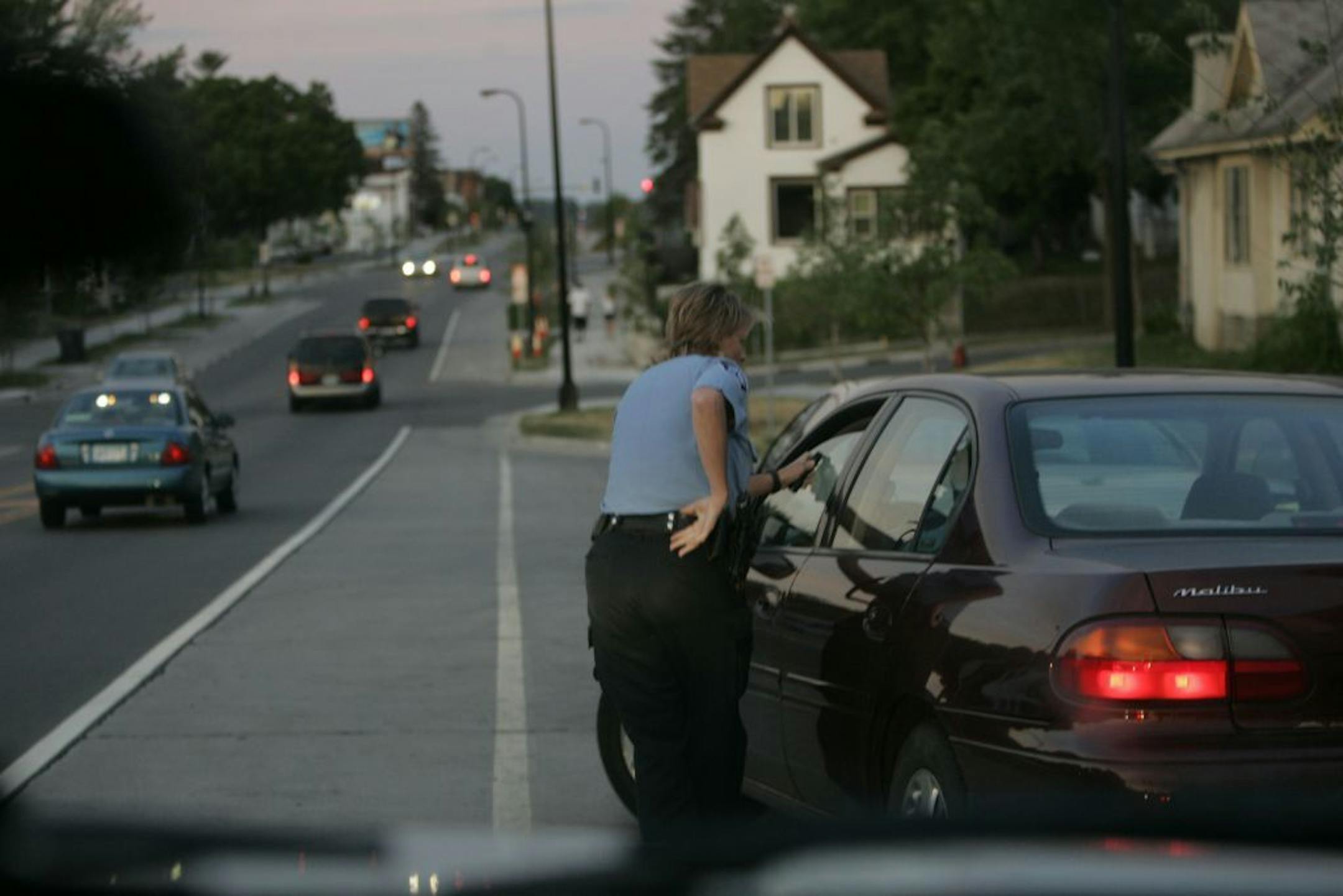
DAVID JOLES � djoles@startribune.com Minneapolis, MN - June 27, 2007 - Minneapolis police officer Lora Hanks outside a vehicle on a traffic stop on Lowry Ave. N near Emmerson. Shortly after this photo was taken the suspect fled, and officer Hanks stepped back to avoid being hit. Hanks then ran back to her police vehicle and radioed in to dispatch. The suspect led police on a high speed pursuit that ended in a collision with another vehicle near N. Lowry Ave. and Stinson Blvd. Two passengers in t
During its approval of the 2015 budget, the Minneapolis City Council separately voted to direct the Police Department and the city attorney’s office to gather five years’ worth of police stop-and-arrest data. (Jm -/The Minnesota Star Tribune)

Minneapolis officials are launching a new effort to find trends in where police make stops, whom they stop — and who is arrested and charged with misdemeanor offenses.

During its approval of the 2015 budget, the City Council separately voted to direct the Police Department and the city attorney's office to gather five years' worth of police stop-and-arrest data. The reports will include information about the race, gender and age of the people involved in incidents from 2010 to 2014, along with where the arrests took place.

The data will be presented to the council's public safety committee by summer.

Council Member Cam Gordon, who introduced the plan, said he's heard concerns about racial profiling and other issues since before he was first elected to the council nearly a decade ago. He brought up the issue in 2008, when he led a similar push to gather data on the city's "lurking" regulation. That law allows police to arrest people who are hanging around public and private spaces, trying not to attract attention, with the intention of committing a crime.

A review of lurking arrests over two years found that black people were eight times more likely to be arrested than white people. Native Americans were arrested at nine times the rate of whites, while homeless people were 20 times more likely to be arrested.

While Gordon was not successful in getting the law overturned, he said he may bring it up again. After months of protests over people killed in altercations with police, he said interest remains high in how police interact with some community members.

Gordon expects that getting a broader range of data could be a better way to reach the city's equity goals than trying to target some specific laws, one by one.

It will be nice to get a big-picture view and get more of an analysis about where [stops and arrests] are occurring and why," he said.

Gordon said the data might lead to questions about the use of the "broken windows" model of policing to prevent crime. That strategy involves putting a major focus on lower-level crimes, like graffiti, vandalism or loitering, as a way to improve neighborhoods and reduce the number of more serious crimes.

Michelle Gross, president of Communities United Against Police Brutality, said she welcomes the news that the city will take a more thorough look at how policing is working in Minneapolis.

She hopes this will be the first step in pinpointing the root of practices that could be causing problems with police-community relations.

"We need to have a better understanding of what's going on and that needs to start at the level of what's the overall picture," Gross said. "But eventually that needs to drill down to see if there are issues, are they with particular officers or a wider problem?"

about the writer

about the writer

eringolden

More from No Section

See More
FILE -- A rent deposit slot at an apartment complex in Tucker, Ga., on July 21, 2020. As an eviction crisis has seemed increasingly likely this summer, everyone in the housing market has made the same plea to Washington: Send money — lots of it — that would keep renters in their homes and landlords afloat. (Melissa Golden/The New York Times) ORG XMIT: XNYT58
Melissa Golden/The New York Times

It’s too soon to tell how much the immigration crackdown is to blame.