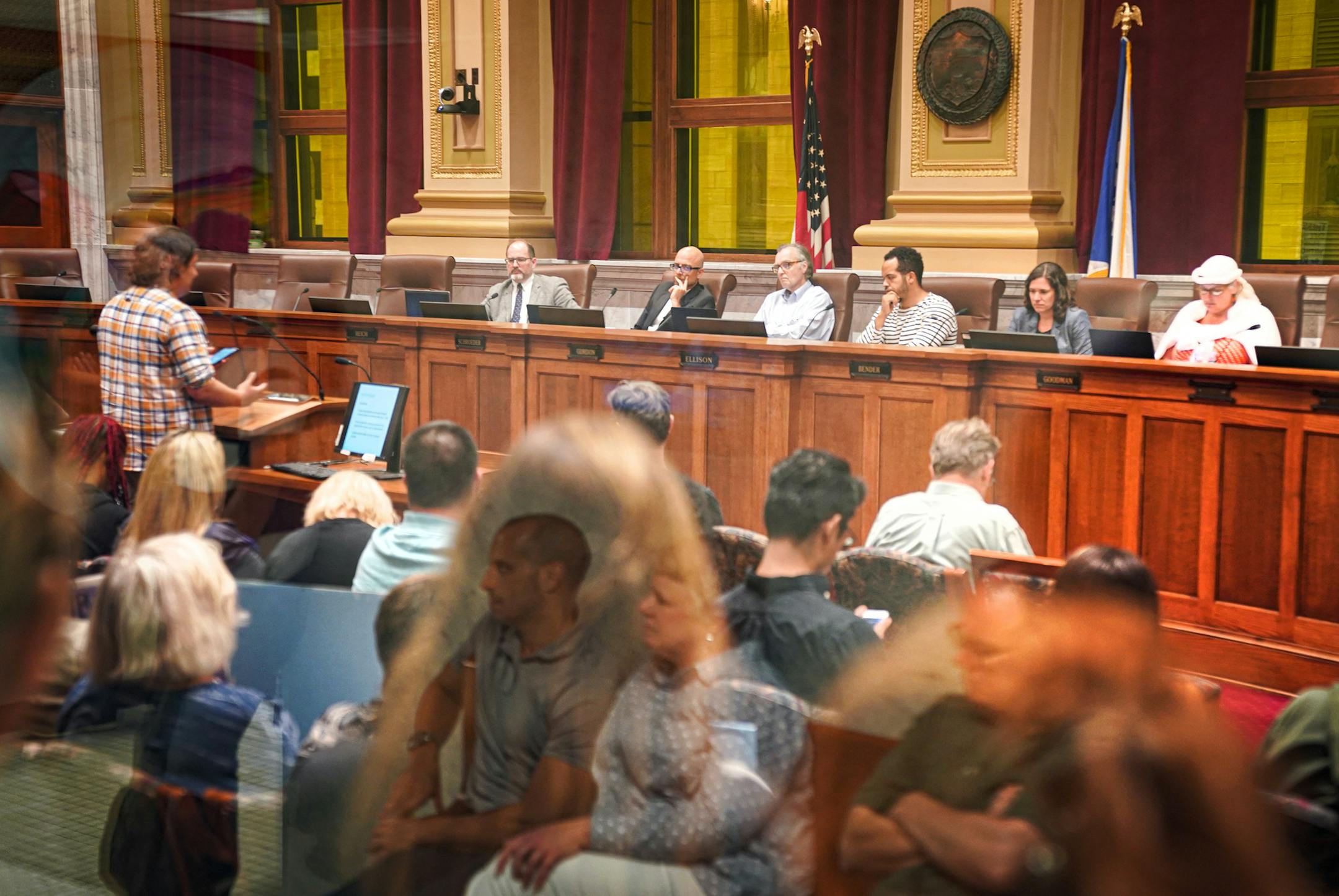
Residents and landlords packed seats and stood shoulder to shoulder Wednesday to voice their opinions about a proposed Minneapolis rule that aims to give renters with problem backgrounds a better chance during the application process.
The Minneapolis City Council's Housing Policy and Development Committee approved moving the ordinance to the full council after the three-hour public hearing. The full council is expected to take it up next month.
The ordinance would limit how far back landlords can consider an applicant's criminal and eviction histories, cap security deposits and limit how credit scores are used.
The public hearing caps a bitter summerlong standoff between tenants and landlords that has put Minneapolis' struggle to solve — or at least curb — the city's affordable-housing crisis on full display.
Cities nationwide, including Detroit, Portland, Ore., Seattle and Washington, D.C. have considered tenant-screening ordinances as part of their affordable-housing strategies. Minneapolis City Council members have grappled with how to help more people access housing, particularly low-income people, people of color and those with criminal backgrounds or evictions.
"Yes, not every ordinance does every single thing, but building our way out of an affordable-housing crisis is not the way that we can go either," said Council Member Jeremiah Ellison, one of the co-authors. "We can build and build and build, and people with blemishes on their record will continue to be screened out of our city if we don't make this change."
Supporters on Wednesday said the change would ease the financial barriers that come with rising rents and diminished-housing options and give people with troubled histories a second chance.
But property owners who attended expressed concern about losing money to pay for damages and being unfairly cited for violating the ordinance without due process, as well as the increased costs of doing business and potentially having to defend themselves against it. During the hearing, people booed those who went to the podium to oppose it.