

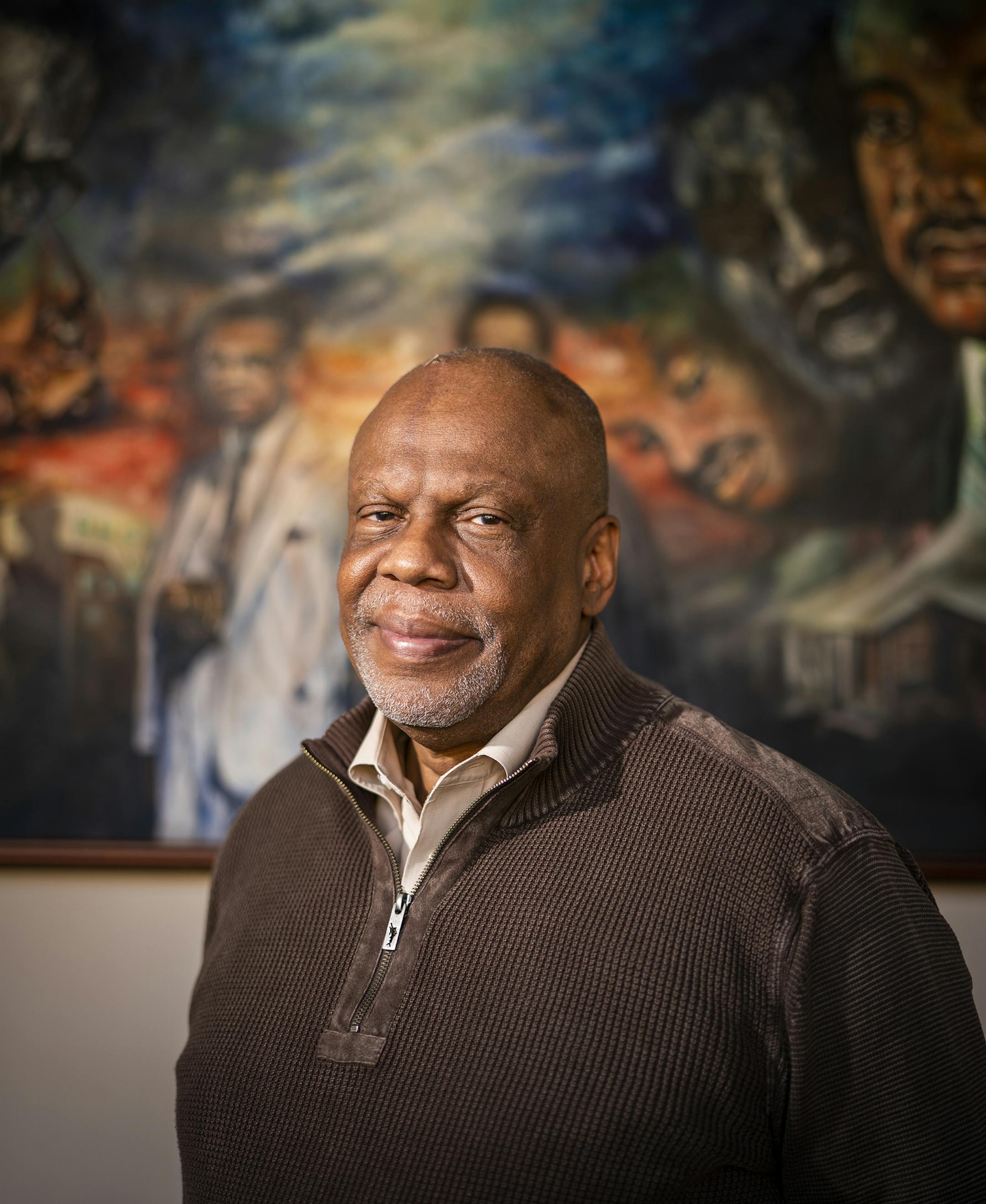
Nearly 30 years ago, the Rev. Alfred Babington-Johnson founded the Minneapolis Stairstep Initiative to address "the core issue of our times: the breakdown of community." He used what now seems a bold and lofty approach — getting people to think and act as if they believe they belong together. Health disparities, violence, isolation, job loss, no issue is insurmountable, he maintains, when well-meaning people come together in respectful dialogue. In the midst of a worldwide pandemic and cries for racial justice, his message seems particularly urgent and his comforting approach especially welcome. The father of three shares his vision for rebuilding trust in institutions and each other and why humor is essential.
Q: Let's start with a fill-in-the blank. The year 2020 for you has been …
A: I want to say transformative and, as much as I want to say that, the jury is still out. This has been a year of extraordinary challenges and extraordinary opportunity.
Q: The challenges are obvious: George Floyd's killing, COVID-19, political polarization. What are you seeing on the opportunity side that maybe we should be seeing, too?
A: Challenge and opportunity are running neck and neck but opportunity is outpacing the challenge. Still, this is a fragile moment and we mishandle it at our own peril. Breakdown of community is an issue for all, but it is critical for those who have been denied access to the levers of power and denied equitable distribution of resources. At Stairstep (stairstep.org) we ask, "What are the dynamics required to revive a spirit of community among African American folk?" Stairstep is not an agency; we seek to provoke community thinking, build models, convene and provoke dialogue.
Q: An important dialogue must be around COVID-19 and its particularly punishing impact on communities of color. A recent University of Minnesota study, for example, revealed that Black people make up 7% of Minnesota's population but account for 25% of the COVID-19 hospitalizations. How are you addressing that specifically?
A: When society acknowledges a disparity, it's an opportunity to clarify and create response mechanisms. Black folks have historic reasons to be skeptical about the government and the medical establishment. For effective deployment of healing strategies, trusted voices must be raised. So where is the trusted voice? My answer is the African American church. Our churches have historic credibility, and are ubiquitous. We facilitate His Works United (HWU), the largest ecumenical collaboration of African American churches in the state. During this pandemic, HWU mobilized 50 of our pastors, both metro and outstate. We charged them to create care trees to connect with isolated, disaffected folk to provide accurate information about COVID and offer help. In addition, after extensive discussions with the governor and the Minnesota Department of Health, we've organized a series of testing sites at African American churches and community centers using church members to help staff the process. We currently test about 800 people a week.
Q: How do you bring young people into this discussion?


