

City living means different things to different people. It might mean a shorter commute to work, or a short walk to a park or the coffee shop. It could mean living in a historic structure, a remodeled house or even a brand-new condo. For more than 25 years, the Minneapolis St. Paul Home Tour has invited visitors to tour a selection of the cities' residences, to explore new neighborhoods and to see real-world examples of how old houses have been updated. Next weekend, more than 50 city homeowners will open their doors to share their homes and experiences. Here are a few highlights:
Modern design statement
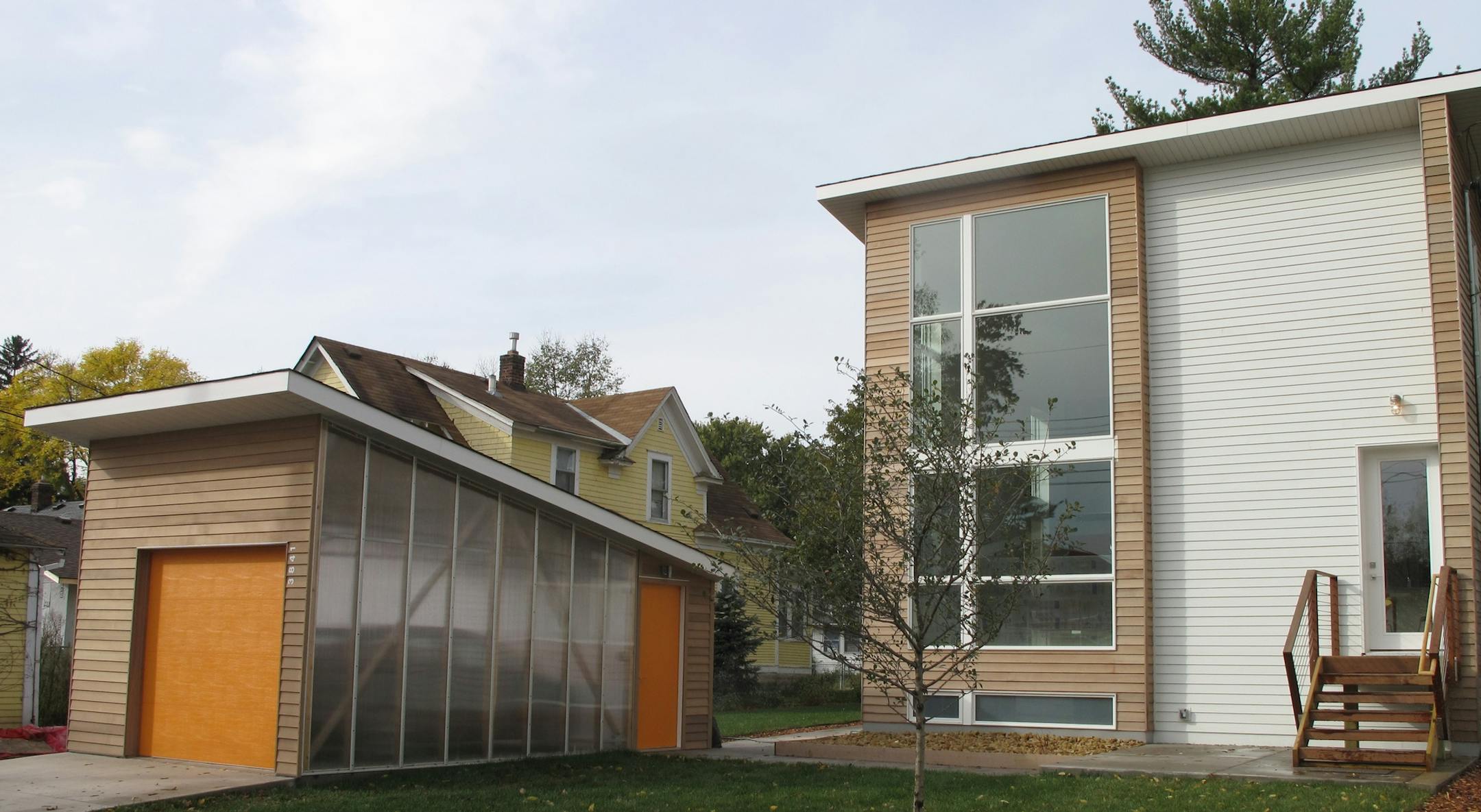
House #6: The house that architect Gordon Olschlager designed for himself last year is ultra-contemporary. Inside, one wall is essentially a 20-foot window, while interior walls are made of a translucent polycarbonate material. "They let daylight penetrate through the house," he said.
Yet outside, Olschlager made sure his house wouldn't overpower the modest 100-year-old homes around it. The house is two-story height at the rear, but the roof slopes lower in front — "so the scale is similar to other houses on the street," he said. "It fits in so well, but is totally unique."
It's also energy-efficient. The exterior walls are a foot thick, made of an insulated concrete form (ICF) wall system.
Then there's his garage, which also has translucent polycarbonate walls so it can do double duty in spring as a greenhouse for organic gardening. "It's a cool-looking object — you can actually see the car" from the outside, he said.
Olschlager, a Twin Cities native, had been living and working in California when he decided to return to Minnesota. He wanted to build a house, and buildable lots were scarce in Los Angeles. He found his lot — in Minneapolis' Standish neighborhood — on the Internet. "It was property where a duplex burned down in 2011," he said. "It's a good location, near the light-rail line and the Chain of Lakes."
Olschlager sees his new house as a continuation of the work he's done during his career. While in California, he helped restore several modernist 1950s-built homes that had been part of an experimental program to demonstrate that middle-class homes could be innovative. "I wanted to build on that legacy," he said.


