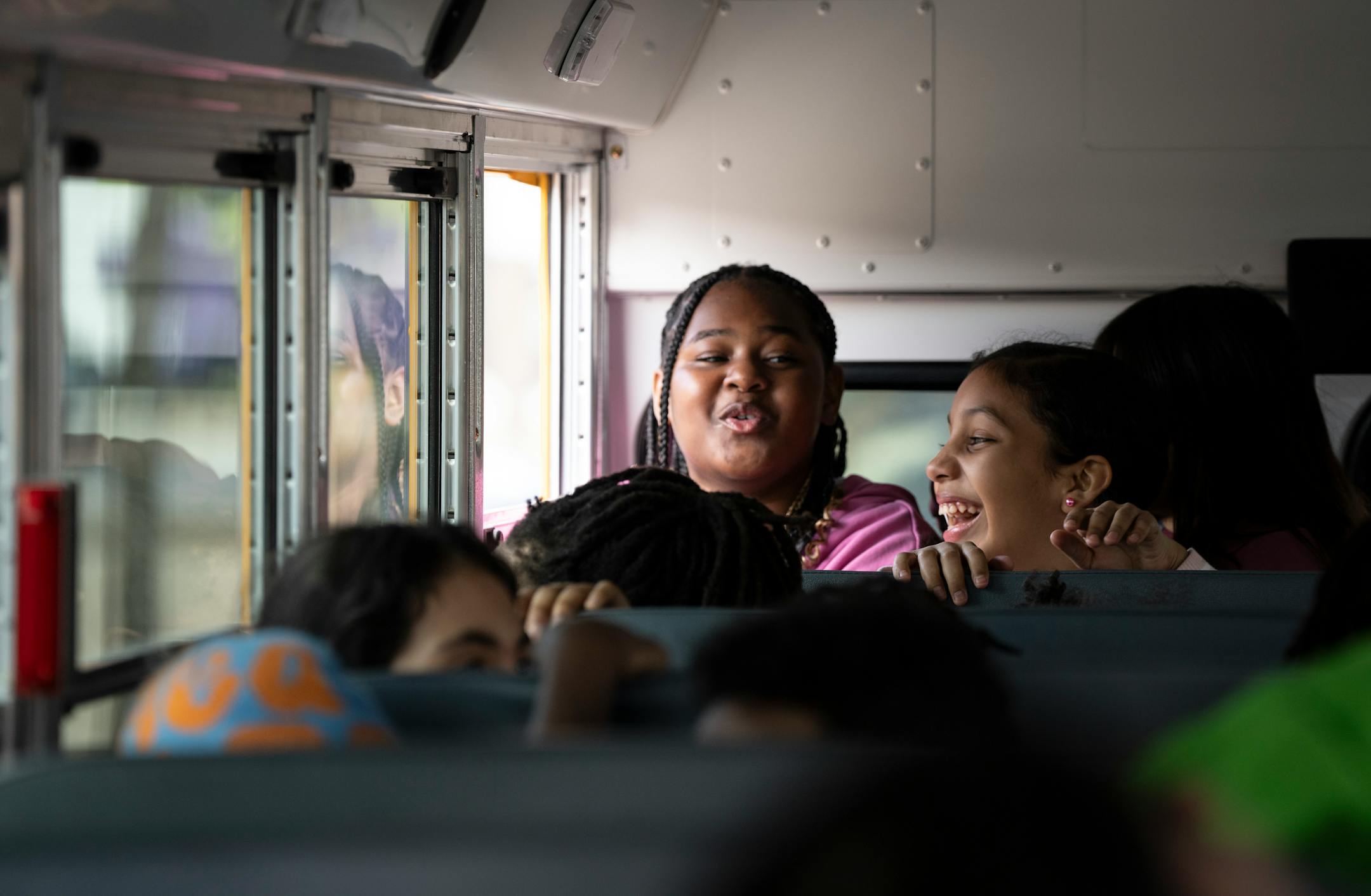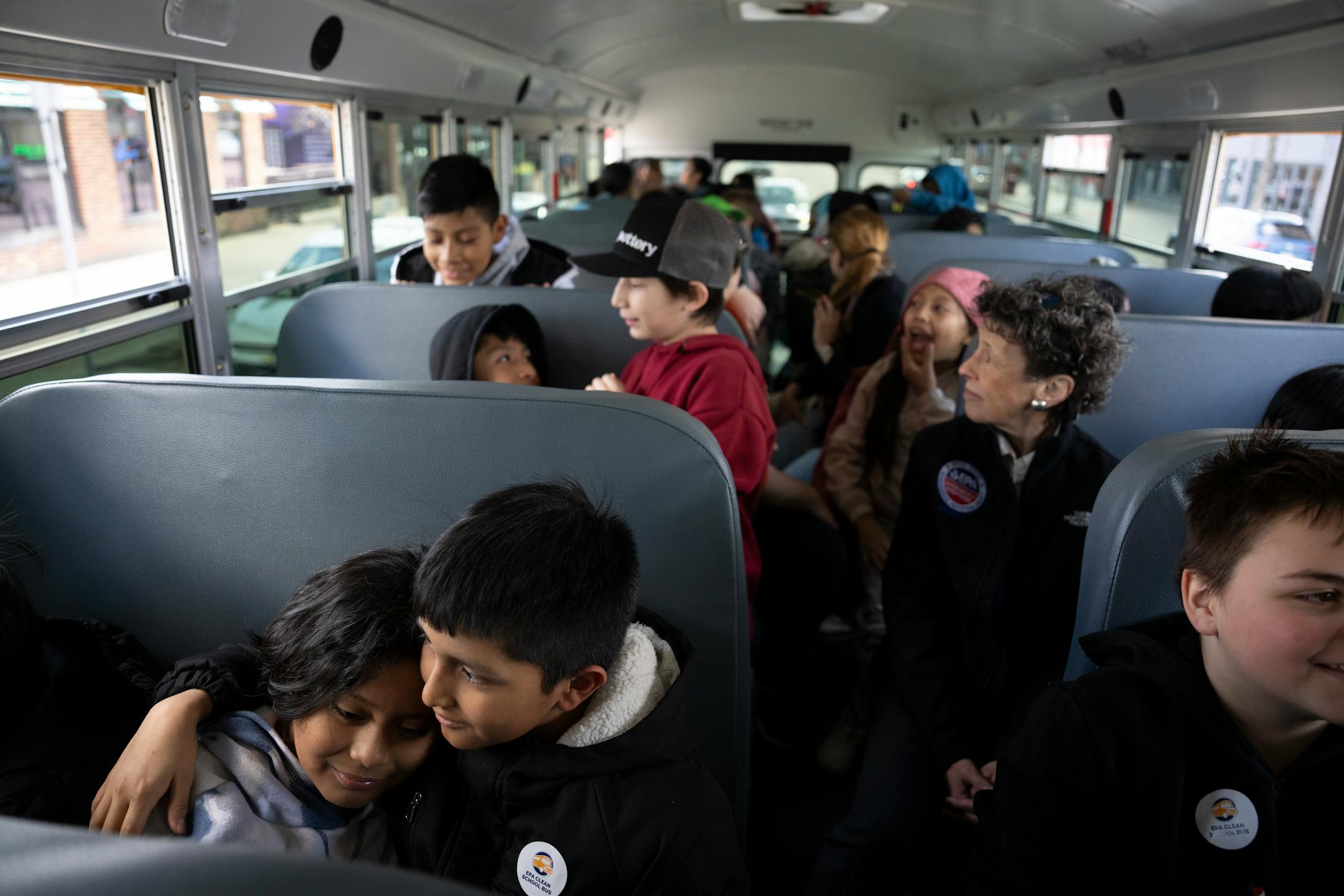
Fifth-grade students at Whittier International Elementary School in Minneapolis piled onto the electric school bus for a short ride through the neighborhood, a field trip that grew out of a letter-writing campaign they staged urging district leadership to buy it.
“We listened,” Superintendent Lisa Sayles-Adams said. Diesel-powered buses “are not the future of transportation. Sustainability is something we can’t afford to ignore.”
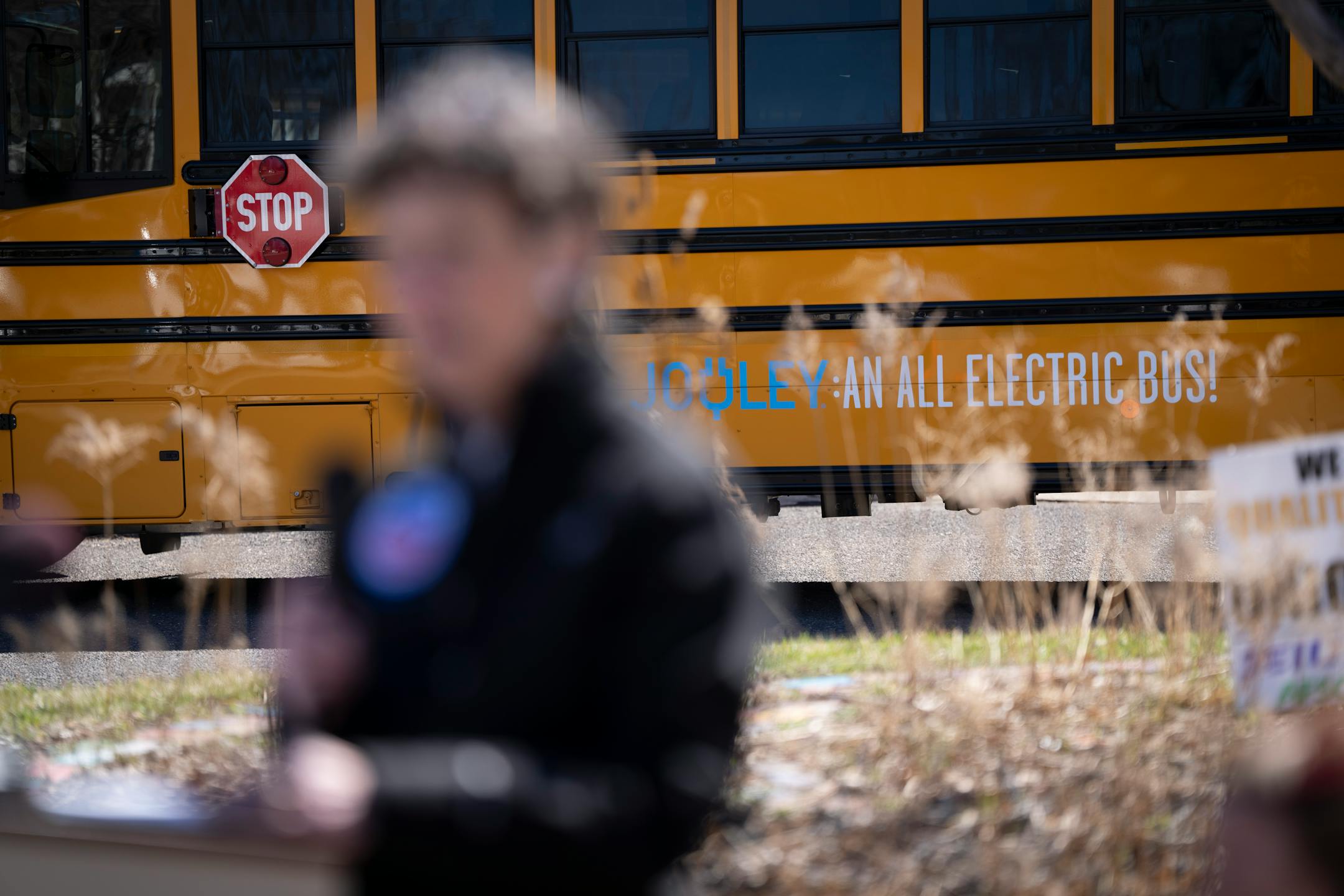
An Environmental Protection Agency grant from its Clean School Bus Program and Highland Electric Fleets was a big impetus, too. Last year the district bought two electric school buses that are just now arriving in Minnesota. Whittier students went for a test ride on one Tuesday, before the buses are put into service this summer.
The EPA grant is allowing the district to buy two more electric buses, which cost between $320,000 and $400,000. The buses, Minnesota Pollution Control Agency (MPCA) Commissioner Katrina Kessler said, will give students a “clean and cool new ride” and add to the state’s small but growing fleet of electric buses.
In 2020, the MPCA launched a pilot to try electric school buses in Minnesota. Over the past few years, 10 buses powered exclusively by electricity have been put in service, and 22 more are on the way, Kessler said.
The state has a goal of reducing greenhouse gases to net zero by 2050 and funding electric school buses is part of the work, Kessler said.
Through its curriculum, Whittier students are challenged to take action to make the world a better place, Principal Anne Wagemaker said.
As part of a “Sharing the Planet” unit last fall, teacher Alex Lange had his students brainstorm ways to reduce the use of fossil fuels and slow climate change. The discussion rolled around to buses, which is how about 70% of the student body arrives to class each day.