
Minneapolis readies high-tech help for Hiawatha Av.

New sensors and control units should better sync traffic signal cycles with light-rail trains.

October 10, 2012 at 3:56AM
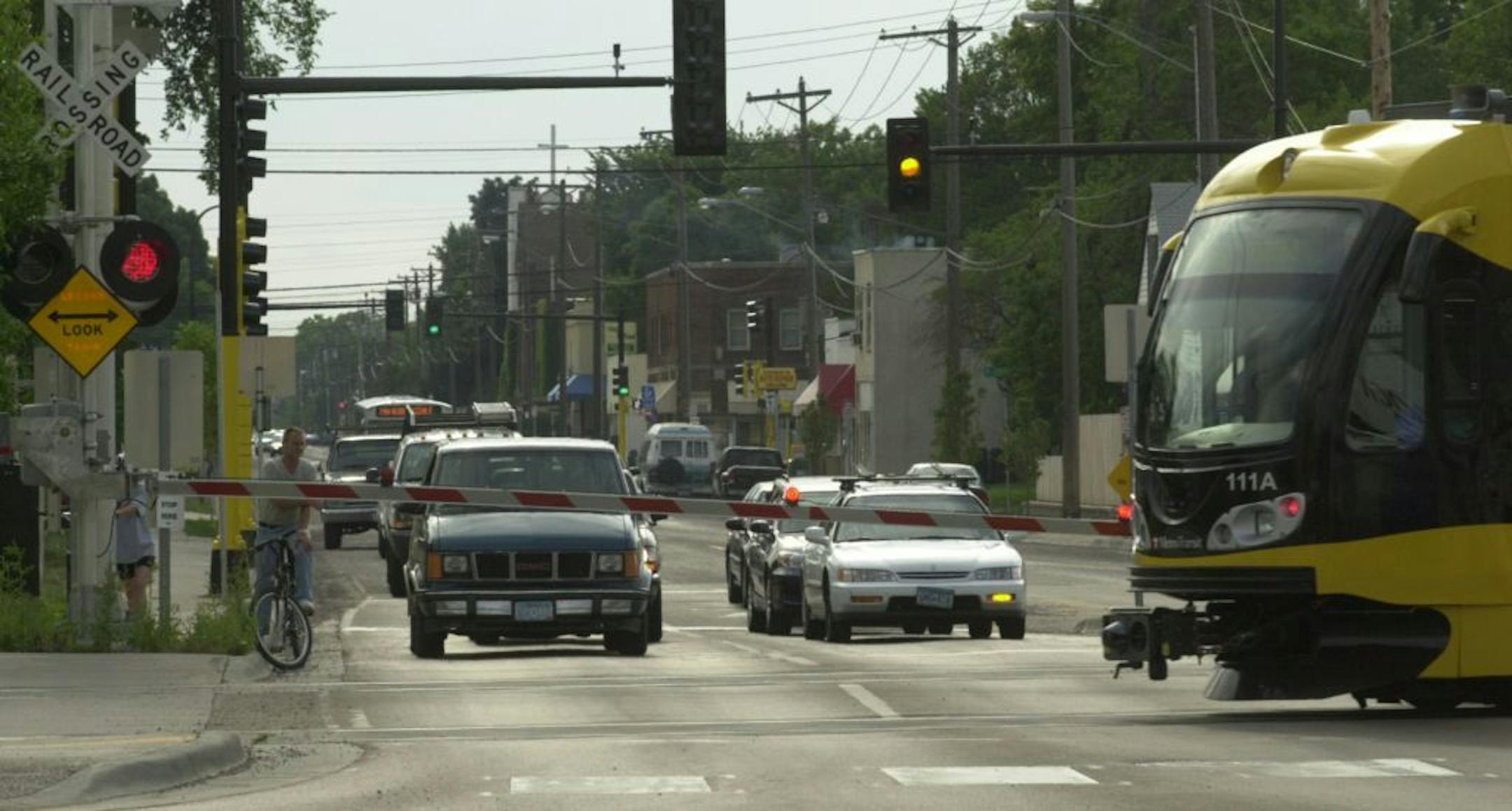
Heather Charles/ Staff Photographer Minneapolis, MN: 7/22/04: Cars stop behind the light rail crossing arms on East 38th Street and Hiawatha Avenue as the light rail passes in front early Thursday evening in Minneapolis. GENERAL INFORMATION: The light rail crossings.
Cars waited on 38th Street for the light-rail train to pass. (Star Tribune/The Minnesota Star Tribune)

October is shaping up to be a nightmarish month for commuters who use Hiawatha Avenue with lane closings, detours and even a 10-day shutdown of the busiest segment of the south Minneapolis thoroughfare, starting Friday.

But the short-term pain will come with a long-term benefit of improved traffic flow as the city installs technology expected to better coordinate traffic signal cycles often disrupted by light-rail trains.

"They take forever," Lindsey Frey of Minneapolis said of the cycles, adding that she has "reworked my travel approach on multiple occasions to avoid being stuck."

"We get more [311] calls about that than anything else in the city," said Minneapolis City Council Member Sandy Colvin Roy with a smile after a presentation at Tuesday's Transportation and Public Works Committee meeting to announce the installation, which begins Wednesday.

With a high volume of turning traffic combined with the frequency of passing trains, traffic engineers have called the four-lane state highway the nation's most complex corridor.

The $1.1 million improvement project includes installing 160 underground traffic sensors at seven intersections between 26th and 50th Streets along with control units that will regulate traffic flow. The current units reset to the beginning of their cycles when a train passes, and sometimes phases get skipped for two to three cycles, said Allan Klugman, a senior engineer with the Minneapolis Traffic and Parking Service Division. The new units will be able to pick up where they left off and have the ability to accelerate the cycle and award a green light to vehicles that have been waiting the longest.

"The main advantage is that delays on side streets and left-turn lanes will be greatly reduced," Klugman said. "People sometimes wait eight to 10 minutes; we know it because we have seen it. Drivers won't miss a phase because a train goes by. This will bring minutes of savings."

New signals also should improve navigability for bicyclists and pedestrians, Klugman said.

Nathaniel Hood of St. Paul is often frustrated by the pace of traffic on Hiawatha but still worries about what the work will do to light-rail use and city planning efforts for the area. "This doesn't really benefit Minneapolis much," he said via e-mail. "Merely those who choose to drive through it.

Until the project is finished, the 23,000 motorists who use Hiawatha daily on the south end and the 32,000 to 37,000 who use it on the north end are in for a tough go. Crews will shut down the northbound lanes of Hiawatha between 50th and 26th Streets on Saturday and Sunday to install sensors. They will close the southbound side Oct. 20-21 for the same reason.

Those closings are in addition to lane restrictions and detours that will go into place as Xcel Energy buries two high-voltage wires that will connect to two substations. Starting Friday night, Hiawatha will be closed for 10 days between 26th and Lake Streets.

Metro Transit light-rail trains will operate as normal during the road work.

Tim Harlow • 612-673-7768 Twitter: @timstrib

about the writer

about the writer

Tim Harlow

Reporter

Tim Harlow covers traffic and transportation issues in the Minneapolis-St. Paul area, and likes to get out of the office, even during rush hour. He also covers the suburbs in northern Hennepin and all of Anoka counties, plus breaking news and weather.

See Moreicon

More from No Section

See More
FILE -- A rent deposit slot at an apartment complex in Tucker, Ga., on July 21, 2020. As an eviction crisis has seemed increasingly likely this summer, everyone in the housing market has made the same plea to Washington: Send money — lots of it — that would keep renters in their homes and landlords afloat. (Melissa Golden/The New York Times) ORG XMIT: XNYT58
Melissa Golden/The New York Times

It’s too soon to tell how much the immigration crackdown is to blame.