

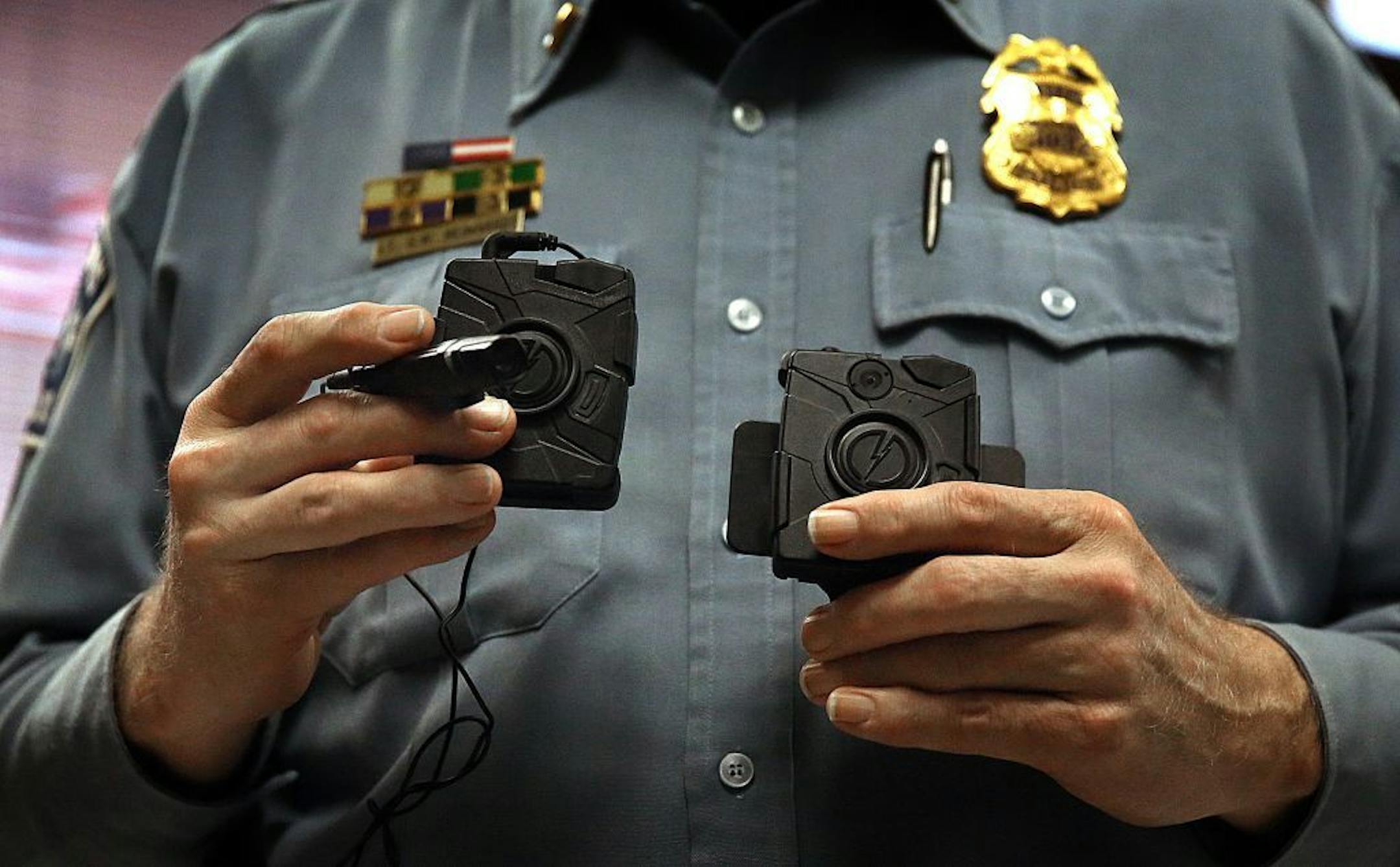
The Minneapolis Police Department unveiled the draft of a new body camera policy Tuesday that calls for the recording of most police-citizen interactions, while sidestepping a separate controversy about making such videos public.
The guidelines are likely to undergo several revisions before a full rollout in October, department and police union officials said. Under the new plan, officers would be required to turn on the devices during all traffic and suspicious-person stops, car chases and searches. Notably, camera-toting officers will not be allowed to film protests like those that followed the death of Jamar Clark last fall.
Chief Janeé Harteau said the department looked at what other police forces around the country are doing to address concerns over privacy, and the time and cost of protecting the identities of victims, witnesses or bystanders captured on camera. Harteau said the new plan reflects policy for dashboard camera video, which is consistent with departments nationwide. The policy calls for the review of audio and video by the officer involved before a report or statement is made to ensure accuracy.
Plans to outfit officers with the cameras took on added urgency after Clark's death in November following a shooting involving two city cops. The incident ignited weeks of volatile protests and repeated calls for the release of any video of the encounter. Officials have said the two officers involved weren't wearing body cameras.
Advocates say the technology is an important source of physical evidence that will improve police-community relations and bring clarity to controversial encounters between police and the public, helping guard against police misconduct and clearing officers who are falsely accused of wrongdoing.
Opponents, though, worry about privacy.
"These body cameras aren't a complete panacea, but they're part of a complete package that helps," said Rep. Dan Schoen, DFL-Cottage Grove, who also works as a police officer. "I know that as an officer, I want to wear them."
Legislators are expected to weigh the matter in the upcoming session.


