

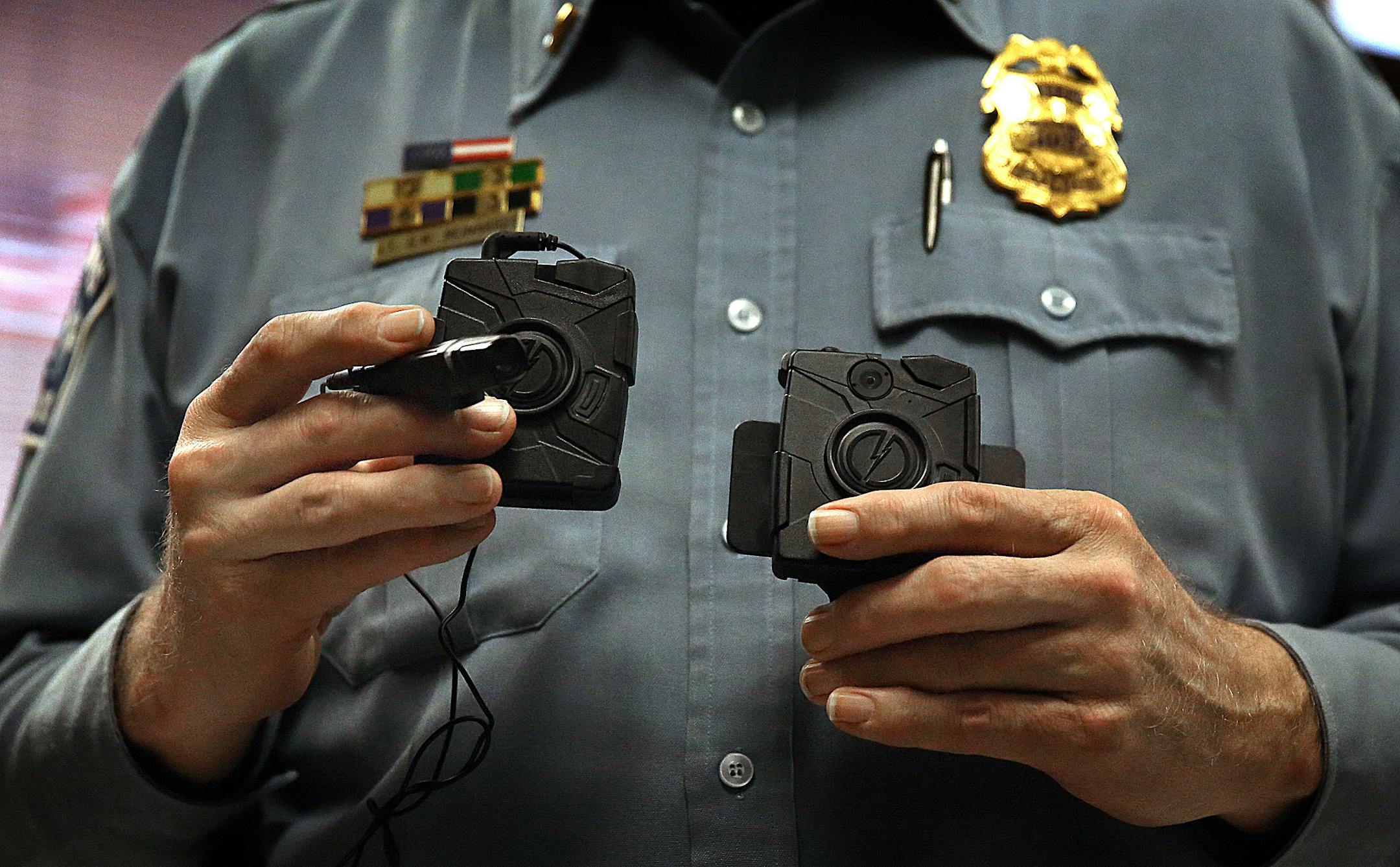
After four months of testing body cameras with a few dozen Minneapolis police officers, city officials have reached one definite conclusion: They are not prepared for the massive spike in public records requests and data processing demands that would come with a full rollout of the program.
The city's auditor, Will Tetsell, told a City Council committee Wednesday that Minneapolis will likely have to hire more people and potentially reconsider the requirements for how quickly the city must fulfill data requests if it is to have a successful and well-regarded program.
Tetsell said the police department gets about 10,000 data requests each month. So far, only a small number are for camera footage. But he expects a surge when all officers are equipped with cameras and more attorneys, insurance companies and members of the media want to review incidents captured on video.
That process can be complicated and time consuming, as officials must review the footage and edit it to avoid releasing personal information. It is such a major undertaking that the city of Seattle has 35 full-time staff members — and is looking to hire more — to handle its body camera records requests. By comparison, Minneapolis has two people assigned to the task.
"If you ask the [records] unit, they would probably say they're not prepared for it," Tetsell said of a departmentwide program. "It's hard to prepare because we don't know what the demand is going to be."
Members of the council's Public Safety Committee said they're also concerned about the absence of any requirements for how quickly the city must respond to requests. Several other cities and states have laws requiring records to be provided within a set period of time.
In Minnesota, Tetsell said, the rules are less clear, mandating only that records be provided as soon as possible.
"I think the spirit of the program was really built around transparency and accountability, and if we think of that spirit without being able to give people this information who want to use it, we're not going to fulfill one of our main reasons for doing this," Tetsell said.


