

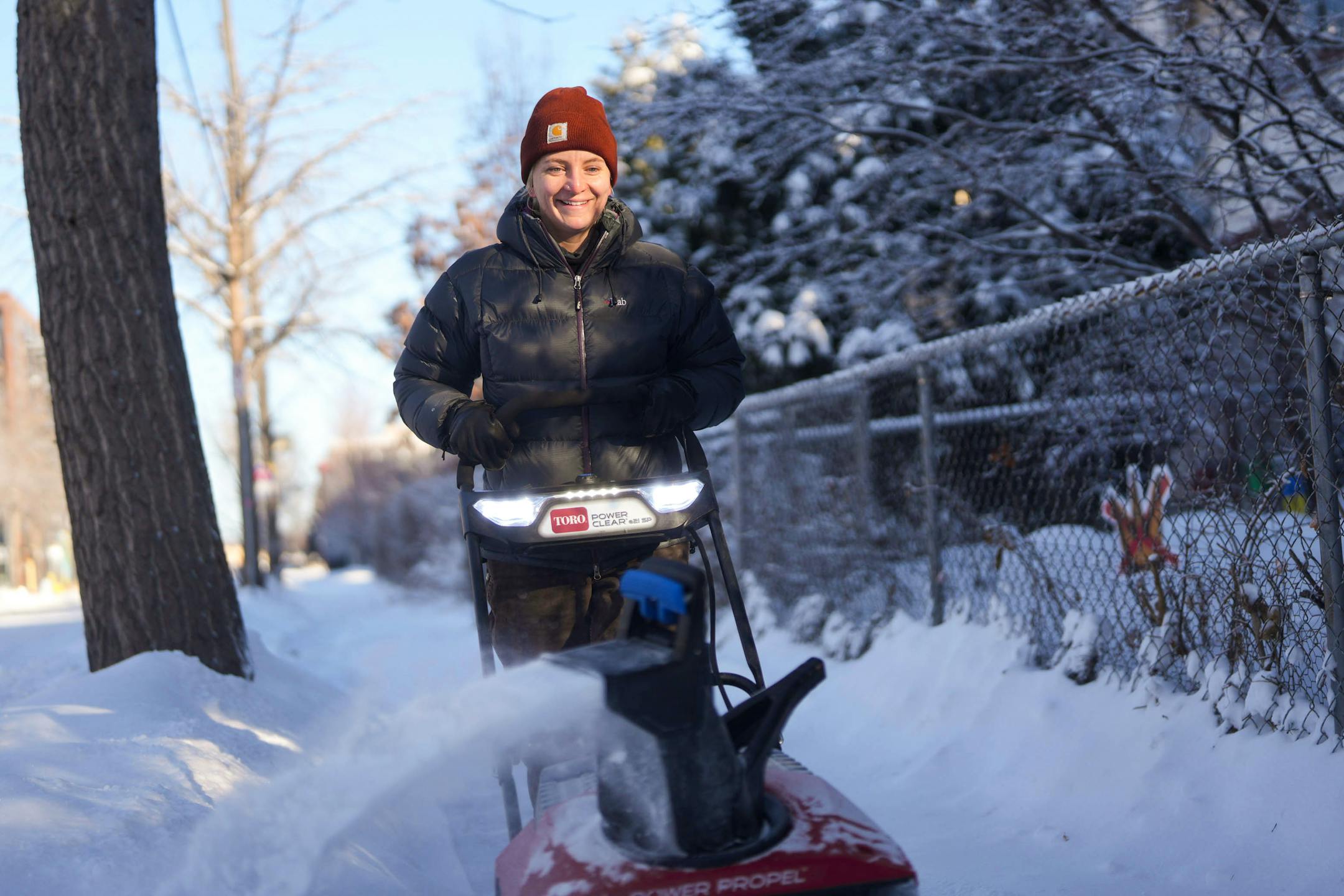
Charlotte Ipsen, a longtime north Minneapolis resident who is 84 this winter, usually relies on a kindhearted neighbor to shovel her sidewalk, as many senior Minnesotans do. But the neighbor is getting older and has disabilities that cause him to limp behind his snowblower.
With money tight — Ipsen’s health insurance, food and taxes all seem to be going up dramatically — she’d be hard-pressed to hire someone to replace him, she said.
So when she heard about a new city-funded program through the Harrison Neighborhood Association that would assign young people to help seniors shovel their sidewalks, Ipsen raised her hand to be a test case. The season’s first major snowfall came last month, and on its tail was the neighborhood shoveling team.
“I really so support this program, so support it, and I just think it’s such a darn good idea,” Ipsen said.
This winter, half a dozen neighborhood associations across Minneapolis are participating in a city pilot to clear snow and ice from sidewalks in front of elderly and disabled residents’ homes, as well as select pedestrian thoroughfares. The pilot is in its second season, and while relatively puny snowfalls last year limited data collection, this winter’s more robust accumulation events are offering a better chance to explore the need for municipal sidewalk-clearing and the effectiveness of, say, equipping neighborhood groups with snowblowers to do it.
Traditionally, the city clears streets and private owners must clear sidewalks adjacent to their properties or risk getting fined. Most property owners — 96% since the city started tracking — comply. But others struggle for various reasons, and when sidewalks aren’t cleared they can get dangerous for walking and unnavigable to wheelchairs.
The idea of having the city take over sidewalk shoveling has been floating around since at least 2018, when the city funded a study looking at what other North American cities have tried.
It gained renewed interest during the snowy winter of 2022-23, when the City Council asked staff to provide a rough estimate of how much it would cost the city to clear nearly 2,000 miles of sidewalks in the "Pedestrian Priority Network," a grid of streets people frequently walk. They were quoted $116.2 million over the first three years and $40.6 million every year thereafter: numbers that council members and Mayor Jacob Frey balked at.


