

Developers with projects trapped in limbo because of legal wrangling over Minneapolis' 2040 comprehensive plan will have to keep their plans on hold after a Hennepin County judge declined this week to reinstate the plan while a legal challenge to it proceeds.
The move didn't come as much of a surprise to local developers, given that the judge had already issued two injunctions ordering the city to ditch the plan and revert to the less-controversial 2030 Plan.
But they said they worry that the prolonged delay is putting growing stress on small-scale developers — and delaying much-needed housing for Minneapolis residents.
"The people who are working at this missing-middle neighborhood-scale infill are largely independent operators who are taking risks that may have financial impacts for their family in a material way," said developer Cody Fischer.
As long as the court case drags on, Fischer said, "you're just not going to see more people like me coming out of the woodwork and building housing that the city needs."
Five years ago, Minneapolis made national news for becoming the first American city to end single-family zoning with the passage of the 2040 Plan. Spurred by the city's unequivocal call for denser housing — such as townhomes and small multiplexes — in neighborhoods where it was historically banned, developers jumped in with plans centered on walkability and sustainable design.
But multiple courts have since found that the city should have first conducted an environmental study to explore the potential harm of increased density to natural resources and wildlife. As a result, the 2040 Plan has been suspended since November, and developers who failed to push through the city's permitting process in time are out of luck.
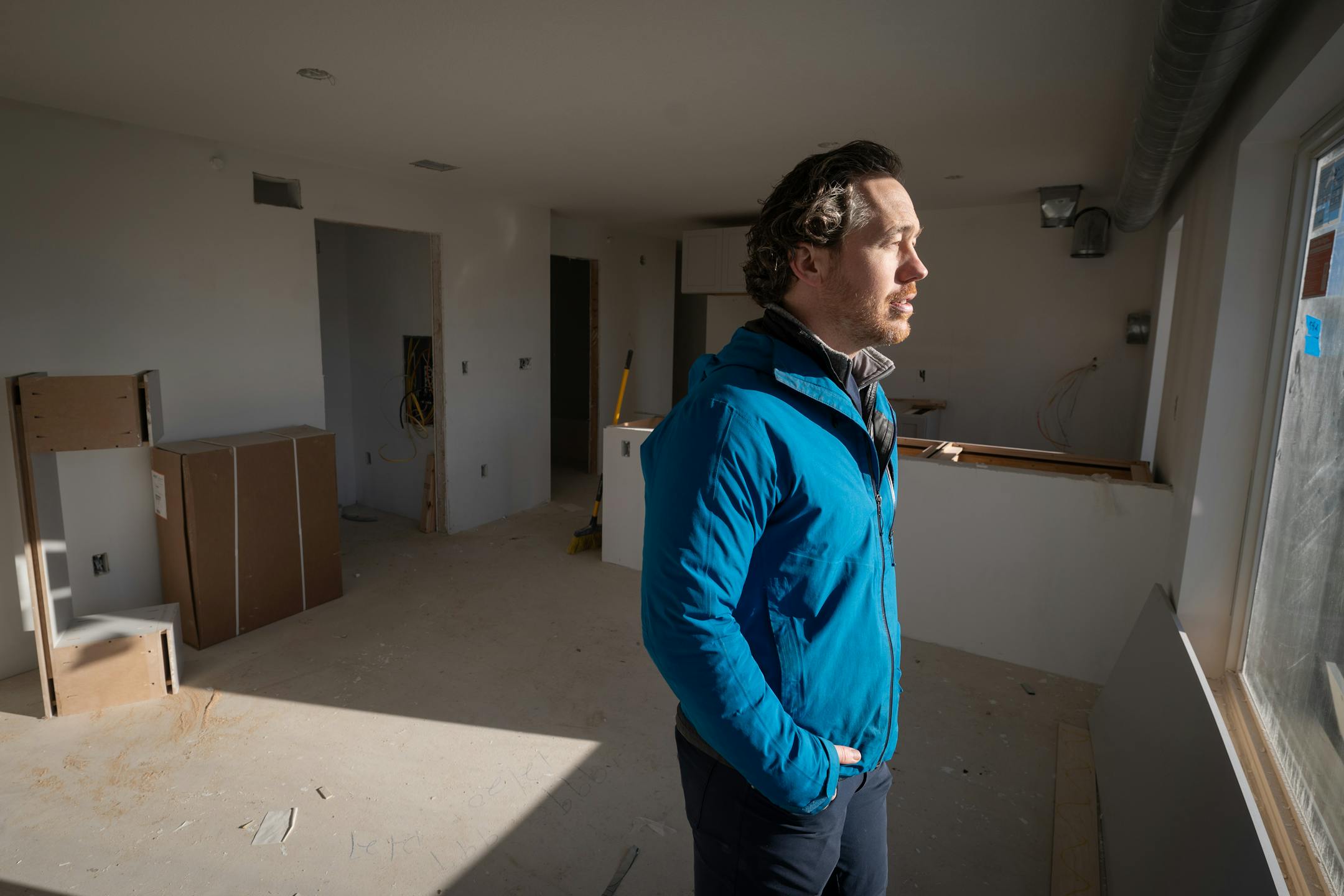
![Cody Fischer, who owns Footprint Development, works on getting his project at 635 Van Buren St. NE completed for leasing Friday, Dec. 29, 2023 Minneapolis, Minn. The building has gone through lots of ups and down as a result of the 2040 litigation. It is now almost complete, but another one of Fischer's projects at Minnehaha and 36th is completely stalled. ] GLEN STUBBE • glen.stubbe@startribune.com](https://arc.stimg.co/startribunemedia/HY2GFCBMZW3TDLMOMMEKCPXDYM.jpg?&w=1080)
Building in Minneapolis has been a roller coaster for Fischer, who owns Footprint Development. Two years ago a 23-unit, four-story building he proposed at 635 NE. Van Buren St. became a 2040 battleground. Neighbors who worried it wouldn't fit the character of the block pushed the Planning Commission to recommend denial, despite the lack of a legal rationale. It ultimately took $40,000 in legal fees and an uproar from environmental organizations, including the Sierra Club and MN350, to get approval.
![Cody Fischer, who owns Footprint Development, works on getting this project at 635 Van Buren St. NE completed for leasing Friday, Dec. 29, 2023 Minneapolis, Minn. The building has gone through lots of ups and down as a result of the 2040 litigation. It is now almost complete, but another one of Fischer's projects at Minnehaha and 36th is completely stalled. ] GLEN STUBBE • glen.stubbe@startribune.com](https://arc.stimg.co/startribunemedia/GHNR6UEO5SJVWNZD4IRTMTVLOI.jpg?&w=1080)


