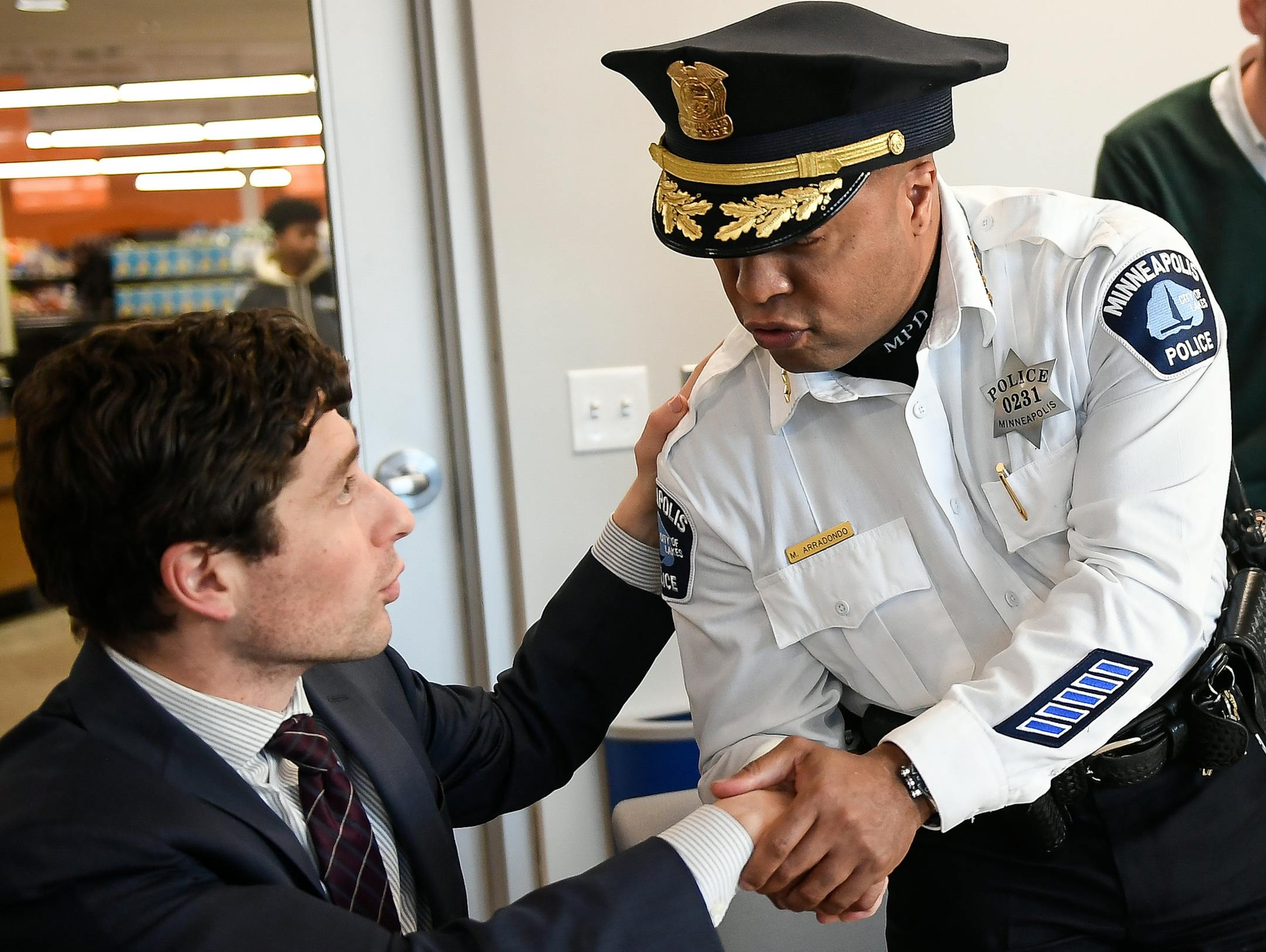
In a news conference brimming with optimism but short on a finalized plan of action, Minneapolis Mayor Jacob Frey and Police Chief Medaria Arradondo shared their vision Thursday for healing the profound divisions between law enforcement and communities of color.
Making their first public appearance together since Frey was sworn in to the city's top office, the two leaders were eager to present a unified front on issues ranging from the department's body camera policy to whether the city needs more police officers.
At its current staffing levels, officers on certain shifts find themselves scrambling from call to call, with little time to get out of their squad cars and mingle with community members, Frey said. He proposed "narrowing their beats" to give them more time to build relationships.
Arradondo, who last summer inherited a police force beset by calls for reform, said it isn't enough to "put a cop on every corner."
"It's important that our officers get to build those trusting relationships with our city," he told reporters gathered at the North Market. "Unity to me also means trust; it also means accountability."
He said he is working to address critics' concerns. As an example, he pointed to the department tightening its policy on the use of body cameras after a city audit report released last fall found that officers were rarely turning their devices on.
Arradondo has said in the past that Minneapolis, like police departments across the country, needs to rethink its approach to fighting crime. Not every emergency call, he has said, requires a police response.
Arradondo's predecessor, Janeé Harteau, had a complicated relationship with former Mayor Betsy Hodges, with whom she clashed at times over the department's direction. Harteau was ousted last summer in the wake of the shooting of Justine Ruszczyk Damond by officer Mohamed Noor, while Hodges lost her re-election bid in November.