2:10
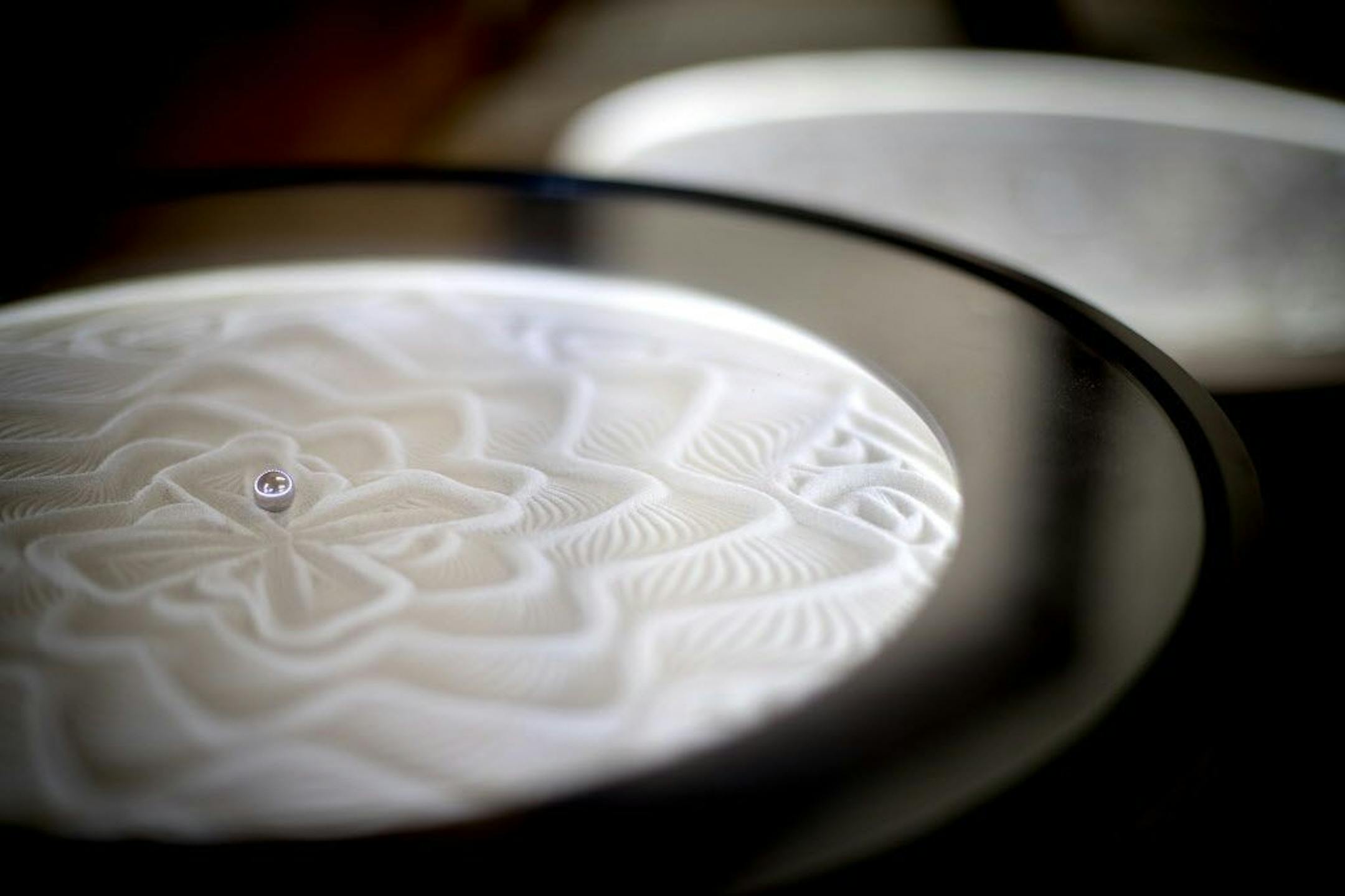
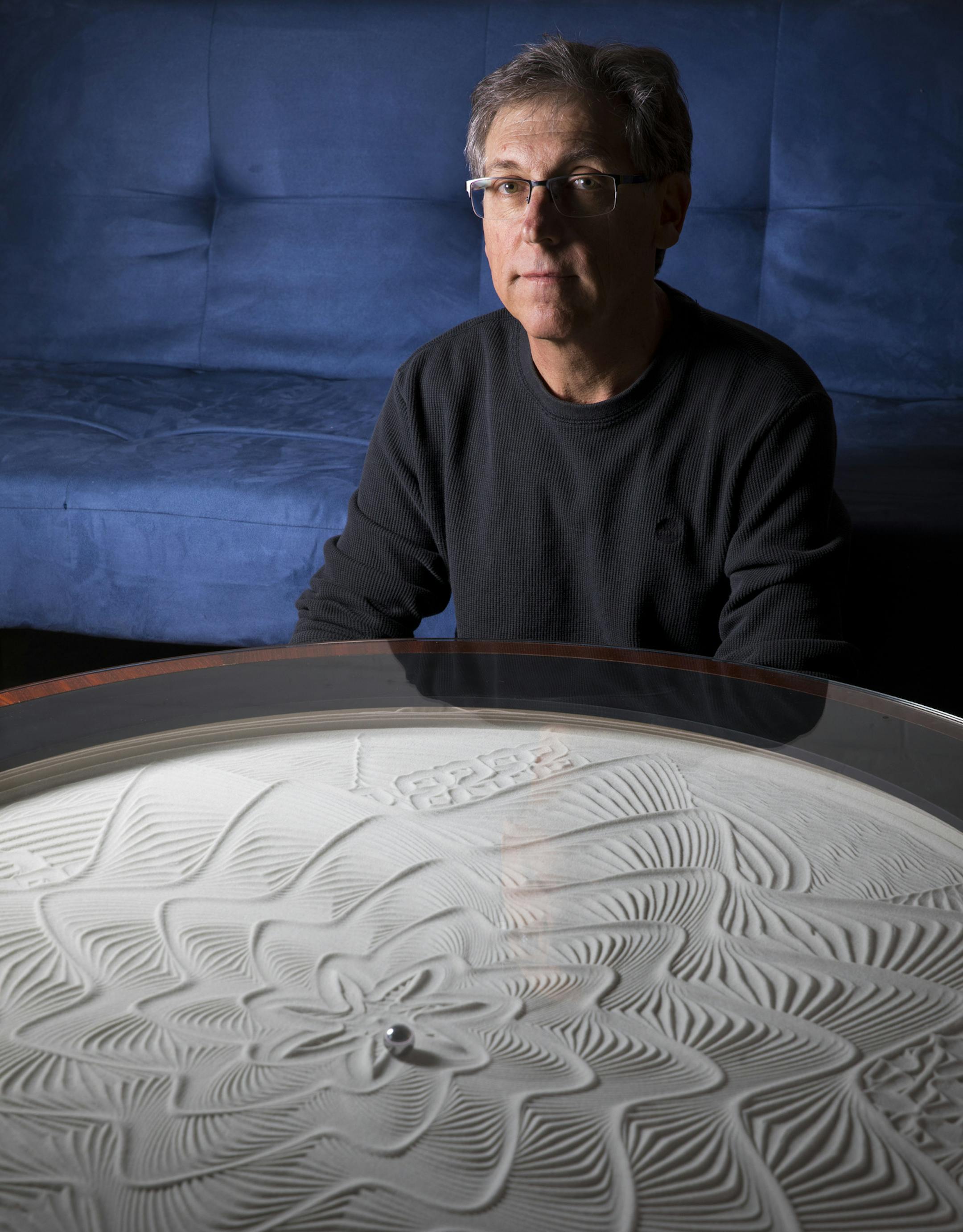
2:10A little steel ball rolls silently across a sand-covered surface, moved by an unseen force, its path ceaselessly tracing an intricate design.
That idea garnered nearly $2 million on Kickstarter, and all because a Minneapolis doctor decided to quit medicine and put his mind to something serious: making kinetic art using computer-controlled motion devices.
In more than two decades of creating, Bruce Shapiro, 60, of Minneapolis has made large-scale moving art pieces that have been installed in science museums around the world. His robotic creations have appeared at the White House and on Martha Stewart's TV show.
But his latest project is meant for your living room: a glass-topped coffee table called Sisyphus. Shapiro's kinetic art table features a magnet-driven ball autonomously rolling over a layer of sand, "forever creating and erasing beautiful patterns."
It's a little like the precise ridges of sand artfully raked into a miniature Zen garden, only the patterns are created by a silent, tireless little robot gardener toiling on a table next to your couch.
When Shapiro put the idea out on Kickstarter last September, he set a goal of raising $50,000 in 30 days to fund production. He reached his goal in the first 24 hours, and ultimately got $1.92 million from backers as far away as Australia and Thailand who put their money down to be the first to get the tables, which cost $645 to $7,500 each.
The project is a product of Shapiro's lifelong passion for tinkering with electronic gadgets, which continued after he got his medical degree at the University of Minnesota in 1983.
He practiced medicine for about five years, specializing in internal medicine. But he was preoccupied with trying to make stuff from used gear put on the surplus market after being scrapped by Twin Cities area tech companies such as 3M and Honeywell.