

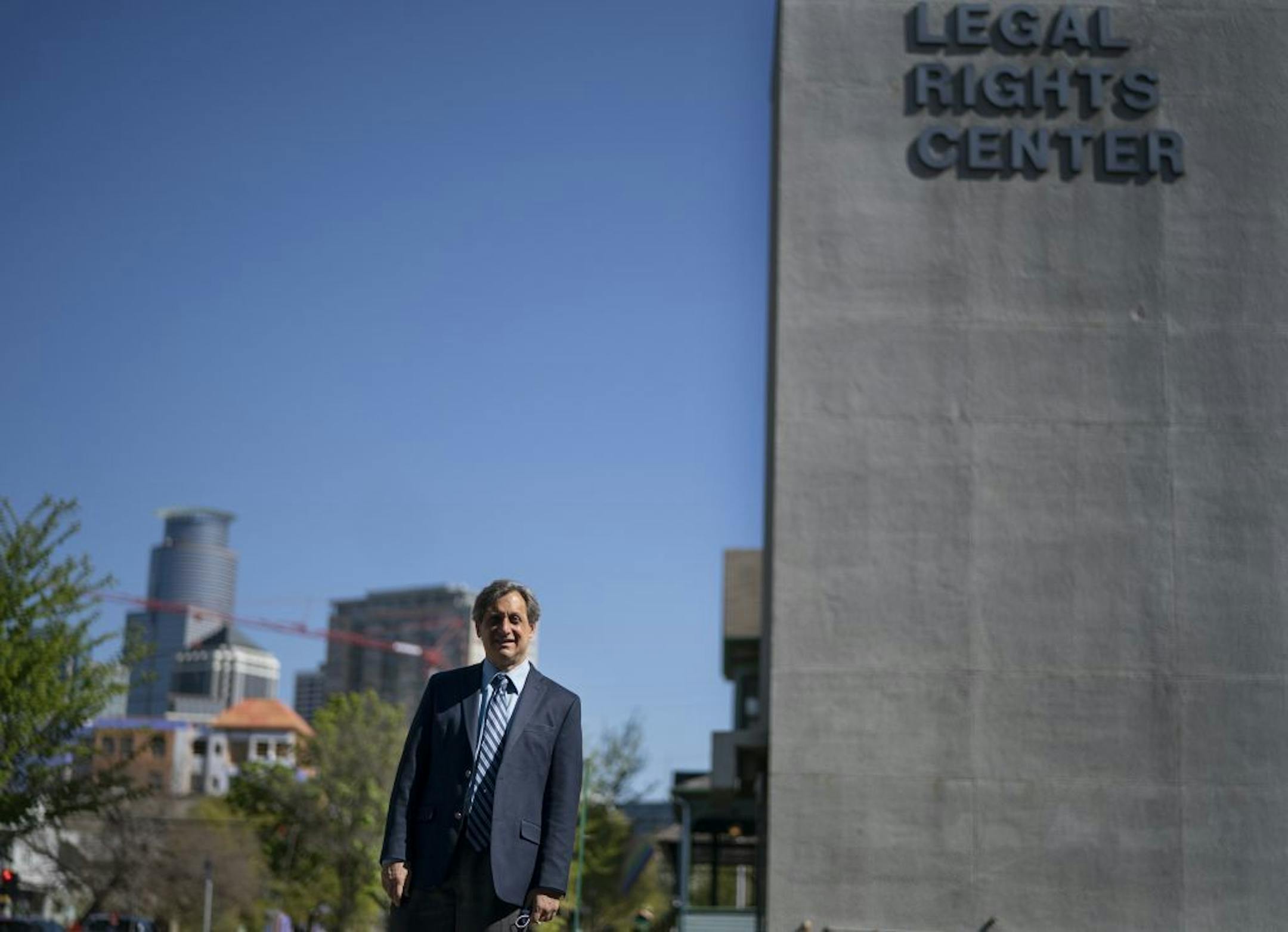
From its earliest days, the Legal Rights Center (LRC) has been a major community asset, representing low-income clients, particularly people of color, in criminal defense cases. The organization's focus is Hennepin County and its priority is juveniles. In recent years, restorative justice has become an important component. As LRC celebrates its 50th year, we turned to executive director Michael Friedman to learn more about the center's evolution. Friedman, who has served for 15 years — as long as the center's founder, the late Doug Hall — will step down in July. No replacement has yet been named.
Q: Can you talk about why and how the Legal Rights Center came to be?
A: The Legal Rights Center (legalrightscenter.org) formally came into existence in 1970. The recognized founders are Clyde and Peggy Bellecourt, who were with the American Indian Movement (AIM), and Syl and Gwen Davis of The Way [a north Minneapolis community center] along with Minneapolis labor attorney Doug Hall. Clyde Bellecourt was a member of the board until last year. The original funding came from local law firms and a lot of that was organized by Peter Dorsey of the Dorsey Whitney firm. At that time, there was no public defenders organization at the trial level. There was a right to a lawyer, so the judge would appoint private lawyers, and there was a lot of dissatisfaction about whether the lawyers were giving defendants appropriate attention. The absolute distinctive feature of the center is that it is not just attorneys but community workers, now called community advocates. They do all the functions of legal support. That includes case investigation and helping clients access community resources, such as treatment or cultural programs, which could serve as the terms of probation or the conditions for dismissal. That brought the community into the cases.
Q: How does the community advocate program make a difference from a typical legal defense?
A: The community is taking ownership — trying to solve the problems in the community, rather than it being imposed from outside and being perceived as hostile. With all the disparities and historical experience, there is tremendous distrust of the justice system by communities of color. Our advocates serve by helping the clients feel supported and also help our attorney better understand our clients' experience.
Q: Who are some of the prominent people whose careers included the Legal Rights Center?
A: Keith Ellison was our executive director for five years in the 1990s, after which he became a state legislator, a congressperson and now Minnesota's attorney general. One of our first attorneys was Michael Davis, who became a state judge, then a U.S. district judge and then chief U.S. district judge in Minnesota. Pamela Alexander began her career at the center and was a longtime judge in Hennepin County. Other people well known in the legal profession who were associated with the center include William McGee, later Hennepin County chief public defender; attorneys James Krieger, Trudell Guerue Jr. and Jerod Peterson and community advocates Willie Mae Dixon, Mary Jane Wilson and Fred "Sonny" Anderson Jr. Twenty years from now, some of our current attorneys and community advocates will be similarly recognized as prominent.
Q: How successful is the Legal Rights Center in court?


