How did Minneapolis become the epicenter for one of the largest terrorist recruitment networks in the country?
The federal trial and conviction last week of a Minneapolis janitor exposed the global workings of the effort to convert at least 20 young men from the Twin Cities into holy warriors, luring them from the relative comfort of their homes in the Twin Cities to the war-torn Horn of Africa.
A years-long federal investigation, dubbed "Operation Rhino," traced the route and workings of that pipeline: how and where the men were first approached, how they were radicalized, how they flew to Dubai or Nairobi on round-trip tickets, never to return.
Operation Rhino, one of the largest counterterrorism campaigns since the Sept. 11, 2001, attacks on the United States by Al-Qaida, has received attention at the highest levels of U.S. government, including the White House, FBI supervisory special agent E.K. Wilson said this week in an exclusive interview.
The trial of Mahamud Said Omar, a 46-year-old part-time janitor, ended Oct. 18 with a guilty verdict on all five terror-related charges. Omar was the only one of the 18 people charged in the investigation thus far to go on trial. Seven others have pleaded guilty, and six remain fugitives.
Wilson estimates that the investigation is less than halfway complete.
Three central figures
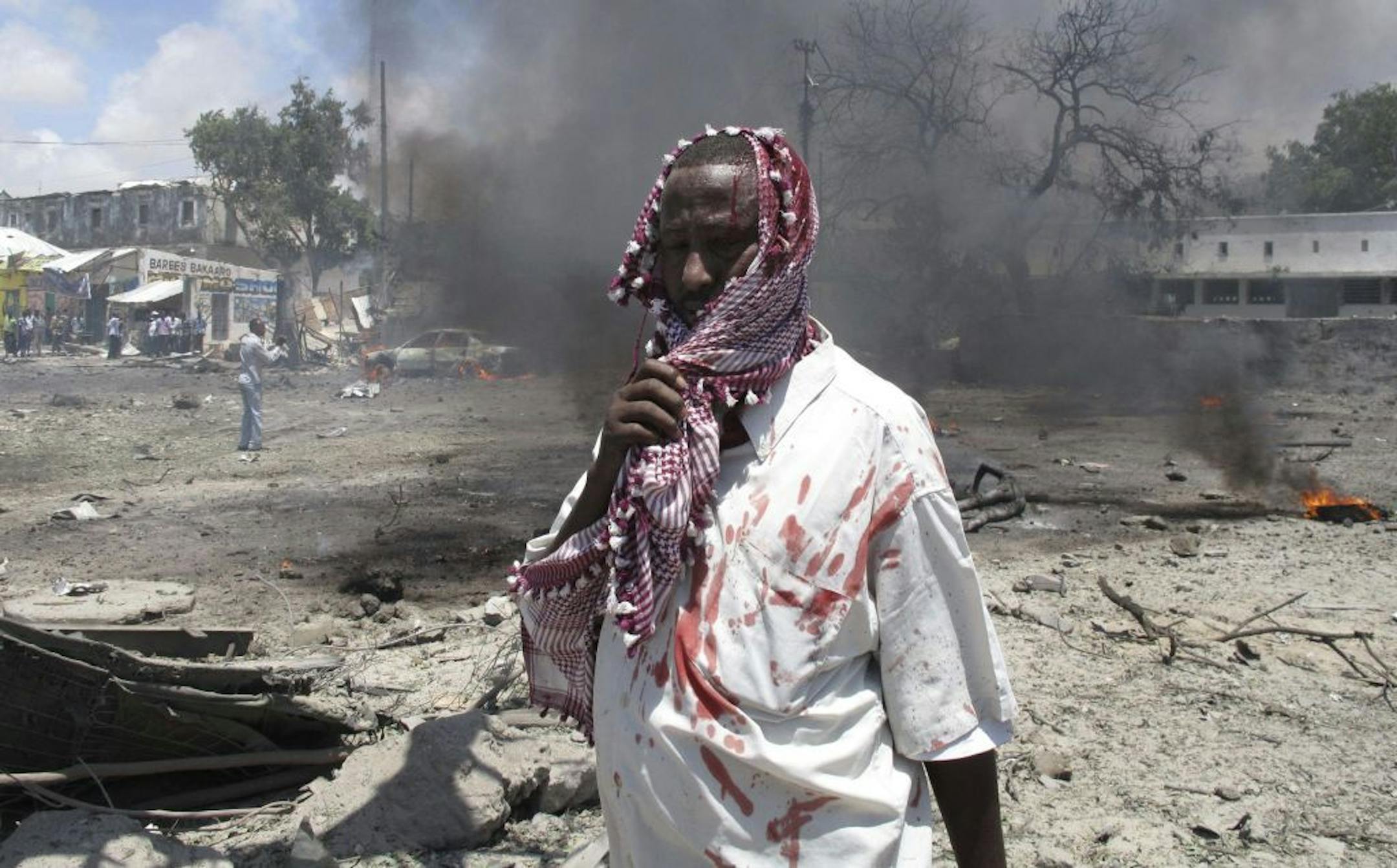
Operation Rhino formally began in the spring of 2008 and went into overdrive after Minneapolis recruit Shirwa Ahmed died in one of five coordinated suicide bombings in Somalia attributed to Al-Shabab, a U.S.-designated terrorist group there.