

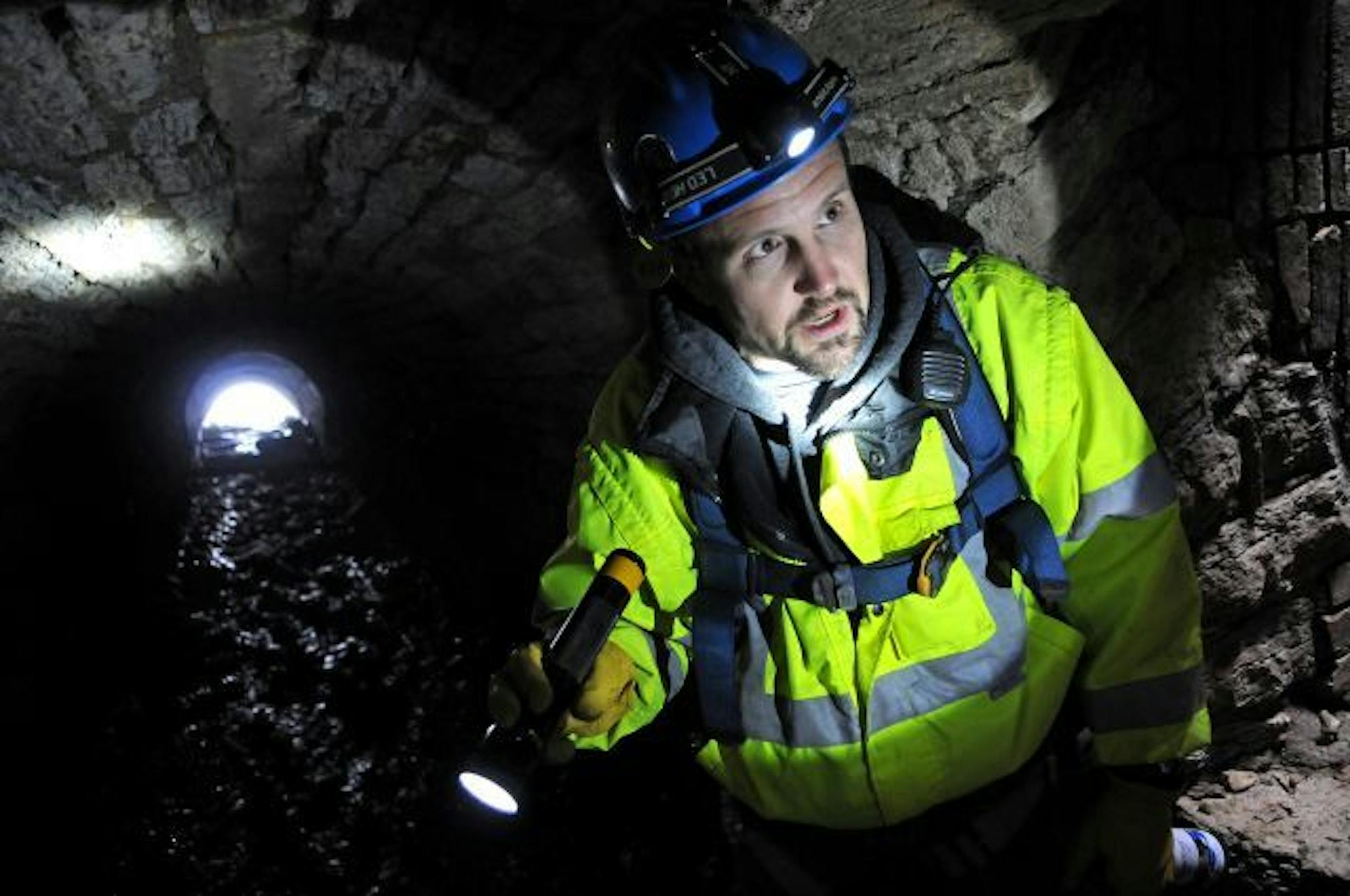
For a 128-year-old, the 10th Avenue storm tunnel outlet is in pretty fair shape.
The tan and red bricks that line its floor are polished by more than a century of rain and melting snow as it drains into the Mississippi River near the University of Minnesota. Its horseshoe-arched concrete ceiling is more than a foot thick.
But it was built for an era when more rain soaked through unpaved streets and yards. Urbanization means more water rushes into the catch basins that feed the tunnel. It just wasn't built for that kind of pressure.
The $3.5 million or so that the city's been spending annually to repair tunnels like this one isn't doing the job, according to an updated assessment. So the City Council is poised to double what it had planned to spend on repairs to the 14.7-mile tunnel system in 2011-2015. The money will come from added borrowing and storm water fees assessed to homeowners.
On Friday, the council authorized a down payment on that job, upping its 2010 storm tunnel repair budget by $5.2 million. Starting later this month, the 1882 outlet to the 10th Avenue tunnel will be widened, as the first project in that work. More repairs will be made as funding accelerates.
This oldest 462-foot section of a mile-long tunnel is a bottleneck for bigger, newer sections upstream. So when water roars through after a rain, the constriction means that bigger sections built in the 1930s undergo hydraulic pressure that can crack their unreinforced concrete and even blow-out sections.
Deep beneath our feet
Kevin Danen, an engineer who heads city sanitary and storm sewer construction and maintenance, knows the storm tunnels intimately.

