

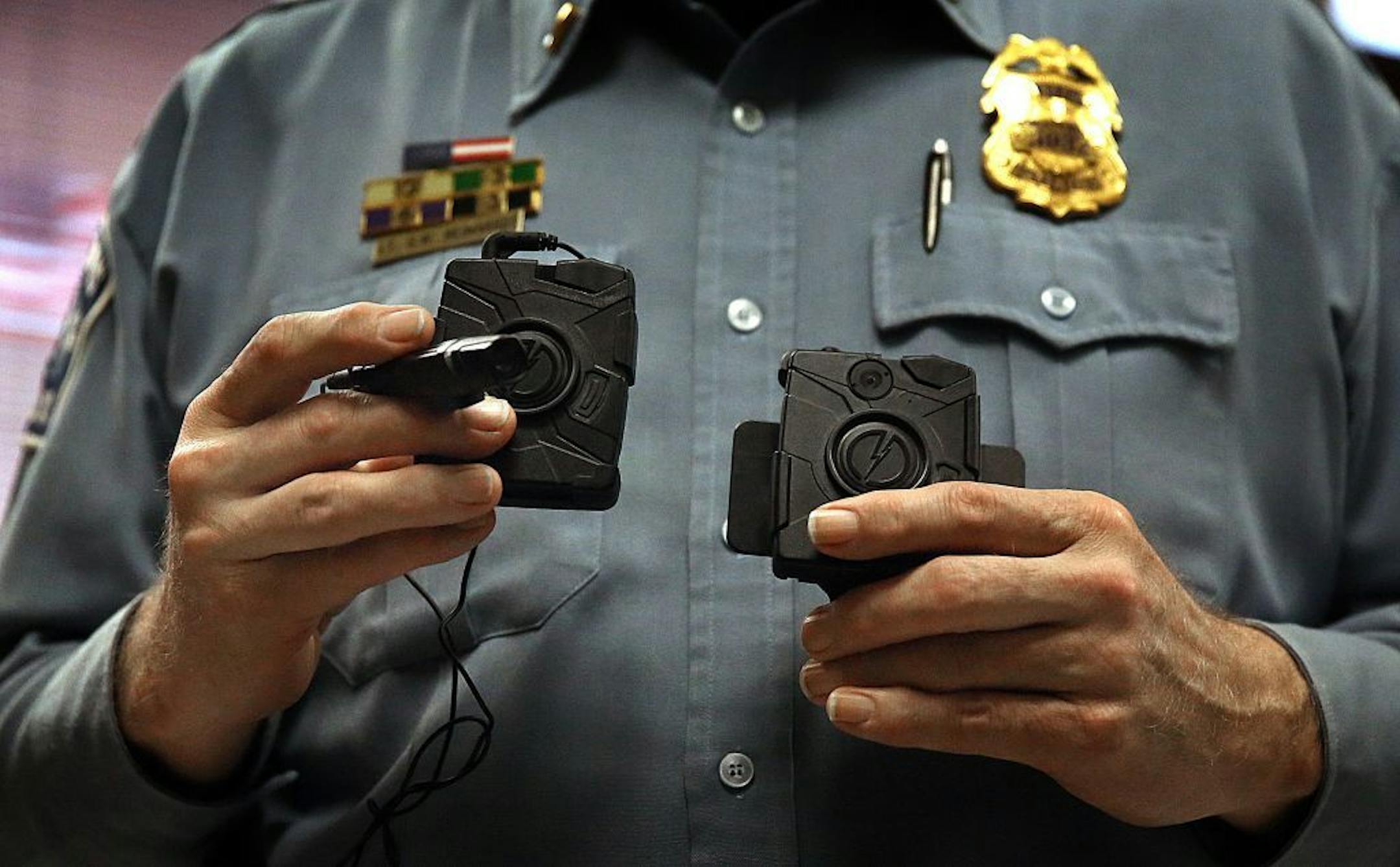
One month before the Minneapolis Police Department plans to begin outfitting its officers with body cameras, City Council members are urging police officials to ensure that their policy for the cameras is transparent and stringent enough to earn the community's trust.
Police officials updated the council's public safety committee Wednesday on the feedback they received in a half-dozen listening sessions over the last month. Those sessions, held around the city, attracted about 240 participants looking to comment on a draft policy unveiled by police in March. That policy was released days after the council approved a $4 million, five-year contract to purchase 587 body cameras and store the footage they provide.
Chief among community members' concerns: when the cameras would need to be turned on (some wanted officers to activate the cameras for the full length of a shift), whether officers would be allowed to view camera footage before writing an incident report and how officers would be held accountable for complying with rules around body cameras.
Deputy Chief Medaria Arradondo said it was too early to say how those issues would be addressed. He said Chief Janeé Harteau and others are reviewing the comments and will report back to the community with any changes. It's not clear when the update will be released.
In the meantime, council members said that they are taking the community feedback seriously and that they hope the police will, as well. Council Member Blong Yang, chairman of the public safety committee, said officials frequently talk about body cameras as a demonstration of how the city and the department value accountability and transparency. But he's not convinced the draft of the policy meets those goals.
"When I look at the policy, it leaves a lot to be desired," he said. "I feel like the policy is very defensive, and not open in terms of how we want to approach the community and build trust."
Deluge of requests
Others repeated concerns about a lack of clarity on who will be able to request the footage and if the city is prepared to handle a deluge of additional — and time-consuming — data requests. In February, department officials said the 11-person office handling requests for police reports and other information has seen its workload grow by 400 percent over the last few years. Between 2014 and 2015, the number of requests increased from between 70,000 and 80,000 to approximately 150,000, and each week the office falls another 100 hours' worth of work behind.
Minneapolis officials have been waiting to see if state lawmakers would come up with a statewide policy governing privacy and public availability of body camera footage, but so far those discussions have stalled.


