
Minneapolis clamps down on weekend crime

City Council action is intended to calm the late-night violence in Minneapolis' club district.

July 20, 2012 at 2:55AM
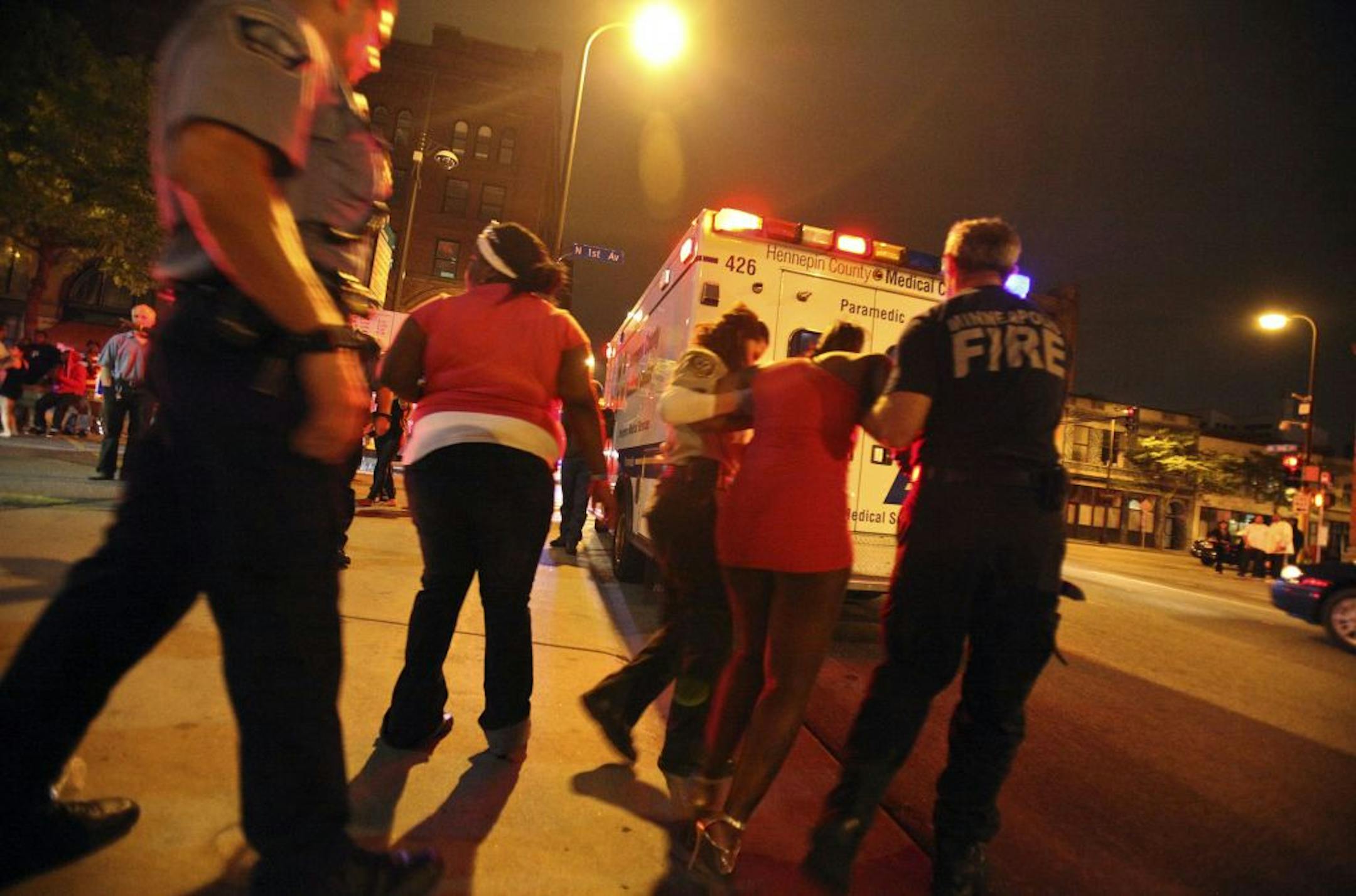
Ambulances are a too-frequent sight around bar closing time in downtown Minneapolis. The council pushed several clubs to end under-21 events on Sundays.
Ambulances are a too-frequent sight around bar closing time in downtown Minneapolis. The council pushed several clubs to end under-21 events on Sundays. (Star Tribune/The Minnesota Star Tribune)

The Sunday night parties are over for teenagers in downtown Minneapolis, city leaders announced Thursday, one tactic in a multifaceted strike against late-night street violence in clubland.

On one front, the city has pushed several clubs to stop hosting under-21 events on Sundays and beef up security. Simultaneously, Mayor R.T. Rybak and City Council members are devising new ordinances to give the city more power to place conditions on liquor licenses.

Crime in the Warehouse District has gotten the attention of City Hall this summer after a number of shootings near downtown clubs at closing time. Events open to patrons under 21 on Sunday nights appear to be incubators for late-night violence when people spill out onto the streets at 2 a.m.

"There is too much stuff going on downtown that is beyond what we believe is acceptable," Rybak said Thursday. "So we're taking some very tough action."

The verbal agreements with several clubs -- which the mayor declined to identify -- include the following stipulations: Stop hosting under-21 events on Sunday nights until at least Sept. 12. Use tougher wristbands to identify young people at under-21 events. Employ uniformed security and off-duty police officers. Conduct background checks on all staff members.

Council Member Don Samuels said the agreements target a "small cohort of club owners that are not operating their businesses ... responsibly enough."

The council will be officially informed Friday about proposed ordinances to give city licensing staff more tools to put conditions on both liquor licenses and non-liquor establishments, said Council President Barb Johnson. The exact language, which will eventually get a hearing and council vote, was not available Thursday.

"Businesses that do not follow the conditions of their license will risk losing them," Johnson said.
Grant Wilson, the city's head of business licensing, said the new rules would allow the City Council to mandate conditions on licenses, rather than merely reach agreements with the business owners and license holders.

"We are going to be using these ordinances as ways to target our efforts," said Council Member Elizabeth Glidden, who is authoring the proposal. "We are going to be able to -- on more of a case-by-case basis -- provide unique restrictions that are targeted to the problems at some of these businesses. And we mean business."

The moves come during a bad year for violent crime downtown, particularly in the area surrounding 4th Street and 1st Avenue N.

Violent crime has risen 58 percent this year in downtown Minneapolis. A city statement said Thursday that 80 percent of the violent crimes downtown occur between 10 p.m. and 4 a.m., largely on Saturdays and Sundays.

The Police Department has responded with beefed-up patrols, officers on horseback and extra help from the Hennepin County Sheriff's Office.

"When these crimes are occurring, we're being very aggressive to make sure that we maintain that diligent pursuit of those individuals that are downtown with nefarious intents," said First Precinct Inspector Eddie Frizell, adding that "we will prevail."

One of the bloodier incidents occurred after bars closed June 25, after a Sunday night of revelry. A 2 a.m. shooting near the Gay 90's nightclub sent three bystanders to the hospital with gunshot wounds.

City officials said last month that they were also discussing staggered or later closing times to alleviate the rush after bar closing. Rybak indicated Thursday that they were still examining those options.

Staff writer Paul Walsh contributed to this report. Eric Roper • 612-673-1732 Twitter: @StribRoper

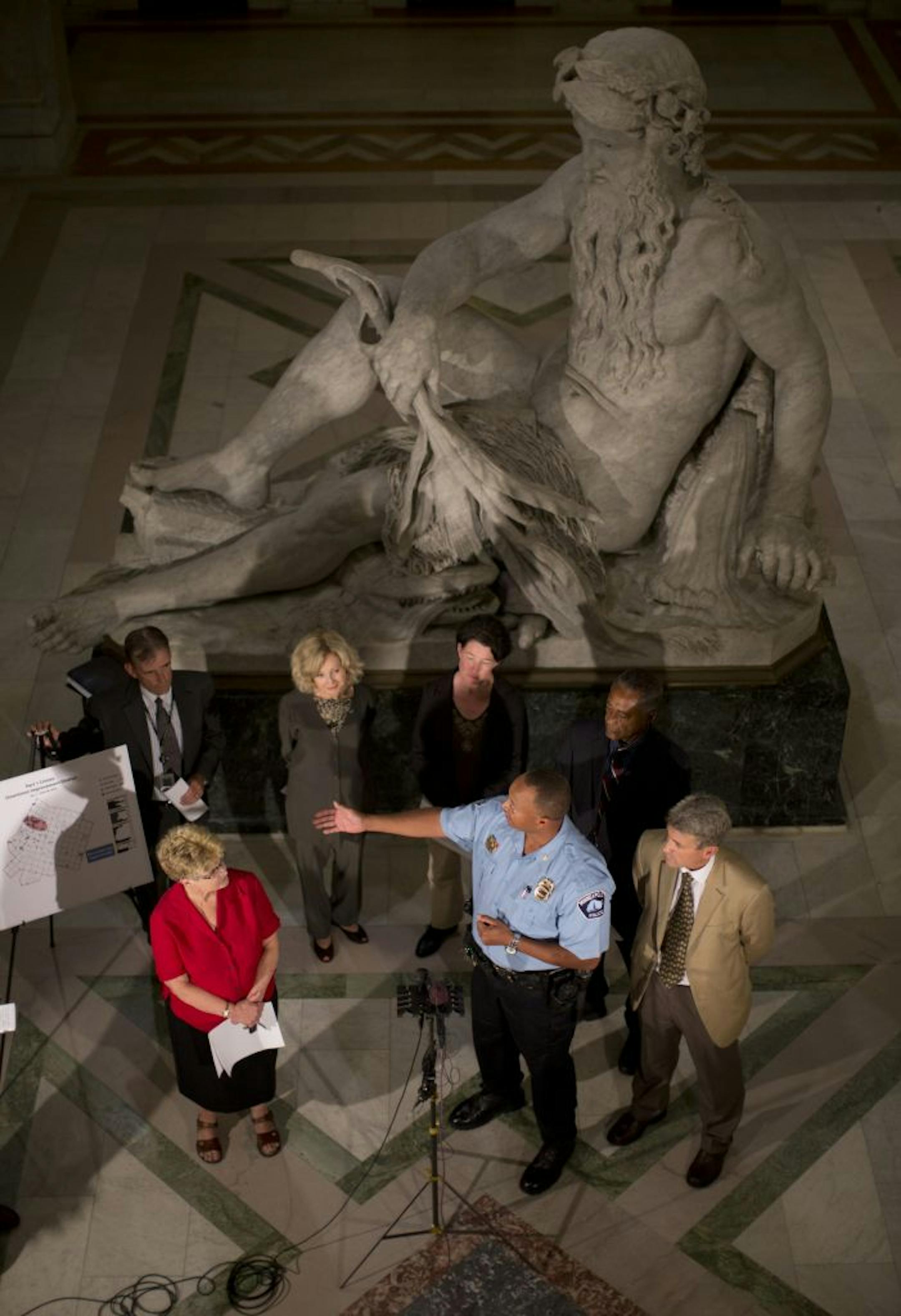
With city officials surrounding him at City Hall Thursday, First Precinct Inspector Eddie Frizell spoke about new ordinances as Mayor R.T. Rybak, right, and City Council President Barb Johnson, left, listened.
With city officials surrounding him at City Hall Thursday, First Precinct Inspector Eddie Frizell spoke about new ordinances as Mayor R.T. Rybak, right, and City Council President Barb Johnson, left, listened. (Star Tribune/The Minnesota Star Tribune)
about the writers

about the writers

Paul Walsh

Reporter

Paul Walsh is a general assignment reporter at the Minnesota Star Tribune. He wants your news tips, especially in and near Minnesota.

See Moreicon

Eric Roper

Curious Minnesota Editor

Eric Roper oversees Curious Minnesota, the Minnesota Star Tribune's community reporting project fueled by great reader questions. He also hosts the Curious Minnesota podcast.

See Moreicon

More from No Section

See More
FILE -- A rent deposit slot at an apartment complex in Tucker, Ga., on July 21, 2020. As an eviction crisis has seemed increasingly likely this summer, everyone in the housing market has made the same plea to Washington: Send money — lots of it — that would keep renters in their homes and landlords afloat. (Melissa Golden/The New York Times) ORG XMIT: XNYT58
Melissa Golden/The New York Times

It’s too soon to tell how much the immigration crackdown is to blame.