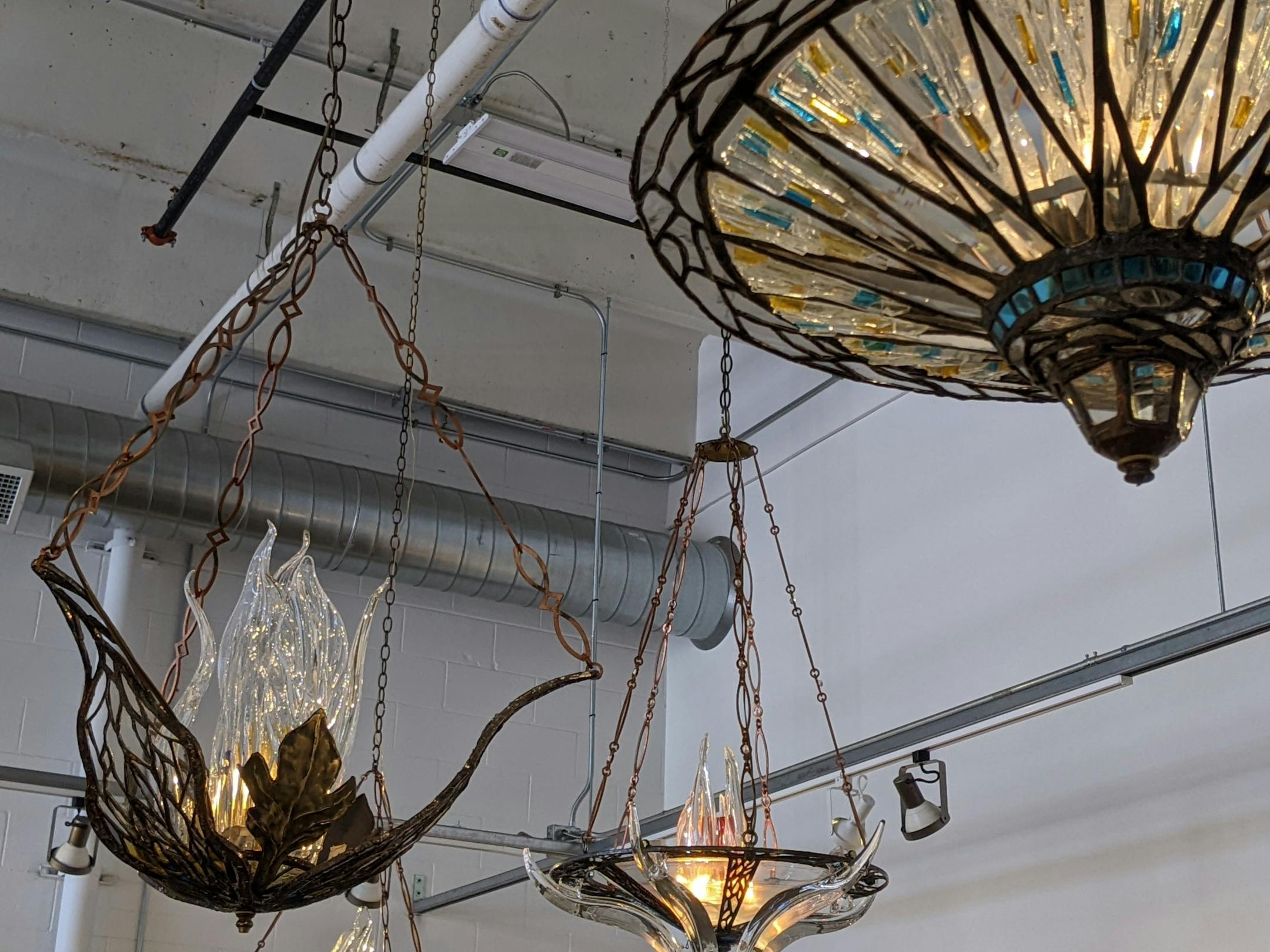
Eternal lights — their shine refracting in pieces of fused glass, beautiful blown flames and intricate stained glass — fill the main gallery at Foci Minnesota Center for Glass Arts.
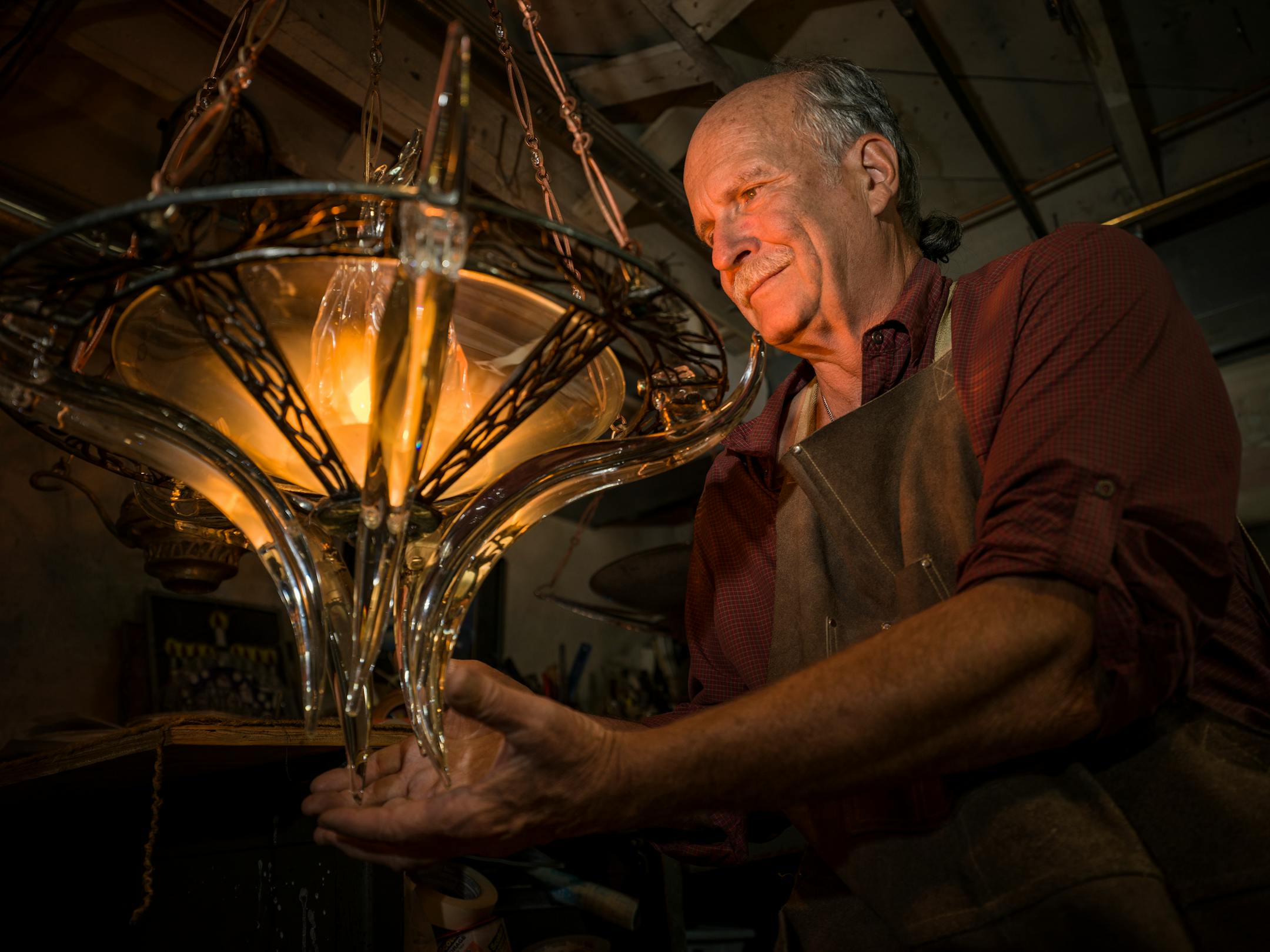
They are the work of Minneapolis artist Claude Riedel, who specializes in creating the ner tamid, or eternal light, that hangs above a synagogue's ark.
The lights he creates in collaboration with glass blowers and metal and bronze workers shine in more than 175 congregations around the world, including in several Twin Cities synagogues. Now his lights are shining in the show, "From Darkness Into Light: Claude Riedel and the Art of the Ner Tamid," which runs through March 27.
The show includes nearly a dozen of Riedel's lights, clips from AMC's "Fear the Walking Dead" (which features one of Riedel's lights for an episode about a zombie-fighting rabbi) and photos of the strikingly beautiful ner tamid he created for a St. Louis Park family using pieces of barbed wire from a Holocaust camp.
We talked with Riedel, who is also a psychologist, about how his artwork became known internationally ("My wife likes to say I'm on five continents," he said), its roots in his family history and how he recently decided to collect his life's work into a book. The conversation has been edited for space and clarity.
Q: Can you describe the importance of a ner tamid?
A: The ner tamid is the light that represents the eternal light, or the presence of God, that hangs over the front of every synagogue. ... The ner tamid is one of the most emotionally evocative or laden pieces of ceremonial art in the synagogue because often people have donated money in memory of someone for the previous ner tamid or for the current one. The passing of the torch, so to speak, is often challenging, and interesting and a very sensitive issue. You want to be respectful to the past while also moving in the new.
Q: How do you begin the work?