

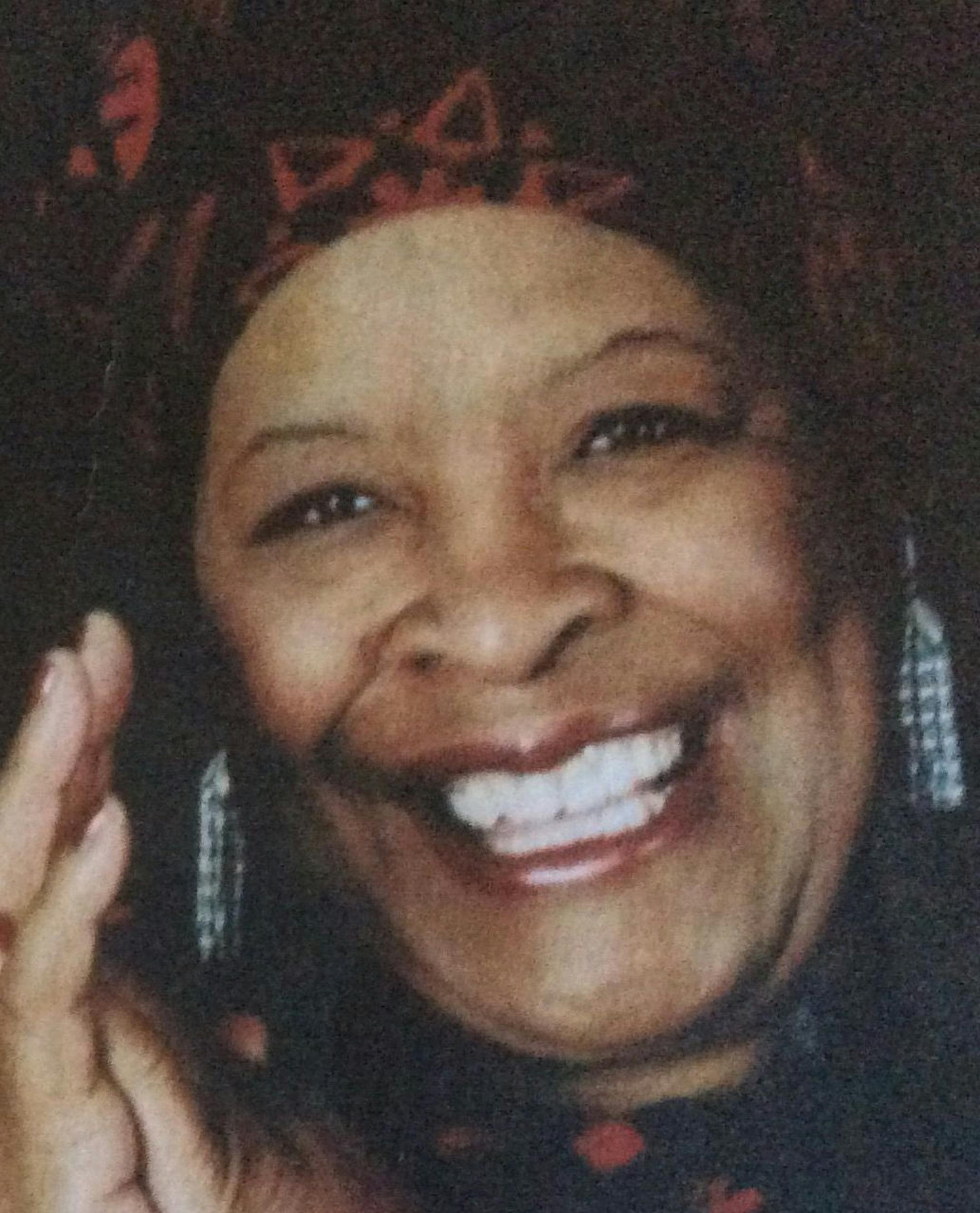
Growing up in South Carolina, the fifth of 13 children, Rosa Mavins Bogar taught herself how to sew. After lights out, "she would finish an outfit by moonlight, to wear the next day," recalled her sister Betty Moseley, of Minneapolis. "She could make an outfit a night. She was a sharp dresser."
Bogar made her own clothes by hand, without patterns, as well as clothes for her six sisters, with whom she shared a single bed. "We were poor but rich in love and happiness," said Moseley.
After graduating from a segregated high school in South Carolina, Bogar moved to New York, where she met and married boxer Leroy Bogar and moved to his hometown of Minneapolis in 1966.
In the Twin Cities, she honed her distinctive clothing style, favoring bold African patterns and head wraps. "She had a saying, 'Wrap your head in knowledge' … the knowledge of our ancestors," Moseley said.
In 1981, Bogar took part in a black fashion show in Minneapolis and was named top designer. That led to a chance to display her designs in the window of a downtown department store and participate in other, bigger shows. She also made pageant gowns for Miss Black Minnesota contestants. In 2012, Bogar produced a reunion show, "Black Fashion in the Twin Cities: 1970s through 1990s." "You know the saying, 'I'm black and I'm proud.' The clothes showed that," she told the Star Tribune.
Bogar worked to instill that pride in her students as a longtime education assistant in the Minneapolis Public Schools. "She was really passionate about the kids — even after she got out of teaching," said her son Gregory Agnew. "She was always talking to kids and trying to educate them about history."
At Richard R. Green Central Park Elementary School, Bogar inaugurated the Green Tree awards to recognize students who demonstrated positive leadership skills, said teacher and friend Tonyus Chavers. "She was good friends with Dr. Green [Minneapolis' first black superintendent] … and she did a lot of things to keep his legacy alive." Long after Bogar retired, she continued to return to the school for the annual award and to update the plaque with that year's winner. She also had a purple plaque made to honor Prince, who attended the former Central High School, where the elementary school now sits. "I think he should be an inspiration to the children there today," Bogar said when the plaque was installed in 2016 on the late musician's birthday.
Bogar died Sept. 2 at age 77 after an illness. Right up until her death, she was at work on "The Ancestral Wrap Project," a curriculum and board game she was developing to teach African-American youth about their roots.


