3:19
3:19The partisan political battle over gay marriage and photo ID amendments developed into a full-fledged constitutional dispute at the Minnesota Supreme Court on Tuesday, with both the Republican-controlled Legislature and the DFL-controlled executive branch claiming the right to determine how the proposals will be described on the ballot.
The court vigorously questioned both sides on the issue of who should write the bold-faced titles of both the photo ID and the marriage amendments. No decisions were made, but two of the six justices asked whether the best bet might be to put the entire text of the proposed constitutional amendments on the ballot, rather than present them in a form favored by either side.
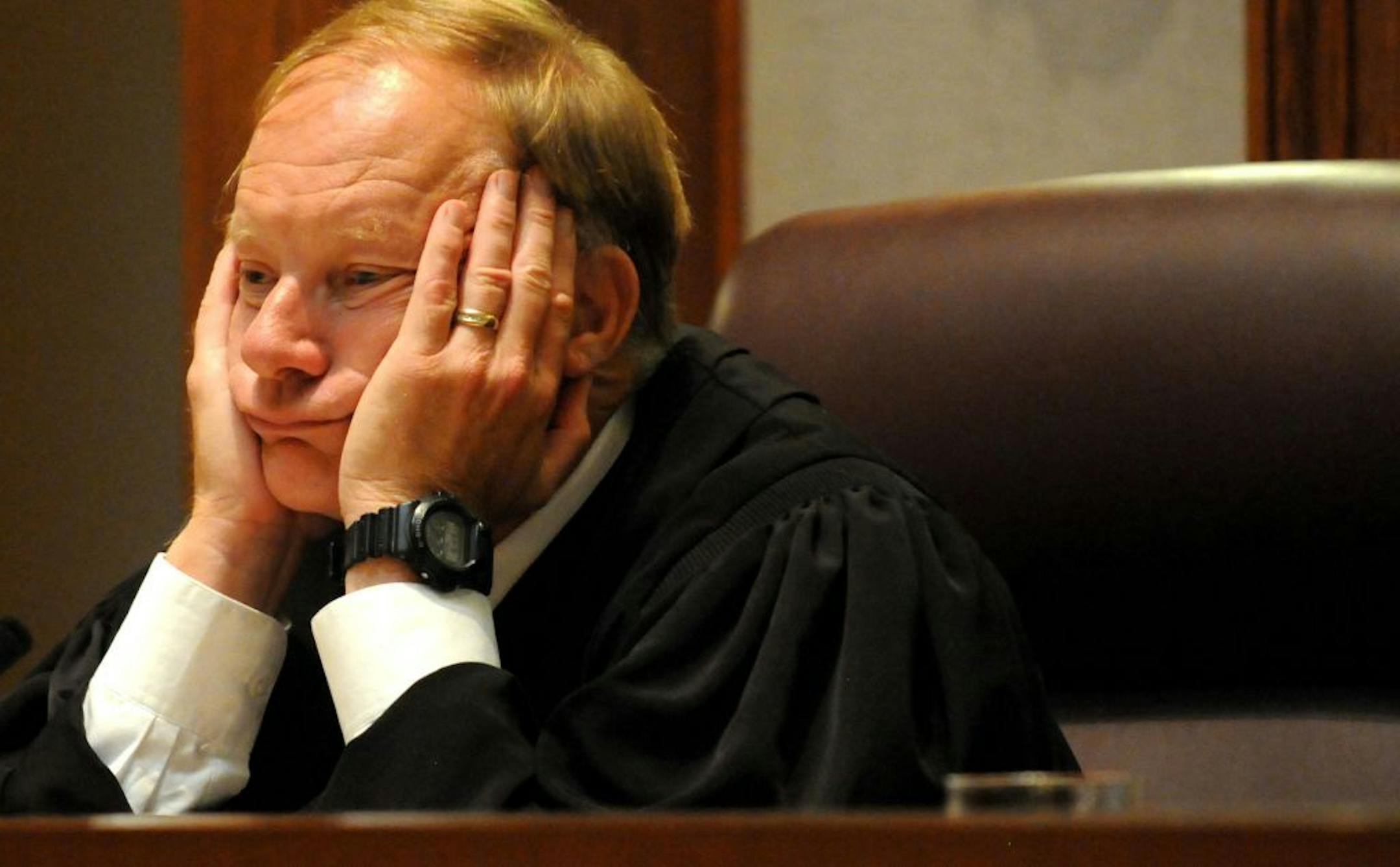
"It's odd to me that we can submit a question that kind of disappears into hyperspace after the vote," said Justice Paul Anderson during oral arguments on the title issue. "And there's an amendment that becomes part of the constitution that's never put before the people."
Justice G. Barry Anderson, meanwhile, expressed concern that constitutional wars between the two branches will become a regular feature. He worried out loud that "in most general election years, we're going to have a separation of powers argument every summer."
The court was asked by GOP legislators to restore the title language that the lawmakers selected for the two proposed constitutional amendments, which voters will consider on Nov. 6.
The justices also had been asked to decide a dispute over the photo ID ballot question; both decisions are expected this month. Justice Helen Meyer, who is retiring soon, did not participate in Tuesday's deliberations.
In approving the marriage amendment for the fall ballot, the Legislature titled it: "Recognition of marriage solely between one man and one woman." Secretary of State Mark Ritchie, citing a statute that charges his office with writing amendment titles, changed it to: "Limiting the status of marriage to opposite sex couples."
Similarly, the Legislature titled the voting amendment, "Photo identification required for voting." Ritchie's choice: "Changes to in-person & absentee voting & voter registration; provisional ballots."