

With just two weeks before the Legislature is scheduled to adjourn, the terms of the fiscal debate have been set, and the DFL-controlled Senate and Republican-controlled House could hardly be farther apart.
The Senate passed a $460 million tax bill Monday by 42-25, a mostly party-line vote, that would provide property tax relief, tax credits to businesses hiring veterans, and aid to local governments over the next two years.
That is far different from the House tax bill passed last week, which cuts taxes by $2 billion on individual income tax filers, property-owning businesses, Social Security recipients, military retirees, farmers and a range of other recipients.
The two parties are divided on how to use the state's projected $1.9 billion surplus, with Republicans pushing to return the extra money to taxpayers while Democrats want to spend the money on education, health care and other priorities they say will benefit the state.
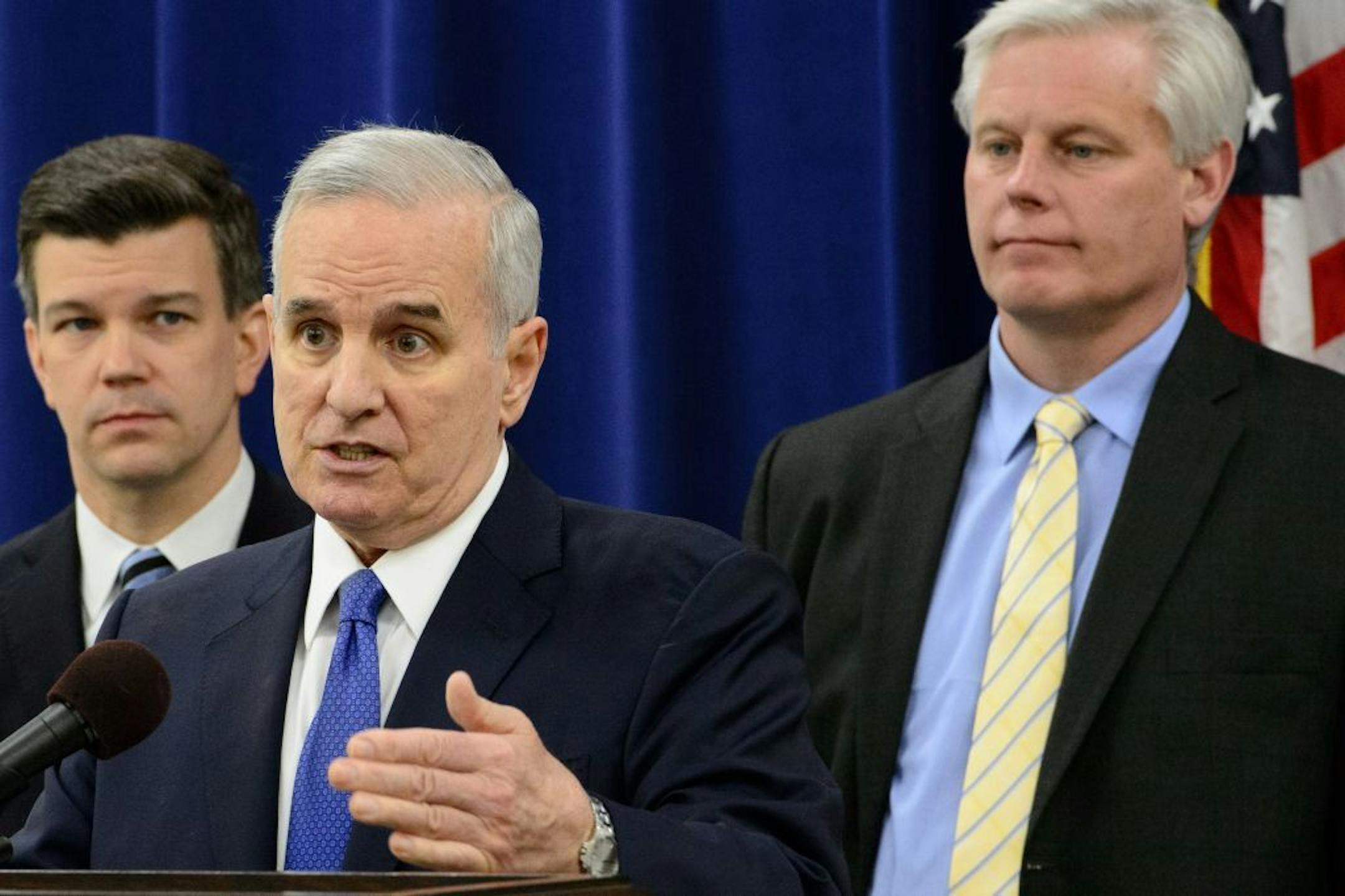
At a Monday news conference, DFL Gov. Mark Dayton again castigated the House Republican plan for favoring wealthy interests: "I wish Minnesotans understood what was going on here and what the House tax bill really does," he said. "What they've allocated for middle income is two years, $250 for an average family. And then they're going to turn around and give estate tax exemptions to millionaires and billionaires, turn around and give property tax relief to businesses."
Sen. Julianne Ortman, R-Chanhassen, said the upper chamber tax bill passed Monday was a disappointment because it didn't give enough tax cuts: "We have more revenue here at the Capitol than we can justify. This bill doesn't do anything to relieve the tax burden of Minnesota or make Minnesota more competitive in its business or tax climate," she said.
In floor speeches, Republicans sought to link the modest relief of the tax bill to the Senate transportation bill passed last week that would institute a gas tax at the wholesale level to raise about $11 billion in new money for roads, bridges and transit, charging that the two bills taken together add up to a net tax increase.
The House Republican transportation plan would spend $7 billion without raising taxes by moving money from the general fund into dedicated road building funds. Democrats say once the economy hits another recession and tough budget times return, future Legislatures would quickly grab the money back for schools and other priorities.


