

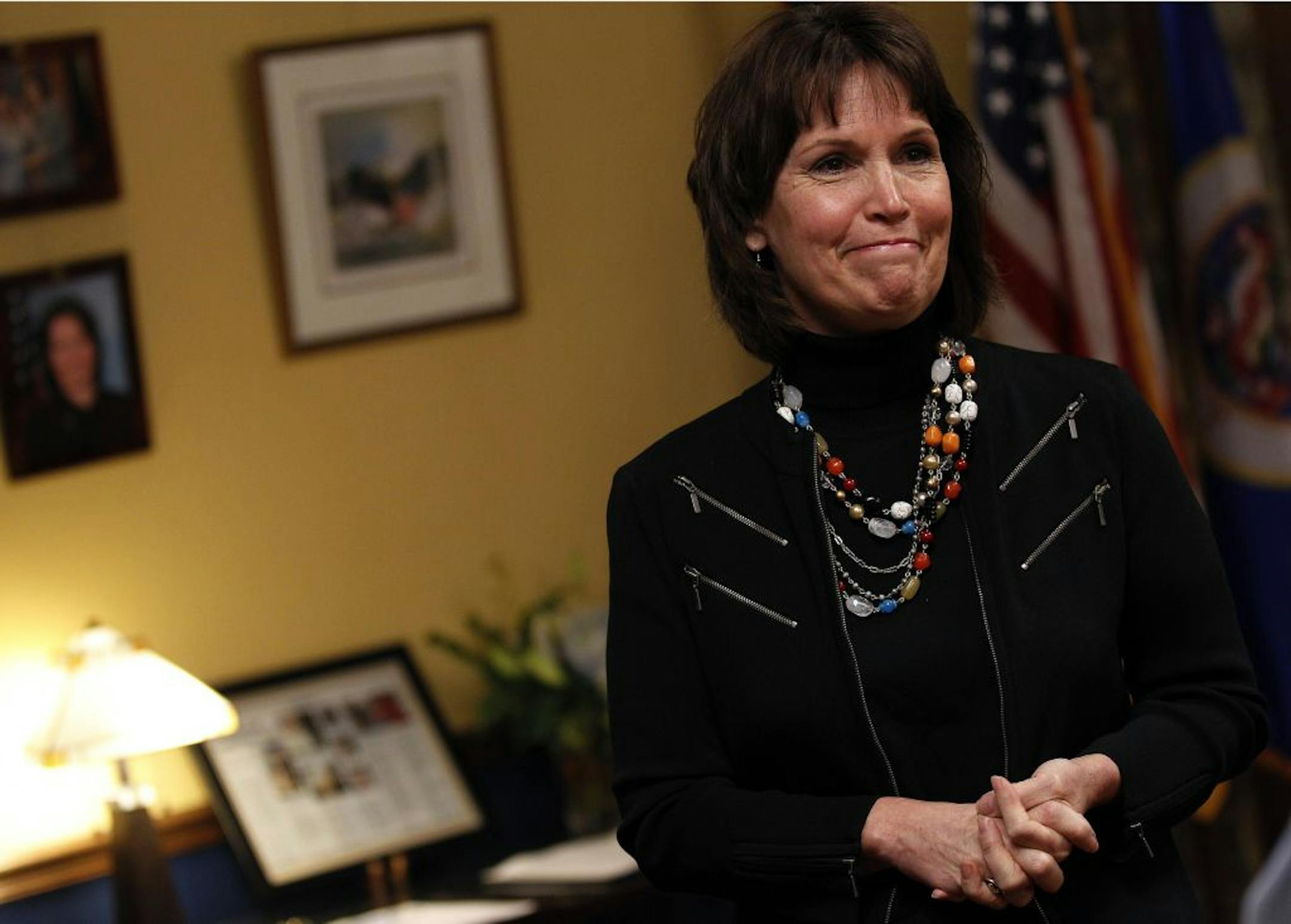
WASHINGTON – Rep. Betty McCollum was irritated that the armed forces were pouring tens of millions of dollars into recruitment campaigns featuring NASCAR sponsorships.
In 2012 alone, the National Guard spent $26.5 million on Dale Earnhardt's race car. The return on investment? Zero new recruits.
McCollum, an understated lawmaker who got her political start on the North St. Paul City Council, was in a position to do something about it. One of the highest-ranking Democrats on the defense appropriations subcommittee, she found a Georgia Republican who agreed with her, and the two joined to push a ban on military expenditures of sponsorships.
Her proposal was defeated in both 2011 and 2012, but this month the issue was at the forefront again when Democrats and Republicans in the Senate rebuked the Guard for futile spending of taxpayer dollars on sports sponsorships.
McCollum said she felt vindicated. "Some days I'm a little disappointed that it didn't go my way, or that I couldn't bring enough others along with me," she said in an interview from her Capitol Hill office. "You keep working on it. … It takes a lot of time but eventually the lights go on and people see the value in it. Or you move on to the next project."
McCollum has kept a low profile since arriving in Washington in 2001, but she has quietly emerged as one of the most powerful Democrats on one of the most powerful committees in the House of Representatives. Next year, she will be the No. 1 Democrat on the Interior appropriations subcommittee and No. 2 on defense.
On paper, her job can seem a drag. McCollum is in the minority party in one of the most polarized Congresses in memory. The last several budget cycles have seen politicians cutting more than spending — particularly given the mandatory cuts imposed by the Budget Control Act of 2011.
"You're in the minority, [and dealing with] a minority of the budget where decisions are made by Republican leadership," said Stan Collender, a lobbyist and a former staffer for both the House and Senate budget committees. "You've got a Congress that's not doing much more than naming a post office. It's hard to say anyone has a lot of power."


