

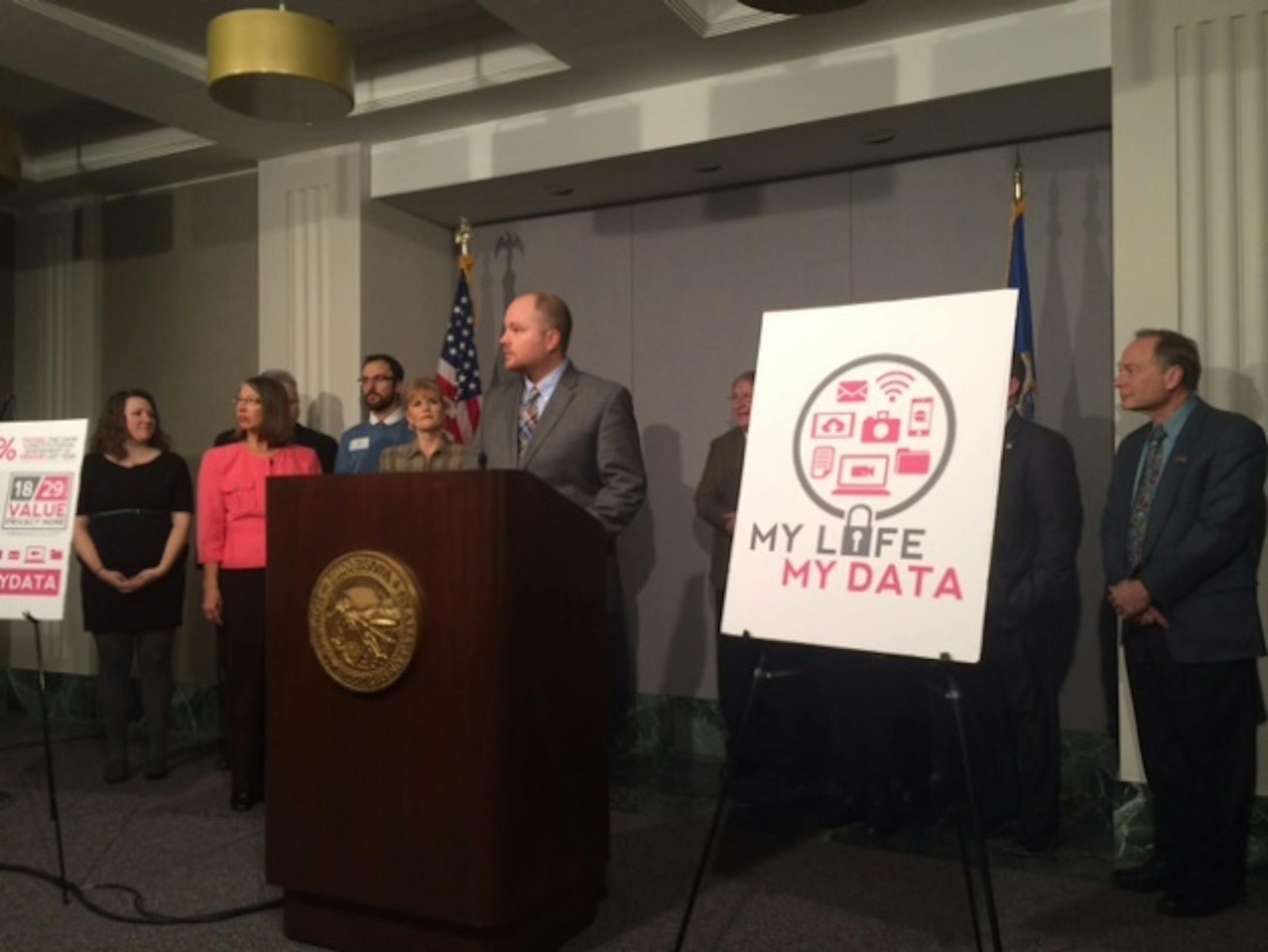
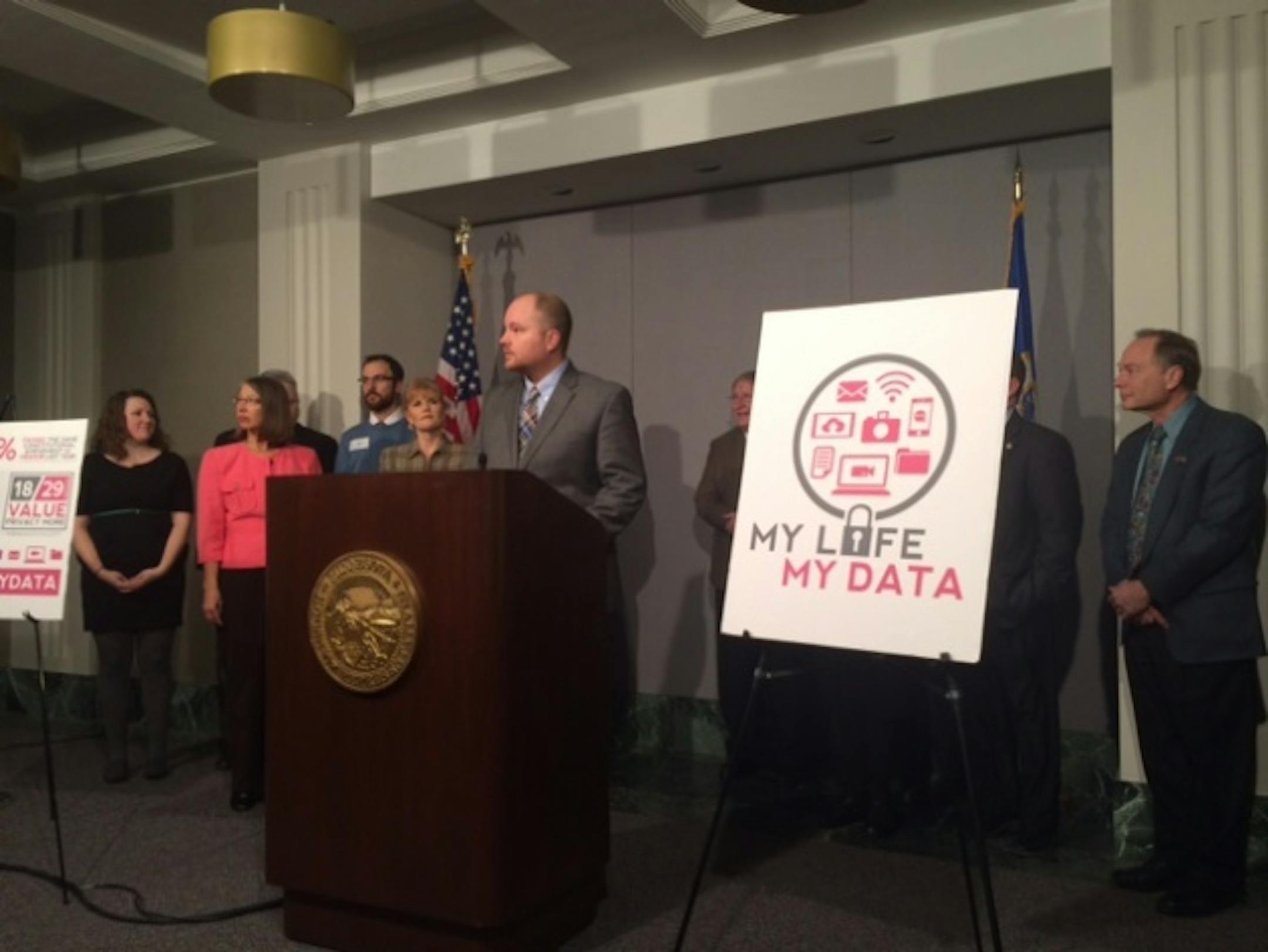
A bipartisan coalition of lawmakers, accompanied by a wide coalition of data privacy advocates, are leading to the charge to amend the Minnesota Constitution to protect electronic data from warrantless searches.
The "My Life, My Data" movement would make Minnesota the second state to amend its constitution by adding the words "electronic communications and data" to Section 10 of the document, which guarantees "The right of the people to be secure in their persons, houses, papers and effects against unreasonable searches and seizures." If approved, the amendment would be placed on the 2016 November election ballot. A similar measure passed in Missouri last year with 75 percent of voter support.
Sen. Branden Petersen, R-Andover, is lead author of the Senate bill, with co-authors including Sens. Scott Dibble, DFL-Minneapolis, and John Marty, DFL-Roseville. A house version sponsored by Rep. Peggy Scott, R-Andover, is co-authored by Rep. John Lesch, DFL-St. Paul. The measure would protect bank records, text messages, emails and other data--a move they say is updating the constitution to reflect its original intents when it comes to warrantless searches.
Dibble, who chairs the Transportation and Public Safety Committee, said he signed on because of the ever-blurring line between what is public and private information.
"This is a set of values that unite all of us across our different party affiliations and ideologies," he said. "I think a central unifying premise of our system of government is we only need as much government as necessary."
Activists to support data privacy say the broad support is indicative of the necessity of the amendment.
"It's not about party politics, it's not about egos," said Karl Eggers of Liberty Minnesota, a conservative/libertarian grassroots group. "It's about protecting the U.S. Constitution.
Eggers was among a number of privacy advocates inattendance, including representatives of the American Civil Liberties Union, Tea Party Minnesota, Occupy Minnesota and others.


