

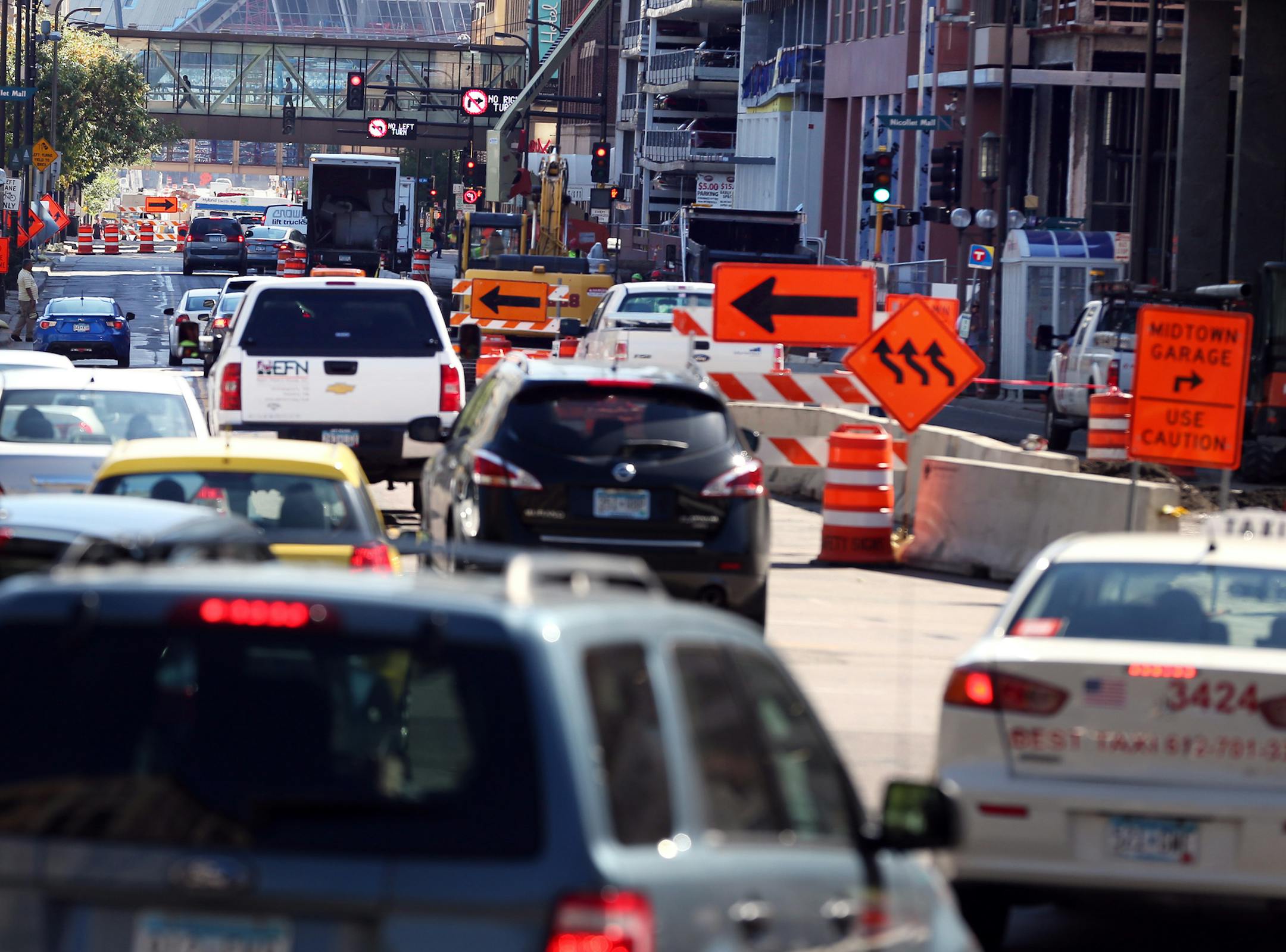
Minnesota cities are hitting the spending pedal after years of recessionary caution, a new report shows.
Among the bigger municipalities, capital spending — expenditures on long-term assets such as buildings, roads, parks and the like — leapt in 2014 by $200 million, to $1.2 billion, after remaining level for several years, according to the state auditor's latest update on local finance.
"A lot of infrastructure is aging and in need of repair and maintenance, and that is a big driving force," said Gary Carlson, director of intergovernmental relations for the League of Minnesota Cities.
Spending on amenities such as parks and libraries also rose, according to the report.
For example, from 2010 to 2014, annual capital spending for libraries rose from $6.7 million to $16.6 million. Much of the big-ticket spending happened through county library systems in the metro area.
The report, written and compiled by a team of 10 state staffers, contained other significant findings:
• Cities are still taking in less money than they were a decade ago. "When adjusted for inflation, 2014 revenue levels are below 2005 levels and decreased by 6.9 percent over that period of time," said the report.
• Cities are getting less help from the federal government and other grantmakers than they once did, and are leaning harder on property taxes for revenue. Adjusted for inflation, taxes rose 21 percent over the decade, while intergovernmental transfer payments dropped by 19 percent.


