
Mini reviews of 'Carmine Street Guitars,' 'The Biggest Little Farm' and 'Shadow'

May 16, 2019 at 8:40PM
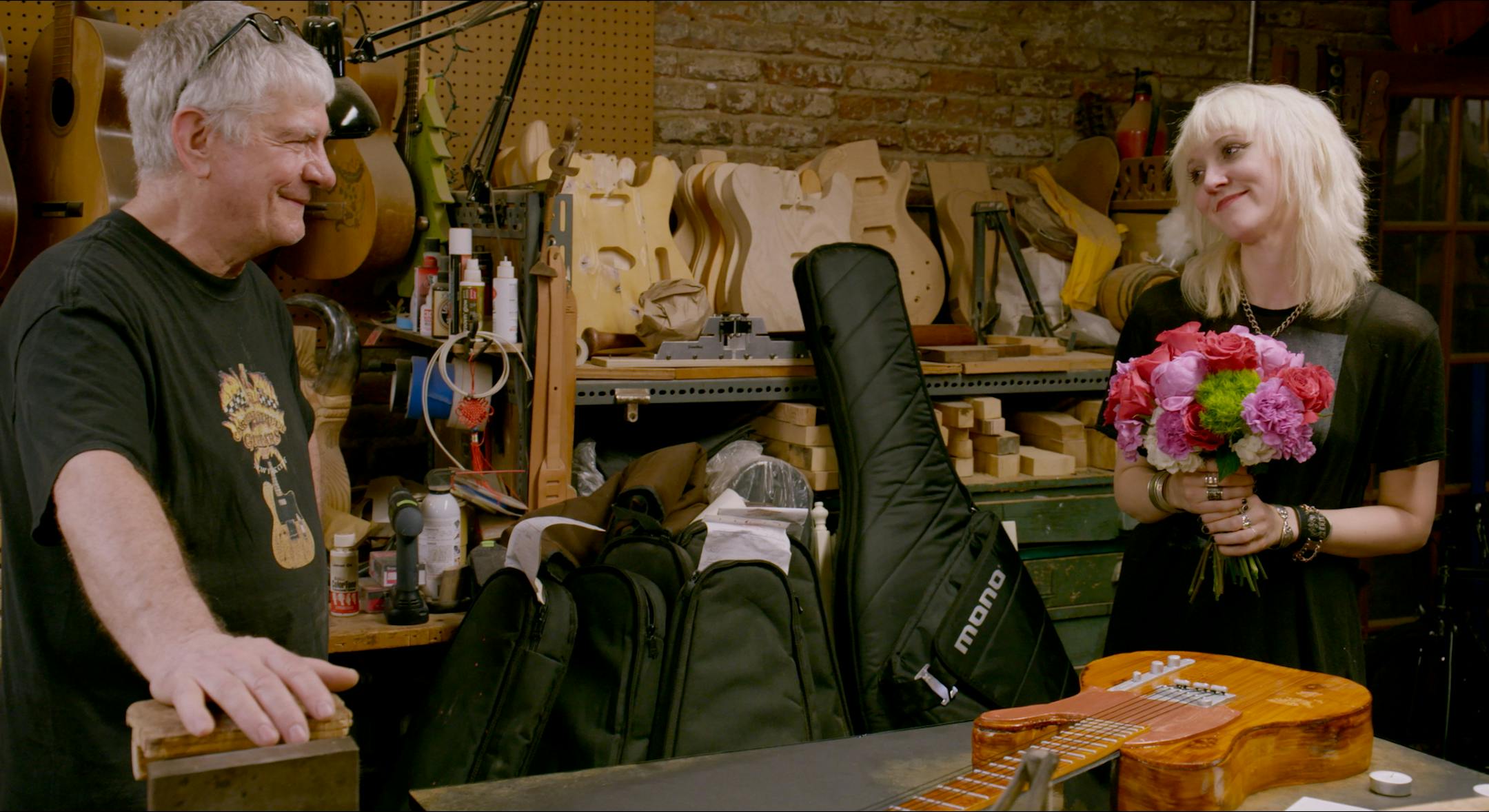
Rick Kelly and Cindy Hulej in "Carmine Street Guitars."
Rick Kelly and Cindy Hulej in “Carmine Street Guitars.” Sphinx Productions (The Minnesota Star Tribune)

Carmine Street Guitars

⋆⋆⋆½ out of four stars

Not rated

Theater: Lagoon

Composed with the same evident affection for the subjects covered in "Comic Book Confidential" and "Poetry in Motion," Ron Mann's latest is a leisurely Sunday stroll of a documentary about the cozy Greenwich Village mainstay in New York City that has served as a sanctuary for musicians.

Since starting his business in the late 1970s, proprietor Rick Kelly (whose mom, Dorothy, still handles bookkeeping and dusting duties) has earned a loyal following for hand-crafting guitars made from reclaimed wood salvaged from many of the city's centuries-old landmarks.

While sculpting a hunk of timber provided by McSorley's Old Ale House (established 1854) into a one-of-a-kind piece of playable art, he greets steady customers, including director Jim Jarmusch, musicians Bill Frisell, Bob Dylan and Patti Smith; guitarists Charlie Sexton and Lenny Kaye, and the Roots' Kirk Douglas. Several of his visitors serenade Kelly on his creations.

Equally charming is Kelly's easy rapport with apprentice Cindy Hulej, no slouch herself when it comes to her wood-etching talents. She's sort of Cyndi Lauper to his Captain Kangaroo.

As the changing neighborhood's developers sniff at his heels, Kelly resolutely holds his ground, as does Mann, who allows this folksy slice of life to unfold unhurriedly, presenting Carmine Street Guitars — the shop and the film — as a warmly nostalgic nod to the Village's funky bohemian past.
MICHAEL RECHTSHAFFEN, Los Angeles Times

The Biggest Little Farm

⋆⋆⋆ out of four stars

Rated: PG

Theater: Uptown

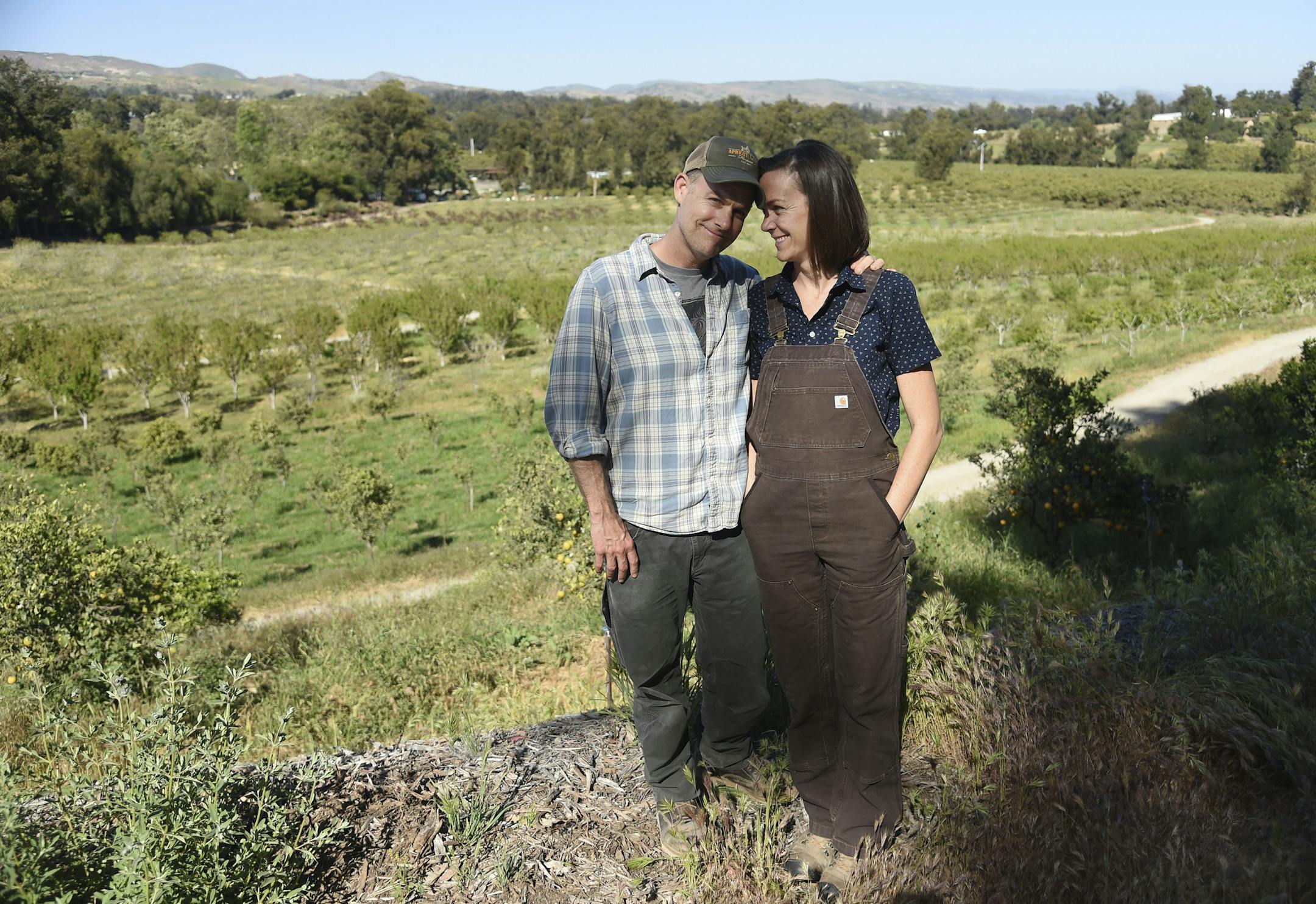
Emmy-winning cinematographer John Chester thought he was leaving show business behind when he and his wife, Molly, decided to quit Los Angeles and buy a 200-acre farm. The fact that they knew virtually nothing about farming didn't dissuade them from vowing to run the farm in an old-school, anti-corporate-agriculture style.

But it turned out that Chester couldn't entirely kick his filming bug, and he starting amassing footage of their struggles — mostly unsuccessful at first. The result was this documentary. It sounds a bit like the old TV sitcom "Green Acres" — and, like that show, even involves a pet pig — but revives your wonder at the weird but ultimately awe-inspiring ways in which humans can help nature do its work.

Nature gives and takes away and gives again as the Chesters work the land. Advised by a farm guru, Alan York, to embrace biodiversity, the couple stock the farm with all forms of animal life. There's enough organic waste (it's good for the soil) to fill a couple of Troma movies — and sufficient animal blood and guts for an Italian cannibal picture.

As depicted in the movie, the Chesters' inexperience at the outset seems close to naiveté. It's a little implausible, but it gives the movie a lot of narrative juice.

Glenn Kenny, New York Times

Shadow

⋆⋆½ out of four stars

Not rated: Contains action and violence; in subtitled Mandarin

Theater: Lagoon

The latest drama from Zhang Yimou, the Chinese director of three Oscar nominees — "Ju Dou," "Raise the Red Lantern" and "Hero" — is an accomplishment. But of what?

Of art direction and cinematography, certainly. Designed in a palette of foggy grays, ranging from white smoke to dark charcoal and with the only dashes of color coming from flushed skin, spilled blood and candle flames, the story of a warrior and his body double (both played by Deng Chao) is a gorgeous thing to behold.

And its fight sequences, which involve weaponized umbrellas that fire off spinning blades, are masterpieces of fight choreography and editing, as well as subtext. The contrast of the enemy's hard masculine blades and arrows and the heroes' use of a traditionally "feminine" accoutrement, which acts as a defensive shield and an offensive projectile, again informs the movie's message.

Ah, but then there's the rest of the movie.

Inspired by Chinese ink brush painting and the tai chi symbol (more commonly known in the West as the yin-yang symbol), the story is a pretty enough meditation on the notion of twinning and opposites — light/dark, male/female, good/evil — but it sometimes gets lost in the visuals, forgetting that we have to care about its characters to stay with it.

Those characters include, in addition to the aforementioned warrior — gravely wounded and in hiding as the story opens — and his healthy alter ego: the warrior's wife (Sun Li), who is falling in love with her husband's "shadow"; their young and dissolute king (Zheng Kai, who splits his time with Hollywood, where he's billed as Ryan Zheng) and the ruler of an enemy people (Hu Jun), who presides over a contested city and a precarious truce between the two tribes.

Yes, it's complicated. And it takes a good half-hour before you start to sort out what's what. That's about the point when the film introduces its first fight scene — which, let's face it, is probably why most people will buy a ticket.

In the end, "Shadow" suffers from a kind of shallow narcissism. Yes, it's beautiful. Sure, it's hard to take your eyes off it, with all the slow-motion action, enhanced by an ever-present, photogenic drizzle. But in an ironic departure from the theme of the balance, it too often emphasizes style over substance.

Michael O'Sullivan,

Washington Post

This April 17, 2019 photo shows John Chester, left, and his wife Molly, of the documentary film "The Biggest Little Farm," at Apricot Lane Farms in Moorpark, Calif. (Photo by Chris Pizzello/Invision/AP)
John and Molly Chester at their Apricot Lane Farm, subject of “The Biggest Little Farm.” (The Minnesota Star Tribune)
about the writer

about the writer

More from No Section

See More
FILE -- A rent deposit slot at an apartment complex in Tucker, Ga., on July 21, 2020. As an eviction crisis has seemed increasingly likely this summer, everyone in the housing market has made the same plea to Washington: Send money — lots of it — that would keep renters in their homes and landlords afloat. (Melissa Golden/The New York Times) ORG XMIT: XNYT58
Melissa Golden/The New York Times

It’s too soon to tell how much the immigration crackdown is to blame.