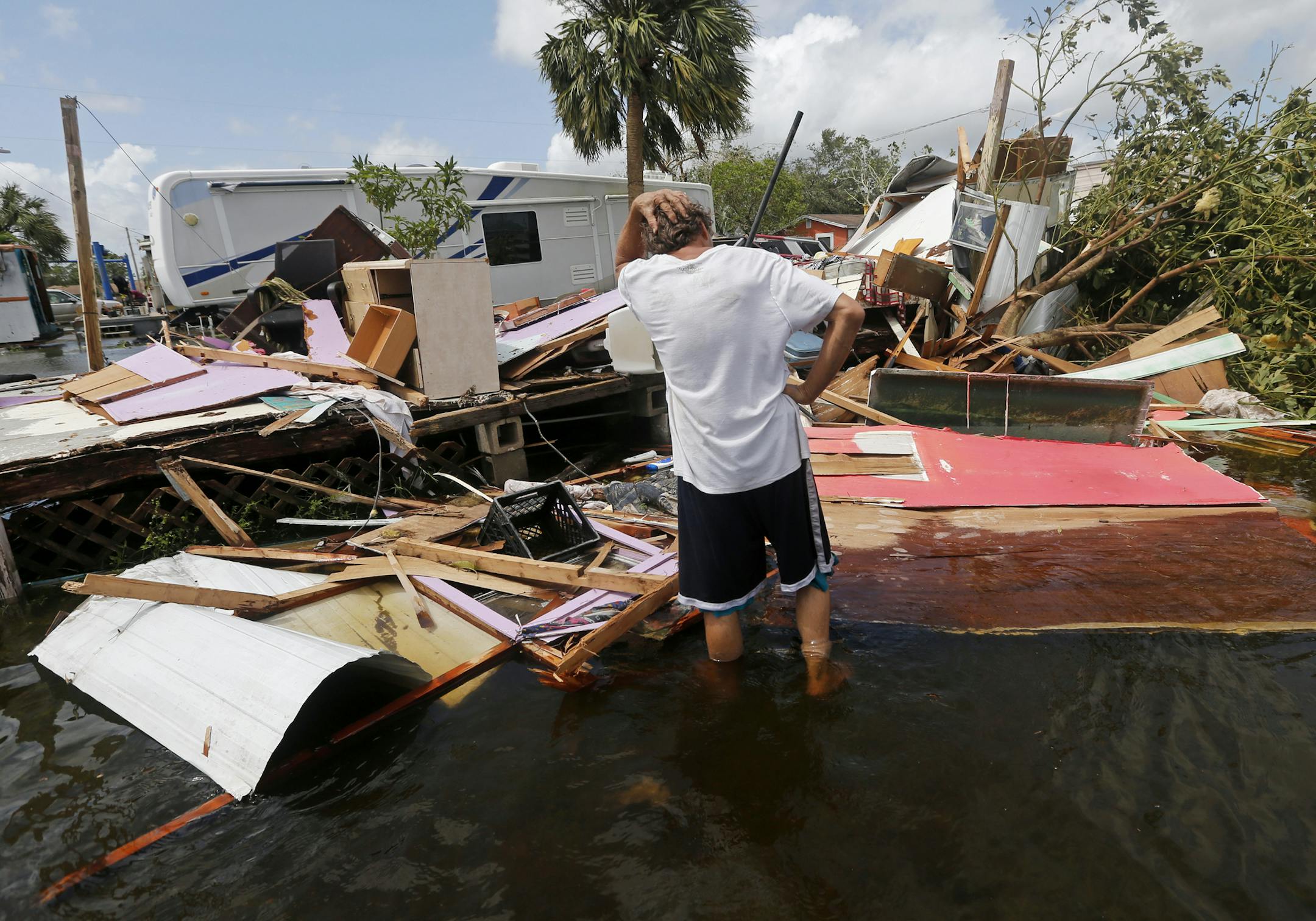
MIAMI – As Hurricane Irma dissipated into a tropical storm on Monday, Florida's residents emerged to streets littered with debris and downed trees while nearly two-thirds of the state was left without electricity.
The once-powerful storm left trailer homes sliced open, boats tossed upside down on roadways and centuries-old trees strewn across power lines. As it trailed off on Monday, Irma's rains caused floodwaters to rise from Jacksonville, Fla., to Charleston, S.C., continuing to impact a massive area of the American southeast.
But it could have been much worse.
That was the grateful mantra on the lips of many on Monday, even as an estimated 12 million Floridians prepared for a dark night without air conditioning in the muggy post-storm swelter. Though there was significant property damage in the Florida Keys and in some parts of southwest Florida, officials said it was remarkable that so far they are investigating just a small number of fatalities that came as the storm made landfall. It was unclear how many were directly related to the storm.
The lack of electricity across most of South Florida was the most pressing and crippling problem. Millions could remain in the dark for days or even weeks as utility companies struggle to navigate impassable roads and floodwaters to slowly restore power.
But in the face of cataclysmic warnings and worries — including a mass exodus from Florida's most-populous area — Irma largely spared many of the major cities predicted to be in its path. Some, including Tampa and Orlando, escaped relatively unscathed. Others, such as Jacksonville, experienced unlikely — and record-breaking — effects.
Waters in Jacksonville, in the state's far northeast, sent residents scrambling to the top floors of their houses Monday morning. The St. Johns River, which cuts through the city, overflowed its banks, flooding bridges and streets.
Rescuers used boats, water scooters and even surfboards to get to residents surprised by the rising waters, said Kimberly Morgan, a spokeswoman for the Clay County emergency center. "You have to get creative in a situation like this," she said.