

She was born "one day when God was drunk."
She is the ill-fated, enigmatic Maria, who lives in Buenos Aires. As the title character of what Argentine composer Astor Piazzolla called his "operita" — his "little opera" — she is the stuff that dreams are made of, and sometimes nightmares. She is Eve and Lilith, both temptress and victim. She is Mary, mother of Jesus, as well as Mary Magdalene. She is sister to Bizet's Carmen and cousin to Kurt Weill's Pirate Jenny.
She is, above all, the embodiment of tango, the sultry dance music that was born in the brothels of Buenos Aires and went on to become Argentina's musical signature — a music that Piazzolla single-handedly, with his "nuevo tango," brought to new heights of expression and complexity. (Piazzolla performed here with his quintet several times. He died in 1992.)
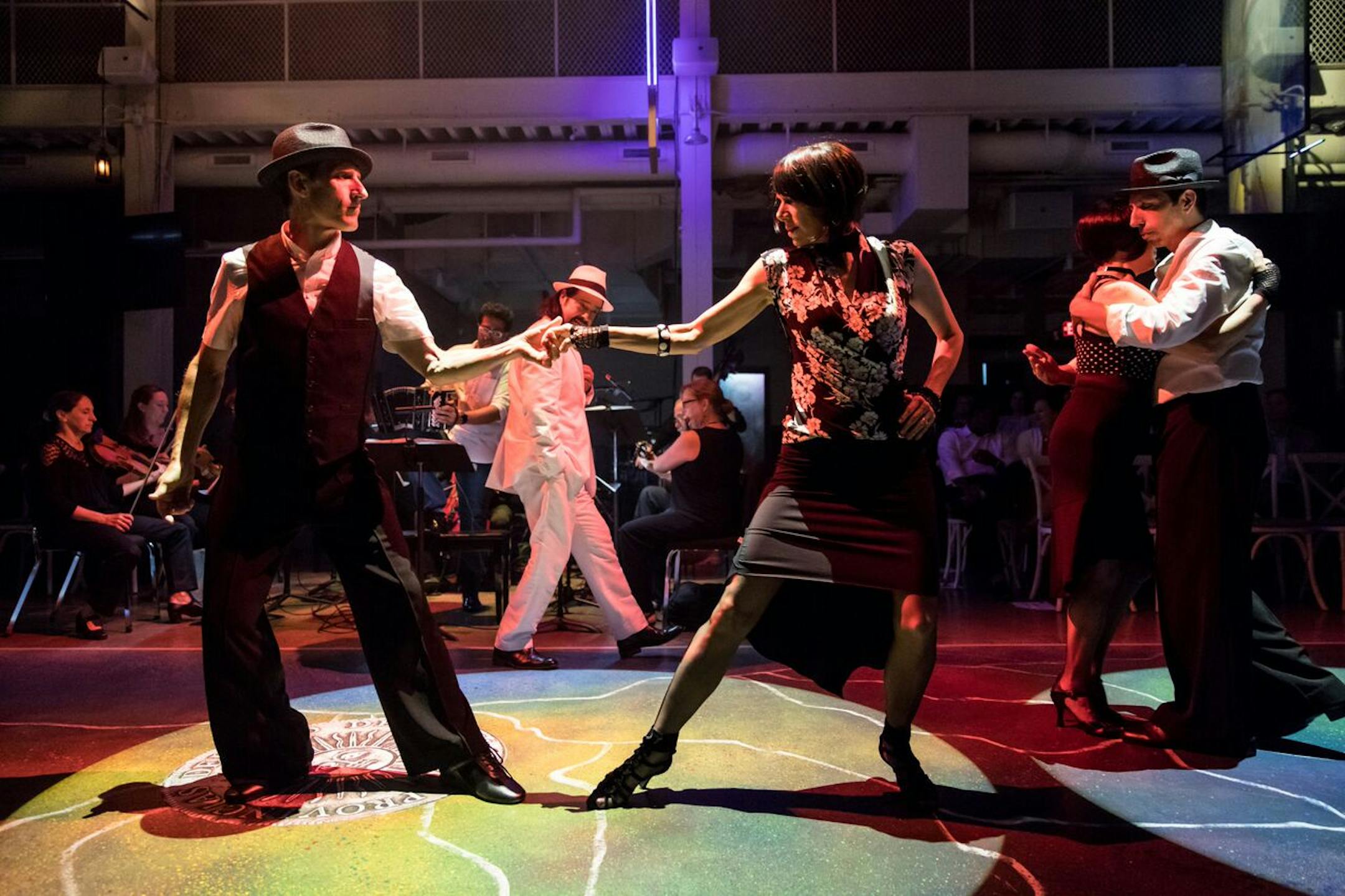
For its sixth annual production the enterprising Mill City Summer Opera is putting on "Maria of Buenos Aires," and in numerous ways it manages to plunge deep into the heart of this oddly compelling and challenging work, delivering vivid visions of its sensuality, its poetry and its mystery.
Mill City and its artistic director, David Lefkowich, have assembled a strong cast of actor/singers and dancers, at the head of which stands the charismatic Colombian soprano Catalina Cuervo, currently the singer most identified with the role of Maria, a part she has sung in more than a dozen productions in the U.S. and elsewhere.
Seen Friday night at the company's temporary quarters in the spacious Machine Shop near the Mississippi River in Minneapolis, Cuervo was a statuesque, stunningly intense, high-wattage Maria, bringing glamour and energy to the role of the young woman who comes to Buenos Aires, is seduced by the tango and the lowlife characters associated with it and becomes a prostitute. After her death, transformed into the Shadow of Maria, she wanders the city and eventually gives birth to a child also named Maria, who may be herself.
Piazzolla wrote the part for a folk singer, completing the work in 1968. It's not an operatic role, but the intensity of Cuervo's portrayal, with her rich low register and firm top notes, gave the part operatic scope. The downside of this imposing portrayal was that it became hard to see Cuervo's Maria as vulnerable in any way, especially at the beginning. Even the character's death came across as a triumph of willpower and stage presence.
The show's nonlinear plot and metaphor-heavy text (Horacio Ferrer) makes it more like a cantata or a song cycle than an opera. Its appeal lies in the sheer beauty of its music and in the exotic romance of its characters. Baritone Luis Alejandro Orozco — no stranger to the role of Payador — was an impressive and commanding figure, as was the menacing Milton Loayza in the speaking role of El Duende.


