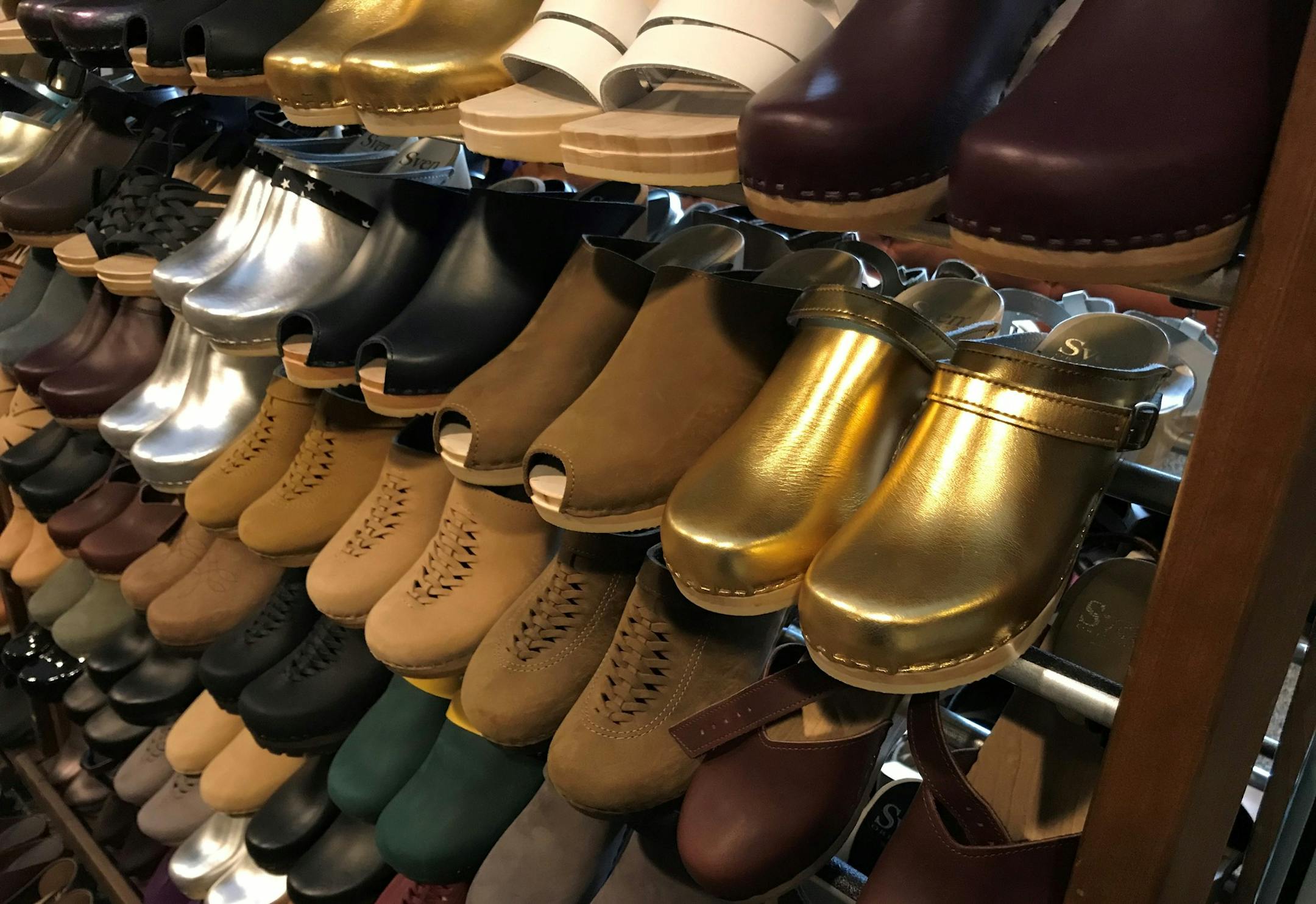
Red Wing boots and Sven Clogs have a few things in common: Both are brands worn around the world and made in Minnesota, in factories that are about an hour away from the Twin Cities — in Red Wing and Chisago City, respectively. And their factory outlets happen to make perfect day-trip destinations, especially if you love shoes. My family made pilgrimages to both this spring.
Red Wing
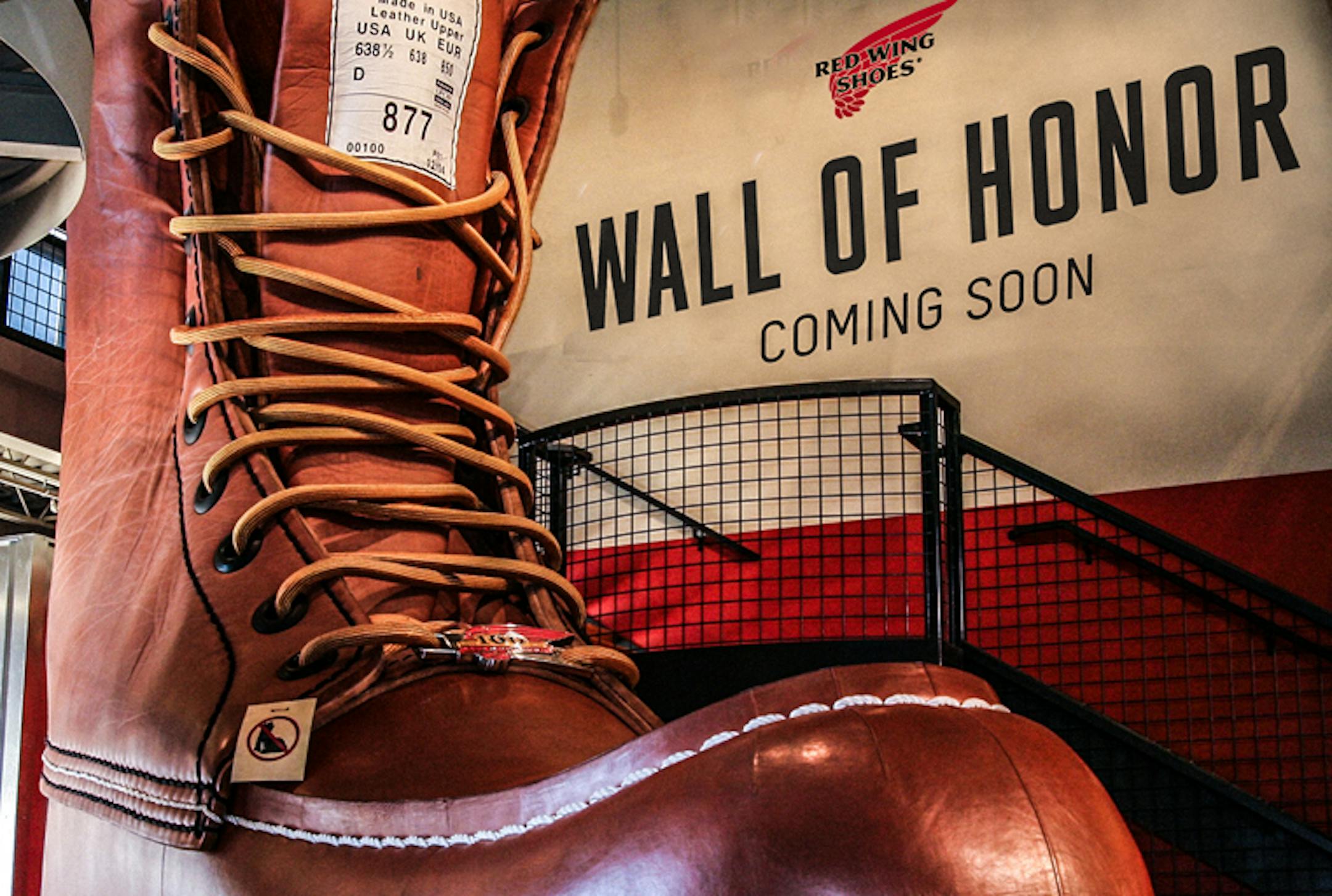
It's Size 638½. The 16-foot-high, russet brown leather and crepe rubber-soled work boot inside the Red Wing Shoe Store & Museum is both hard to miss and somewhat irresistible.
"The sign says no climbing!" I warned my 3-year-old daughter as she tried to jump and touch the cream-colored contrast stitching along the toe. (She couldn't.)
Red Wing Shoes was first established in 1905 by a German immigrant shoe salesman named Charles Beckman in a lovely little Mississippi River city about 55 miles southeast of the Twin Cities. It still employs about 1,000 people in Red Wing.
The company no longer offers public tours of its factory and tannery buildings. Still, the "shoe museum" that opened in 2009 inside the store at 315 Main St. gives an interactive glimpse of how the shoes are put together and the company's history. And there's that giant boot. Built in 2005 to celebrate the company's centennial, it's a blown-up but exact replica of the popular 877 model, first released in 1952.
My family of four spent a morning at the store and museum (651-388-6233; stores.redwing.com/red-wing-mn).
We first checked out the new Wall of Honor, a collection of well-worn and at times inspiring boots that was installed in March. Each boot has a plaque with its model number and the name, occupation and hometown of the person who wore them and sent them in to the company. One such person is Bill Rapetti, a Massapequa Park, N.Y., crane engineer and operator who wore his Red Wing 1203s during recovery work at Ground Zero.
A self-guided tour takes you through well-designed displays — from a pair of 1908 black lace-ups believed to be the company's very first boots to a dated marketing ploy they used in the 1950s: a life-sized statue of the town's Dakota Sioux namesake, Chief Red Wing, that was sent to dealers around the country to sit outside their stores.