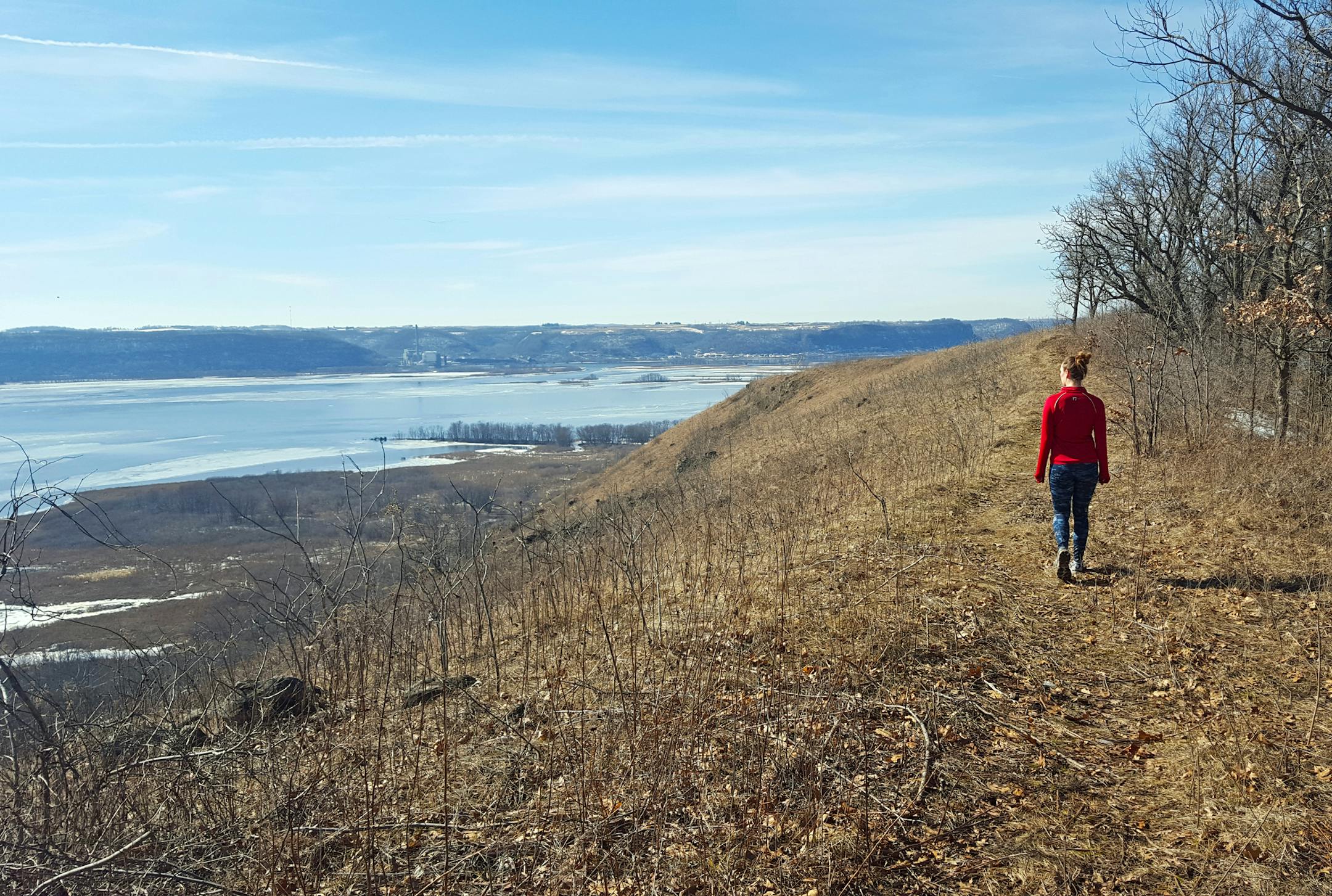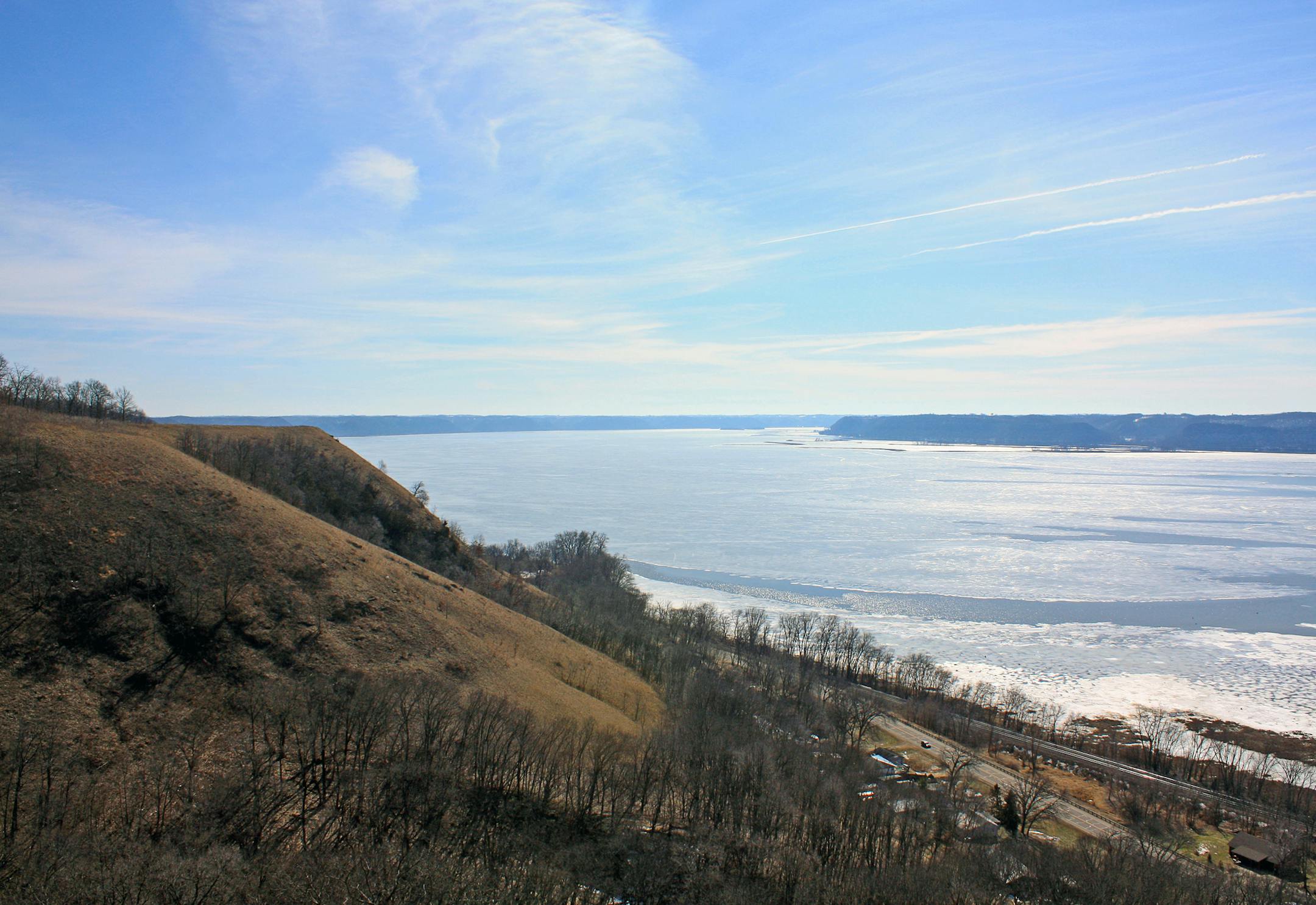
It was already a great day: a balmy 50 degrees and clear blue skies at the end of February. The kind of day that gives you hope that spring will actually come. Then the real stars showed up.
Half a dozen bald eagles, swooping and soaring and diving above the mighty Mississippi River. From a vantage point 400 feet above the river on a bluff in southwest Wisconsin's Rush Creek State Natural Area, I had the best seat in the house to watch the magnificent birds.
It's a view that never gets old, even as it becomes more common during spring migration.
And while the views — of the birds, the riverside bluffs and the Mississippi — are the main draw to Rush Creek in Wisconsin's Driftless Area, the state natural area is also remarkable for its size and unique landscape.
"This is nearly 3,000 acres of land, and with that largeness, that kind of landscape-scale size, it has all of the ecological functions and all of the species and all of the things that go along with having a large, functioning ecosystem," said Thomas Meyer, a conservation biologist with the Wisconsin Department of Natural Resources, who said the natural area is one of his favorite places.
"You get up on top and you can see a long way and get a sense of what this landscape looked like a long time ago," he said.
Dry prairie
That landscape includes a two-mile stretch of dry prairie on bluffs along the Mississippi River. The tree-free swaths of land are a marked contrast to the otherwise-wooded landscape, made even more dramatic by their location on the steep bluffs.
"Back in the 1840s, that entire southwest corner of the state and much of southern Wisconsin was this kind of open prairie savanna landscape, where you'd have open-grown oaks and shagbark hickories and other trees that are resistant to fire scattered along the landscape, kind of like an African savanna," Meyer said. "Those steep slopes were kept open by fire, most of which was set by Native Americans."