

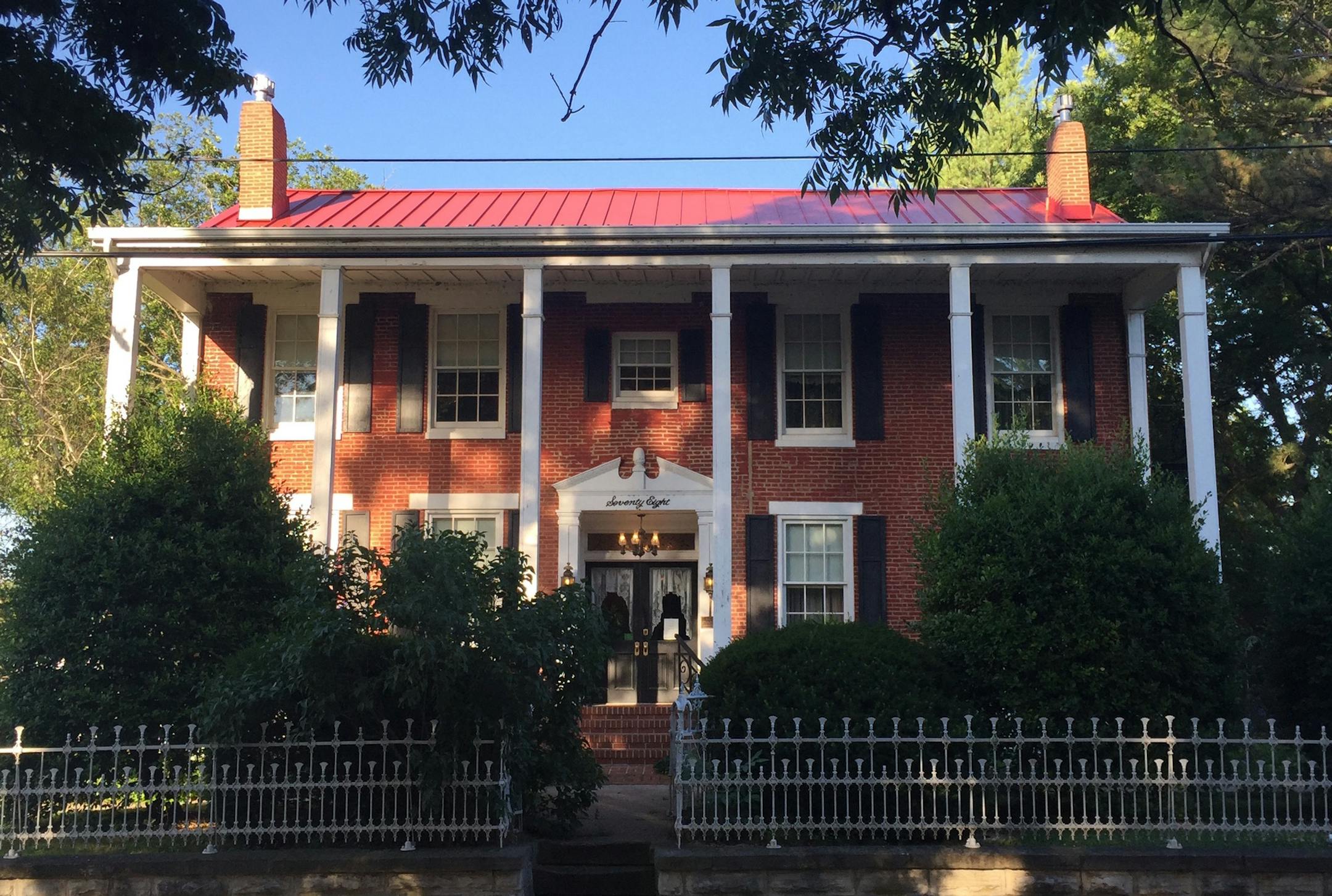
French-speaking settlers crossed the Mississippi River into present-day Missouri and founded Sainte-Geneviève, named for the patron saint of Paris, on its shore in 1735. A flood 50 years later forced a relocation two miles away. At one point bigger than St. Louis, the town sent many tons of grain downriver to New Orleans. The first German settlers arrived in 1820, and a sense of Teutonic order pervades the town and the surrounding farmsteads, set amid rolling fields, pastures and woodlands.
Today, Ste. Genevieve is a sleepy and pleasant place that attracts tourists due to its excellent historic preservation. It works best as an overnight visit attached to a trip to St. Louis or the underrated Missouri Ozarks, but there is enough history, wine and shopping here — and a total solar eclipse passing overhead on Aug. 21 — to make it a worthy addition.
Attractions
You come here to see history, and you should begin either at the Welcome Center (1-573-883-7097) or the handsome little Ste. Genevieve Museum (1-573-883-3461), with a good collection of artifacts like Mississippian pottery, a Bible printed in Latin and German that survived the flood, and memorabilia from the 1935 bicentennial celebrations headlined by Franklin Roosevelt.
Ste. Genevieve's walkable downtown is dominated by a massive Catholic church, and many of its brick buildings bear placards with their year of construction. Be sure to visit the sites under the domain of the Felix Vallé House State Historic Site (1-573-883-7102). The titular 1818 Federal-style house has a re-created storeroom and period-appropriate furnishings, and the 1792 Amoureux House is one of only five surviving French-style log cabins in the United States (two others are also here). It tells the story of Pelagie Amoureux, who was born into slavery and owned by her father, then became emancipated and sued townspeople who harassed her because of her race.
Unpleasantly, the historic preservationists I encountered were entirely too eager to say how relatively well Ste. Genevieve's enslaved people were treated, supposedly due to French custom. In 2017, no attempt, especially by those with who work in public history, should be made to humanize inhumanity.
Any historic town worth its salt has a ghost tour, and Ste. Genevieve is no exception. They meet at 7 and 9 p.m. on most Saturday nights, led by lantern-carrying guides who are true believers in the supernatural tales they tell. Truth be told, some can be a bit shaggy-dog, but many are downright eerie, and the tour is loaded with historical details. Especially spooky is the town cemetery at night, with headstones written in French, German and English (1-314-662-6343).
Luckily, there enough wineries to drink away the fear. My pick of stops along the Route du Vin (a trolley links them to downtown; 1-573-535-1911) is the Cave Vineyard (1-573-543-5284). Try the Norton wine, a dry red made from Missouri's state grape; the Vino Grande is the same fortified with house-distilled brandy. Buy a bottle and enjoy it in the roomy Saltpeter Cave down an easy path from the tasting room. In town, the Sainte Genevieve Winery (1-573-883-2800) is known for its sweet fruit wines, some fermented from Missouri-grown wild pears or elderberries (drink without worry: it's "packed with antioxidants").
While adventurers should check out the 12-mile section of the Ozark Trail between Johnson's Shut-Ins State Park (where the Black River became "shut-in" to a hard rock channel, creating a natural water park) and Taum Sauk Mountain State Park, it's over an hour away. Hawn State Park (1-573-883-3603) is just out of town and features a 10-mile backpacking trail as well as the short Pickle Creek Trail, which follows exposed granite and sandstone shut-ins. The creek's source is at the Pickle Springs Natural Area (1-573-290-5730), with even more peculiar geological oddities like natural arches, slot canyons and hoodoos.


