
Midwest garden guru shares best plant choices

Edward Lyon's new book focuses on central states.

Chicago Tribune
July 28, 2015 at 8:25PM
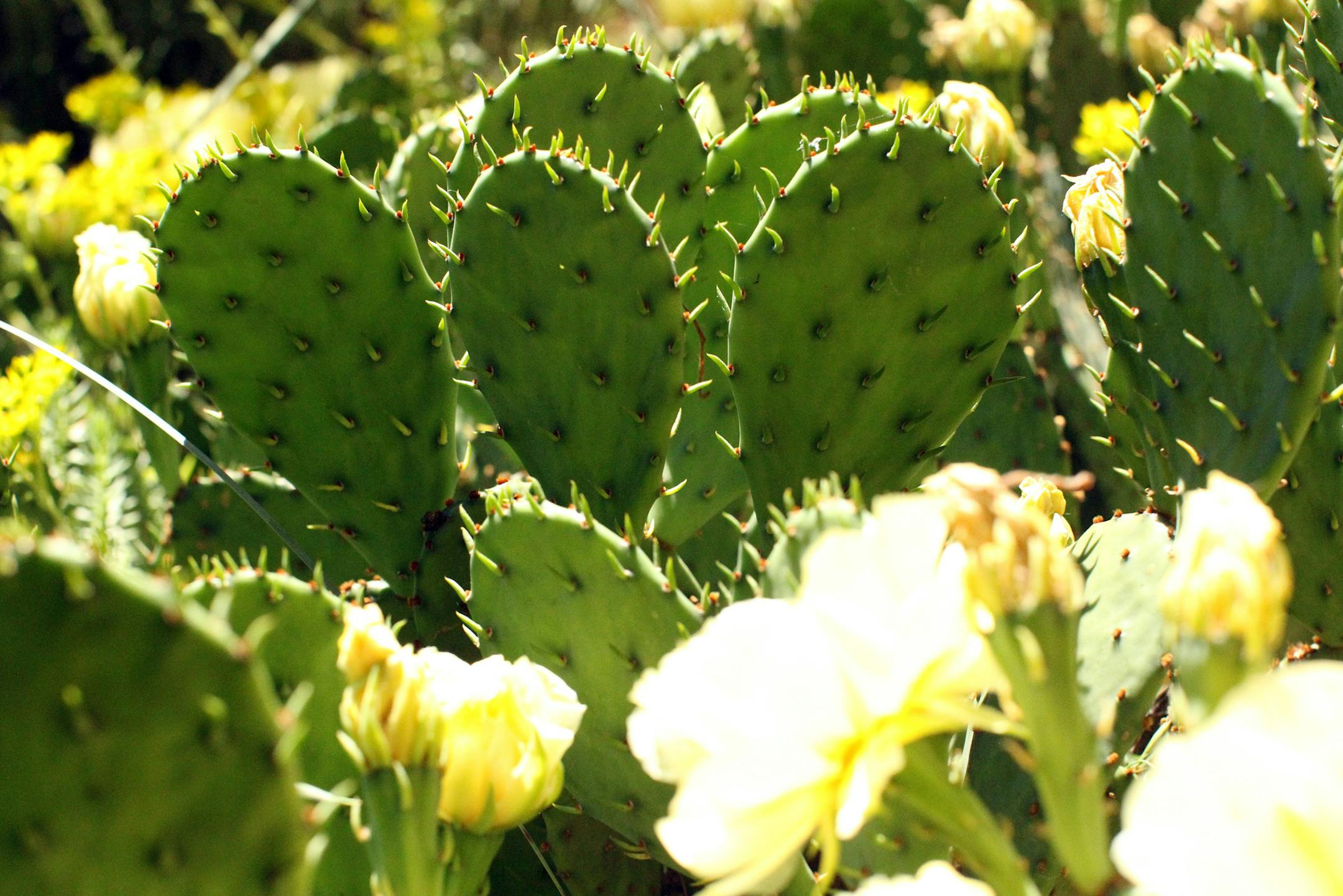
Cactus isn’t just for deserts. Prickly pear cactus, or opuntia, is a native plant in the Midwest. And author Edward Lyon points out that there’s an opuntia native to every state in the U.S.
Cactus isn’t just for deserts. Prickly pear cactus, or opuntia, is a native plant in the Midwest. And author Edward Lyon points out that there’s an opuntia native to every state in the U.S. (Chicago Tribune/The Minnesota Star Tribune)

Over Memorial Day, while his movers were packing and loading for his move from Madison, Wis., to Ames, Iowa, Edward Lyon was working in his garden.

"I was digging and potting and brought a good portion of my garden out in a 26-foot U-Haul," says Lyon, who made the move after becoming the director of Reiman Gardens at Iowa State University.

For a gardener, a new home means new rules.

If anyone knows the ins and outs of Midwest gardening, it's Lyon. He has worked at Allen Centennial Gardens in Madison, the Chicago Botanic Garden, and Rotary Botanical Gardens in Janesville, Wis. He also writes and speaks on the topic. His new book, "Growing the Midwest Garden" (Timber Press), came out in May.

Lyon took time from getting settled in Ames to talk about Midwest gardening and the book.

Q: What sets the Midwest garden apart? The big spread of temperatures?

A: Temperatures and the fact we're in the center of the country. We don't get any coastal effect. Even in the Southwest there are certain effects they're getting coastally. We're so centered we miss a lot of that effect and influence.

Q: What are some of the safe, easy-to-grow plants that nonadventurous gardeners can go with?
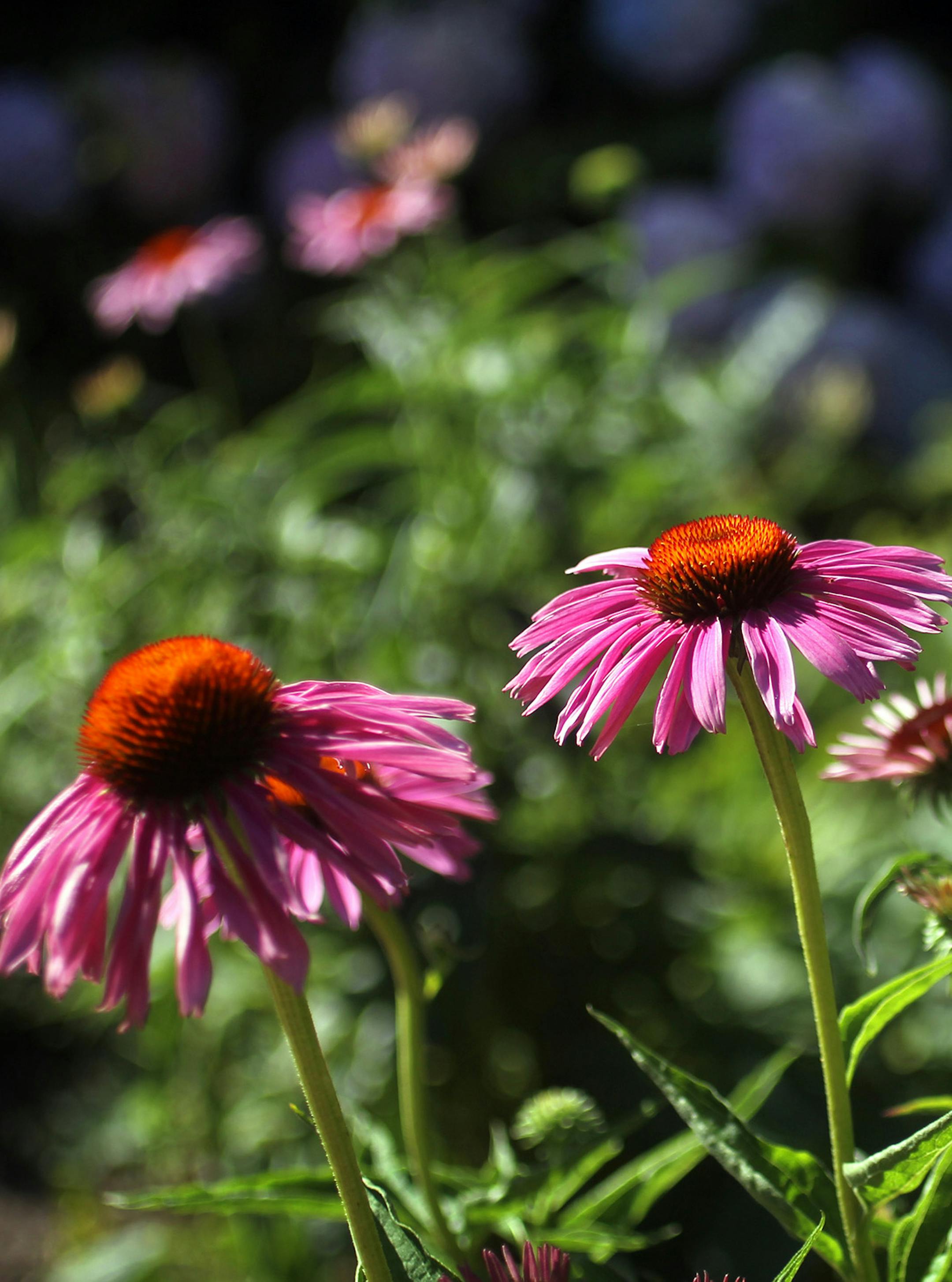
A: There is a list of plants that have been around a long time. Some people, good gardeners, will say they're overused. But that's because they're so successful. I [call them] the "big three" — Goldsturm black-eyed Susan (Rudbeckia fulgida var. sullivantii 'Goldsturm'), Autumn Joy sedum (Hylotelephium 'Herbstfreude' Autumn Joy) and the purple coneflower (Echinacea purpurea). The perennial veronicas and salvias are also tough as well.

Q: Are all garden styles pretty adaptable to the Midwest?

A: All in all, gardens are designed to follow certain guidelines. The plant materials might be different, but you're using essentially the same guidelines. What I highly emphasize, we can teach everyone the elements of design, but ultimately the garden is yours. I give all those design elements, so people can follow them, but I encourage people to put their flavor on them because you're the person who has to live with it 365 days a year.

Q: How about a perennial?

A: Epimedium. It has several names — barrenwort, bishop's hat — and it's not well-known. It can be a ground cover, but it's easy to manage and divide. The spring flower is reminiscent of a tiny orchid. One of its best attributes, it's one of the most drought-tolerate shade plants I know of. The color ranges from yellows to pinks to whites to bi-colors. It's a plant every gardener should be looking at. You see it in a garden center, and it doesn't look very tough. But it's very durable.

Q: And annuals?

A: I'm big-time hot on nonhardy succulents. Agave, cacti, sedums, we lump them into one category. The Midwest was very slow to acknowledge using them and getting access to them; the East and West coasts have been using them a long time. They look exotic; they need very little water, no fertilizers; they're great in containers. You've got a whole group of plants that will thrive in the heat. They were fairly pricey, and a lot more people are propagating them now. So they're no more expensive than other annuals. They're a fun change from petunias, zinnias and marigolds.

Q: What about grasses?

A: I'm a huge grass fan. One of my favorites is a clumping grass people don't know about, Sesleria. It's very soft. The grass mounds to maybe 18 inches. A real attribute, it's extremely drought-tolerant. It's very soft visually. I had it growing under an ash. The tree roots were sucking away the moisture from anything else we put under there, but it looked great.


Purple coneflower (Echinacea purpurea) is one of Edward Lyon’s go-to plants for the Midwest gardener.
Purple coneflower (Echinacea purpurea) is one of Edward Lyon’s go-to plants for the Midwest gardener. (Chicago Tribune/The Minnesota Star Tribune)
about the writer

about the writer

William Hageman

More from No Section

See More
FILE -- A rent deposit slot at an apartment complex in Tucker, Ga., on July 21, 2020. As an eviction crisis has seemed increasingly likely this summer, everyone in the housing market has made the same plea to Washington: Send money — lots of it — that would keep renters in their homes and landlords afloat. (Melissa Golden/The New York Times) ORG XMIT: XNYT58
Melissa Golden/The New York Times

It’s too soon to tell how much the immigration crackdown is to blame.