

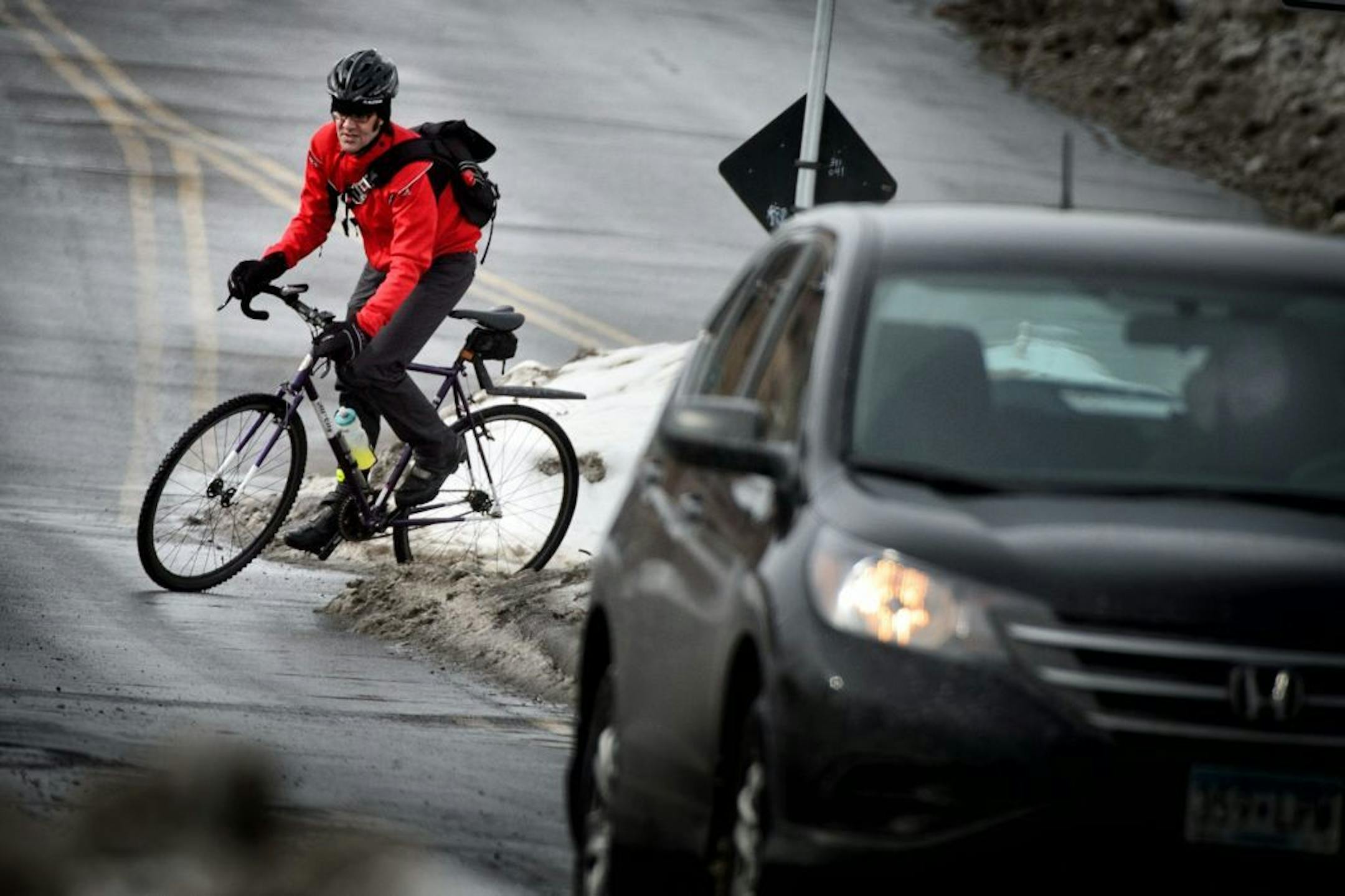
The two streets that parallel the off-road Midtown Greenway are among the most dangerous in Minneapolis for bicyclists, raising questions about why some bikers continue to prefer them over the bike trail.
Lake Street, generally one block south of the greenway, has notched the highest number of bike-motor vehicle crashes on any corridor in the city, according to a city study. And 28th Street, also a block off the greenway, has racked up the highest rate of crashes per miles biked of any corridor in the city, the same study found.
With safety for pedestrians and bicyclists becoming a priority as their numbers grow, bike advocates are pushing for change for 28th Street, and debating whether it's feasible for Lake.
They're hoping that protected bike lanes will be added in the city project when 28th is repaved next year, according to Ethan Fawley of the Minneapolis Bicycle Coalition, but the city hasn't reached the design stage yet.
But the issue remains: Why are bikers using the busy streets when the 5.5-mile greenway is designed for them? Members of the biking community say the main reason is the greenway doesn't lead directly to destinations on Lake and 28th, with access only available at intermittent ramps.
Fawley said it's similar to why Interstate 94 isn't the best choice for all motorists: "We wouldn't assume that everyone in Seward would jump on Interstate 94 every time they go to the grocery. They can use Franklin Avenue."
The issue of bike safety returned to headlines recently when Marcus Nalls, 26, a dedicated biking commuter, was struck and killed as he rode his bike on Franklin Avenue in south Minneapolis. Franklin ranks just behind Lake Street for total crashes.
Bikers on Lake were involved in 226 accidents over an 11-year period starting in 2000, the year the greenway opened. Its highest crash year during that period was 2010, with 32. That came a year after Hennepin County completed the reconstruction of Lake Street, rejecting on-road lanes for bikers, and a year after the county adopted a complete streets policy to accommodate bikers, pedestrians and bus riders in its road designs.
![Bicyclists ride along Midtown Greenway where it intersects with 28th Street E in Minneapolis. Tuesday, February 18, 2014 ] GLEN STUBBE * gstubbe@startribune.com](https://arc.stimg.co/startribunemedia/ZDGUXCKBBBS5TDXUAC3R5XOIR4.jpg?&w=1080)


