

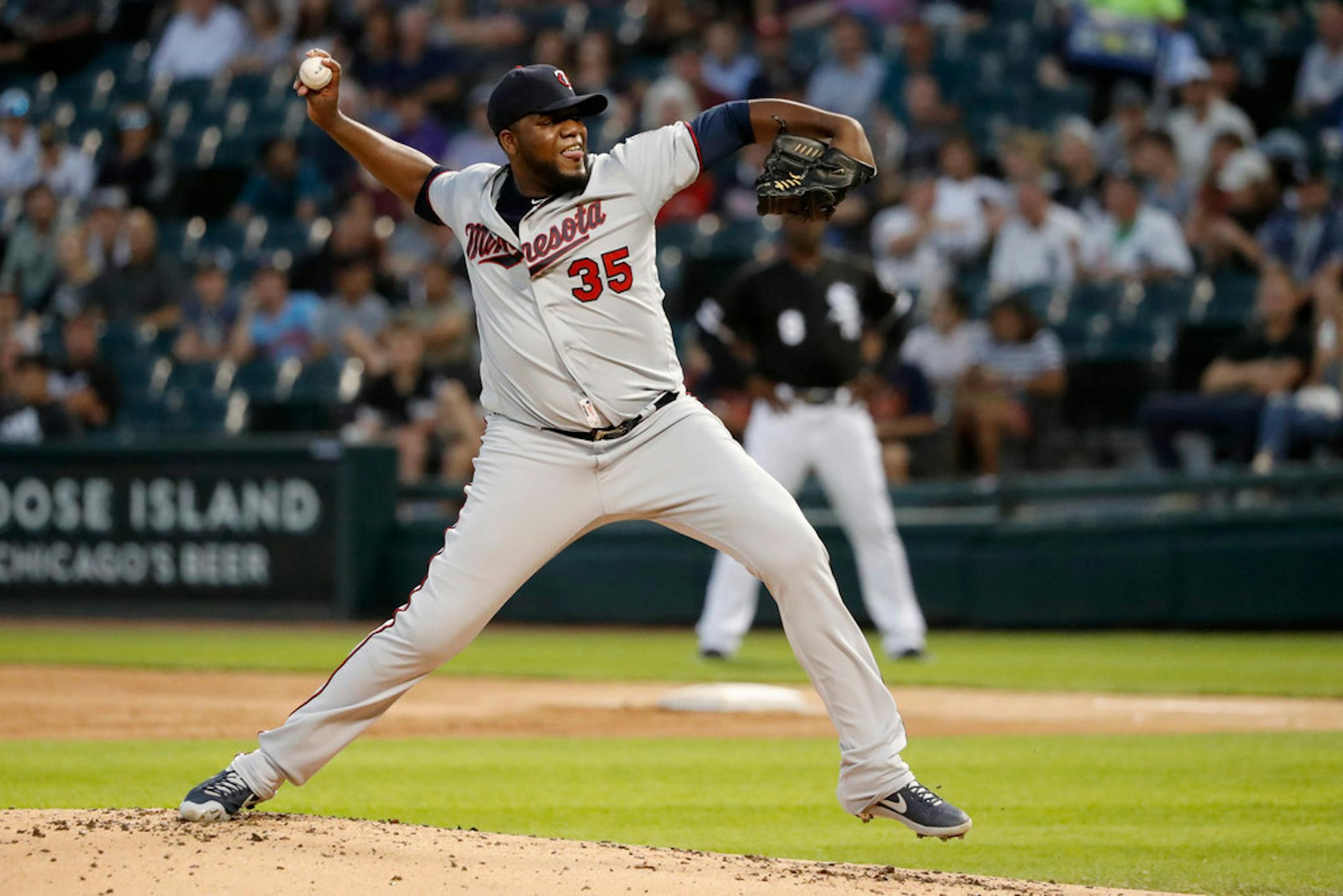

Michael Pineda had completed five strong innings for the Twins on Tuesday, at which point Minnesota held a slim 2-1 lead against the White Sox. He had thrown 89 pitches and had good enough stuff to strike out eight batters while allowing just four hits.
A few years ago, Pineda might have been asked to pitch at least another inning. Another generation or two ago, seven innings would have been the expectation — regardless of Pineda's injury history or other circumstances.
But on Tuesday, five innings and 89 pitches was it. Maybe it wasn't enough to mollify baseball purists who like to see starters work deeper in games, but it was a modern masterpiece of sorts.
It also was a good example of how a 5-inning effort from a starting pitcher isn't really indicative of any sort of weakness on the part of pitchers these days. Rather, outings like that are becoming the norm thanks to a series of circumstances and strategic changes.
*As of 2014, per The Ringer, the average starting pitcher went about 6 innings — around where it had been for two decades. In the 1960s and 1970s, it was more like seven innings. This year, the number is 5.25 innings. That's skewed a little by the use of "openers" and bullpen games, but most of it comes from traditional starts.
But consider this: In 1988, for example, the average plate appearance lasted 3.58 pitches. This season, it's 3.93 plate appearances as batters work deeper into counts while hunting walks and not fearing strikeouts. Over the course of an average 6 inning start, that adds about 9-10 pitches to a starter's workload — helping partly explain how innings pitched are going down.
*Pitchers are throwing harder than ever, but they're also throwing fewer fastballs.
Per FanGraphs, starting pitchers threw fastballs about 57% of the time a decade ago. That number now has dipped to more like 52%. Average fastball velocity, meanwhile, has jumped from just above 90 mph for starters a decade ago to more like 92 mph now.


