

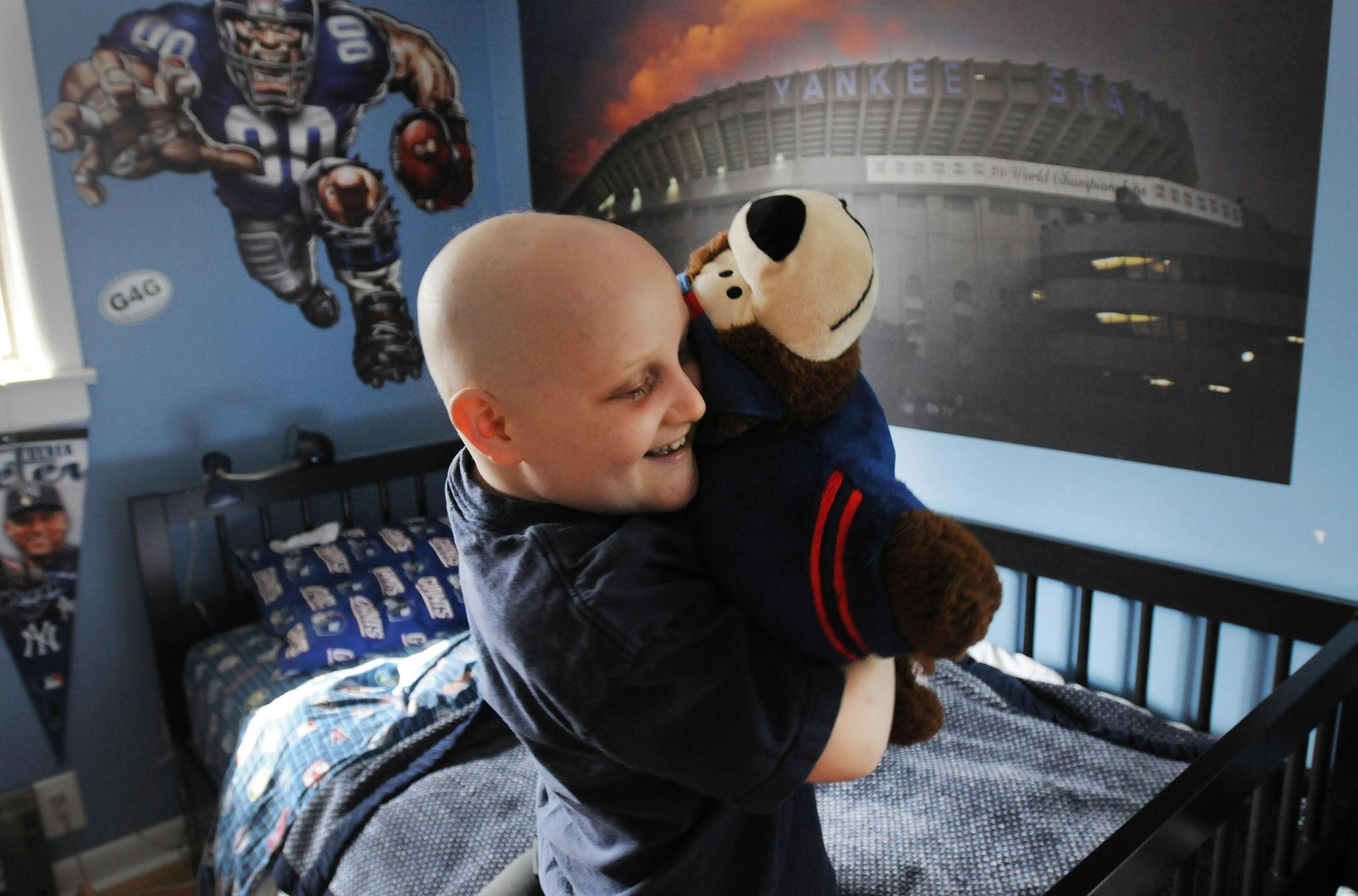
HACKENSACK, N.J. – When repeated chemotherapy and radiation treatments failed to stop the cancerous tumors from growing in their 9-year-old son's lungs and chest, a Ridgewood, N.J., couple took a desperate chance — on a bunch of mice.
They paid a laboratory $25,000 to inject pieces of their son's tumors into the rodents and then test different drugs on the mice. The lab offered no guarantees, but the hope was to find a treatment that would shrink the boy's particular tumors and possibly cure him of Ewing's sarcoma.
Months passed as the tumors grew in the mice and standard treatments failed on Michael Feeney. Then the lab discovered a three-drug cocktail that began to heal the mice, destroying the cancer cells.
And now, Michael's tumors are also shrinking thanks to those drugs.
"If someone had asked me what the chances were of this working, I would have said one or less than one in 10," said Dr. Leonard Wexler, who is Michael's doctor and a pediatric oncologist from Memorial Sloan-Kettering Cancer Center in New York. "But I am delighted, joyful, and just praying with his family that it will be a long recovery."
Michael's treatment may seem unorthodox but, increasingly, researchers believe the key to effectively fighting cancer is by tailoring treatment to the genetic makeup of a patient. By growing the human tumors in mice, researchers can test different treatments on the rodents.
Though most of the research on these treatments is done at academic institutions, the Feeney family used one of the few companies that will work with the general public, taking tumors from patients who are not in a clinical trial. The lab they used, Champions Oncology, has a corporate office in Hackensack. Treatments are tested on mice at Johns Hopkins, said Dr. Ronnie Morris, an internist and president of Champions.
"Normally, the way cancer is treated is by trial and error," Morris said. "With this, we have the ability, for the first time, to test 10 different drugs on any patient's tumor at the same time."


