

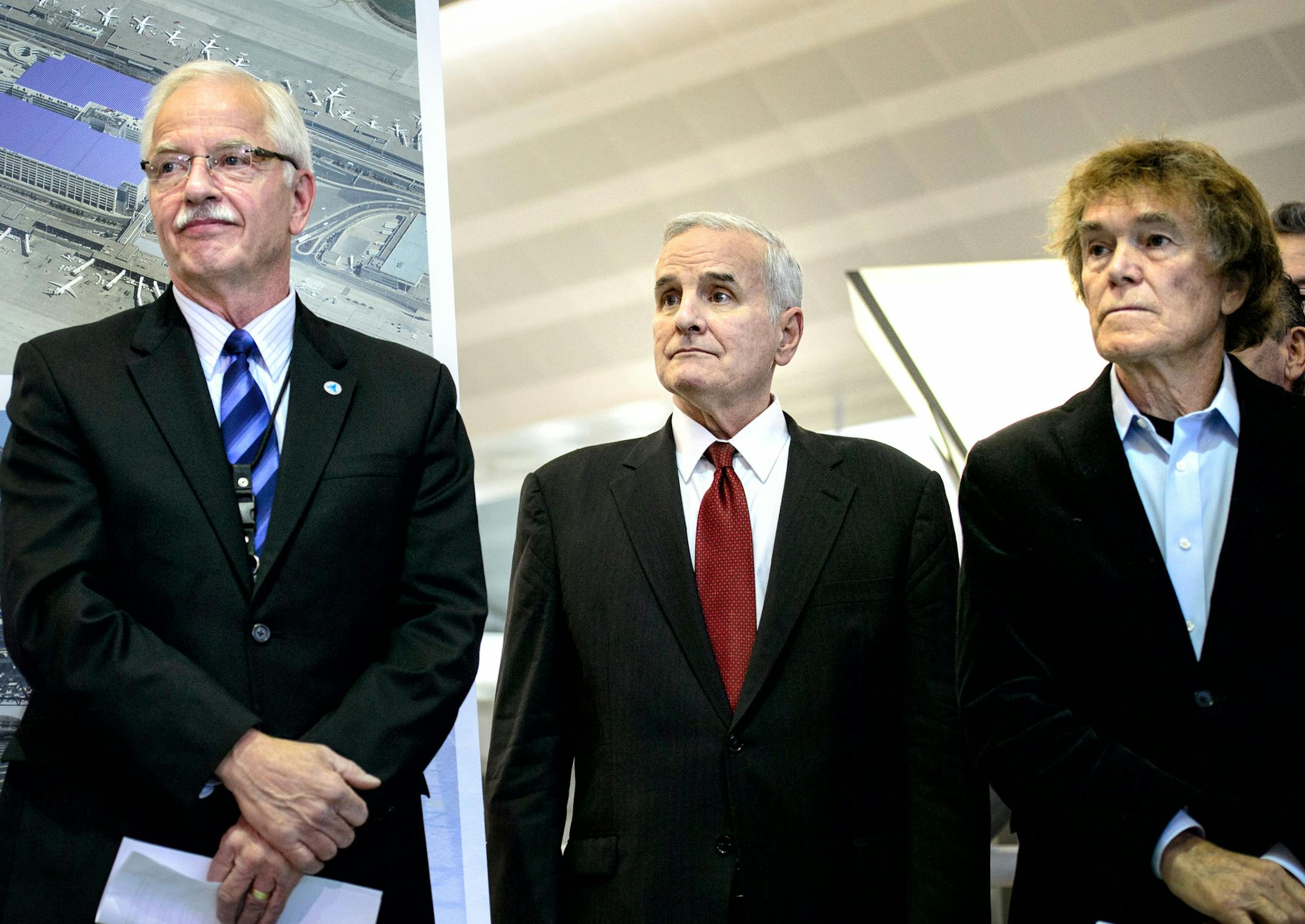
After close to 40 years of working in aviation — a stint that saw airline bankruptcies, a terror attack and a vast expansion of passenger travel, the longtime executive director of the Metropolitan Airports Commission has announced plans to retire next spring.
Jeff Hamiel, 68, began his career with the MAC in 1977 as the organization's first noise program manager, following a stint as a pilot in the Air Force. He rose through the ranks at the MAC and was named CEO/executive director in 1985.
Hamiel oversees the day-to-day operations of one of the nation's largest airport systems, which includes Minneapolis-St. Paul International, plus Airlake in Lakeville, Anoka County-Blaine, Crystal, Flying Cloud in Eden Prairie, Lake Elmo and St. Paul Downtown.
The MAC has 580 employees and a budget of about $300 million this year.
Hamiel "has made an indelible impact on air travel in Minnesota," MAC Chair Dan Boivin said in a statement. "Under his leadership, Minneapolis-St. Paul International has earned a reputation as one of the nation's best managed airports. The number of passengers served annually has more than quadrupled during Jeff's tenure. He has provided a steady hand to keep air service strong in Minnesota not only in good times but also when airlines one after another were filing for bankruptcy, merging and discontinuing hub operations at other airports."
Traffic at MSP increased to nearly 35 million passengers last year, up from 8.4 million in 1977, when Hamiel joined the MAC. The number of flights increased in that period by 56 percent to 412,695 in 2014 — the airport is now the 16th busiest in the United States.
During Hamiel's tenure, the airline industry changed dramatically, including deregulation in 1978, the security changes brought on by the Sept. 11 terrorist attacks in 2001 and the bankruptcy of Northwest Airlines, which later merged with Delta Air Lines.
The airport has also expanded at its current site (after studying others), and launched a $3 billion program in 2010 that included new concourses at both terminals, gates, parking and cargo facilities, light-rail service and a fourth runway. The MAC also developed an airport noise mitigation program involving nearly 15,000 homes in the metro area.


