

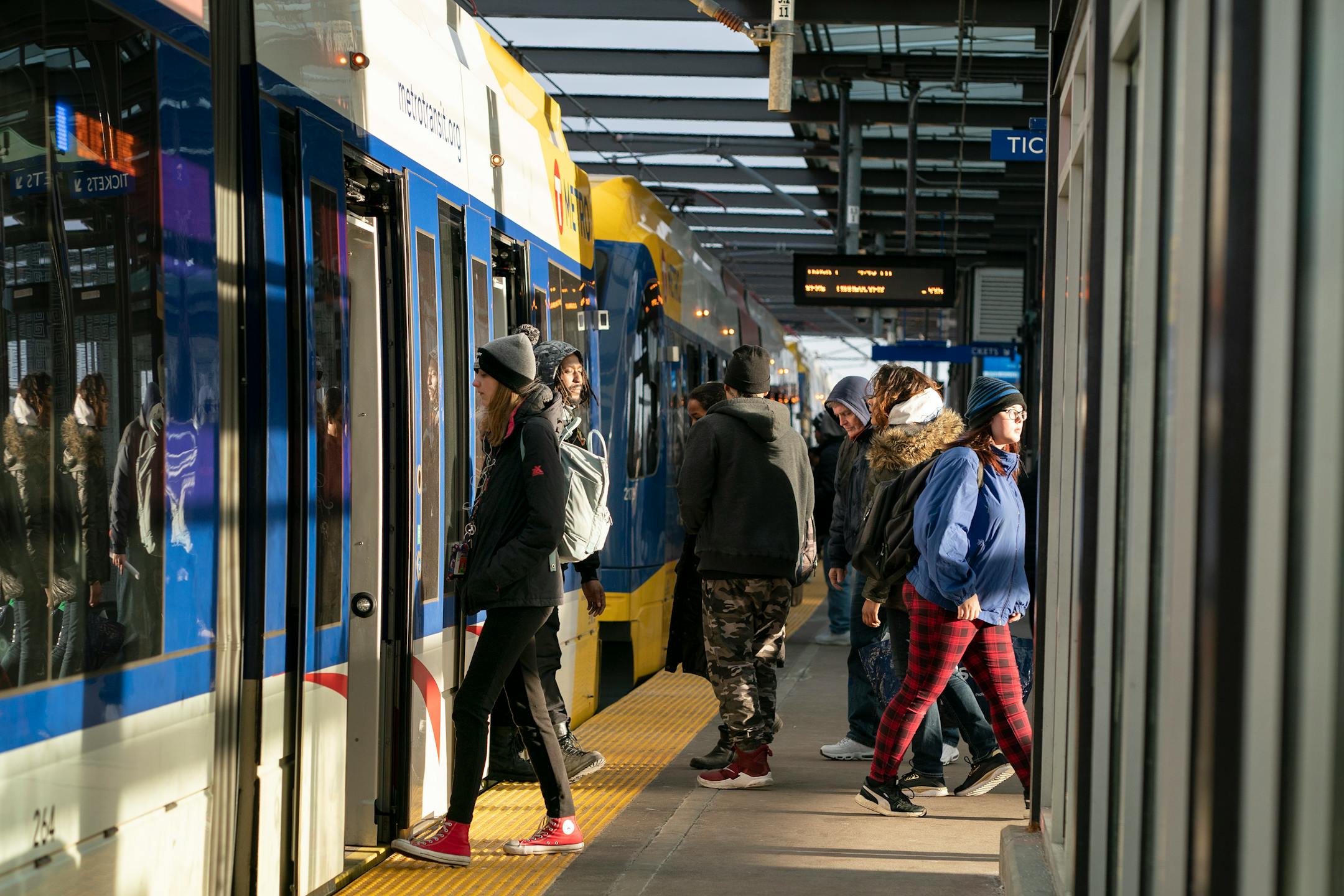
Passengers are steadily returning to public transportation in the Twin Cities, but ridership patterns remain highly dependent on the wiles of COVID-19.
Metro Transit officials reported that ridership increased 20% in the first quarter of 2022, with some 9.1 million passengers taking trains, buses and other services, compared with 7.6 million riders during the same period last year.
That leaves Metro Transit's overall ridership at just over half of what it was in 2019, before the pandemic decimated transit ridership in the Twin Cities and across the United States.
However, according to Eric Lind, Metro Transit's manager of research and analytics, "We're seeing growth in every type of service and route class."
In addition, passenger activity on Metro Transit buses and trains in downtown Minneapolis and St. Paul picked up earlier this year, indicating that more people may be returning to the office.
Between January and March, bus service increased by 22%; light rail by 20%; Northstar commuter rail by 113%; Metro Mobility by 3%, Transit Link by 11%; and vanpool service by 6%, according to Metro Transit.
Of the different types of bus service, ridership on local buses increased by 21%; bus rapid transit (BRT) by 23% and express service by 70%.
Northstar's increase occurred even though the commuter rail service between downtown Minneapolis and Big Lake offers just four daily trips during the week and no weekend service. The Metropolitan Council is currently studying options for Northstar, which some Republican legislators have said they want shut down permanently.


