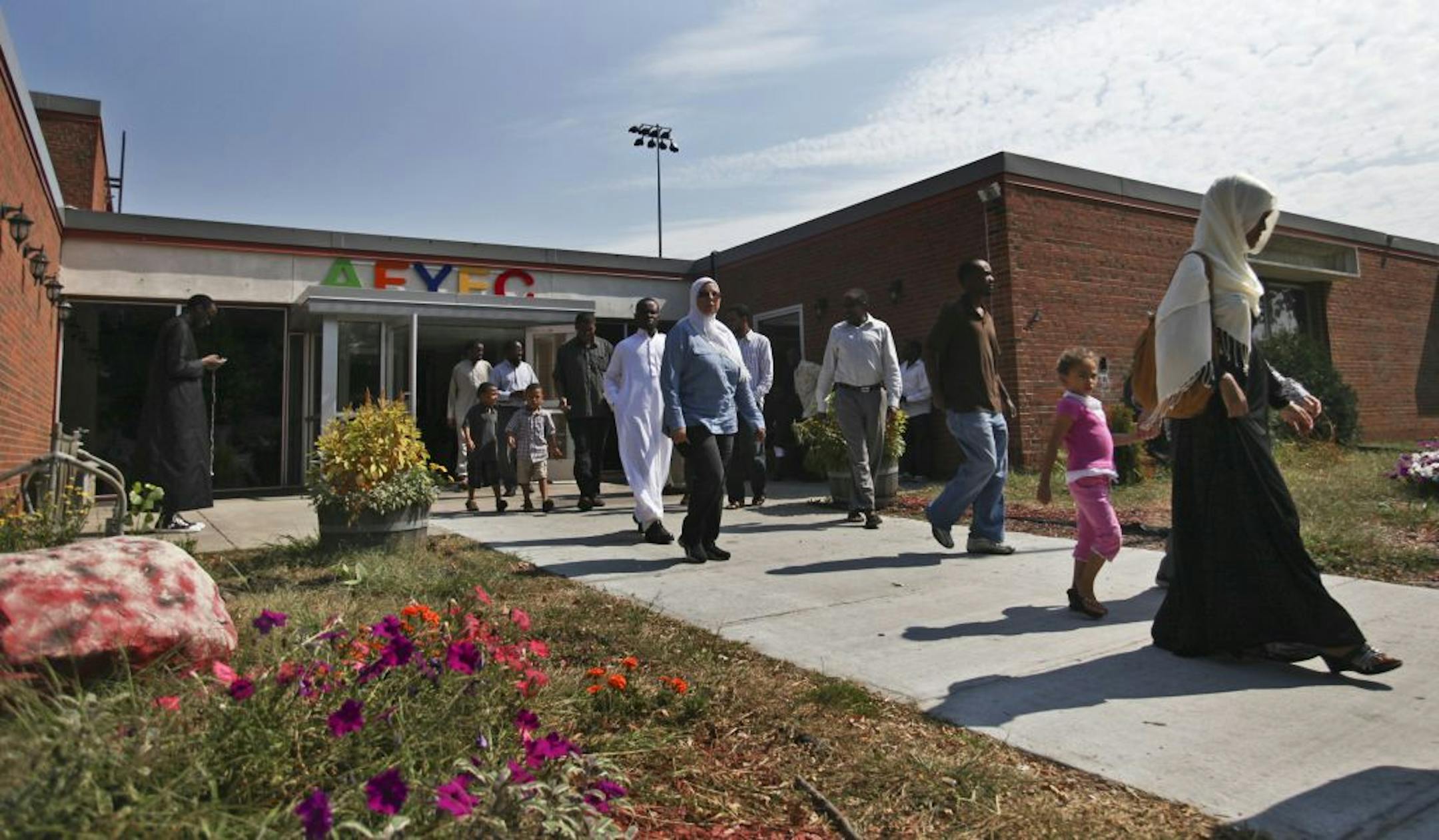
To hear some residents of east Bloomington tell it, life hasn't been the same since the Al-Farooq Youth and Family Center opened seven months ago.
They complain that hundreds of people come and go at all hours from the old high school building at Park Avenue and 82nd Street and that residential streets are clogged with parked cars. They say there is too much noise and too much traffic, and they want the city to step in.
But Bloomington officials say their hands are tied, mostly because of a 2000 federal law that protects religious groups from land use laws that restrict their practices without a compelling reason.
A number of Minnesota cities have become well-acquainted with that law recently. It has been cited by churches that have sued the cities of Wayzata and Medina. When St. Anthony rejected an application for an Islamic center this year, the American Civil Liberties Union of Minnesota warned the city that its moratorium on certain permit applications violated the Religious Land Use and Institutionalized Persons Act (RLUIPA).
"It really is a very provocative piece of legislation, because of how it impacts local government," said Lora Lucero, a land use attorney in New Mexico who co-authored a book on the law. "It's very one-sided in that respect."
Tensions in Bloomington boiled over last month during Ramadan, when crowds of people broke their daily fasts at Al-Farooq after sundown, and during Eid al-Fitr, the festival that ends Ramadan. Parking was the main issue, but in a recent discussion with the city attorney, some City Council members were frustrated by their lack of control over the center.
Attorney Sandra Johnson told members that the city clearly has control over health and safety issues but can't do things like regulate peak parking periods, which would interfere with religious practice at the center.
"The City Council must exercise extreme caution while exercising conditions if it would affect religious exercises," Johnson said.