

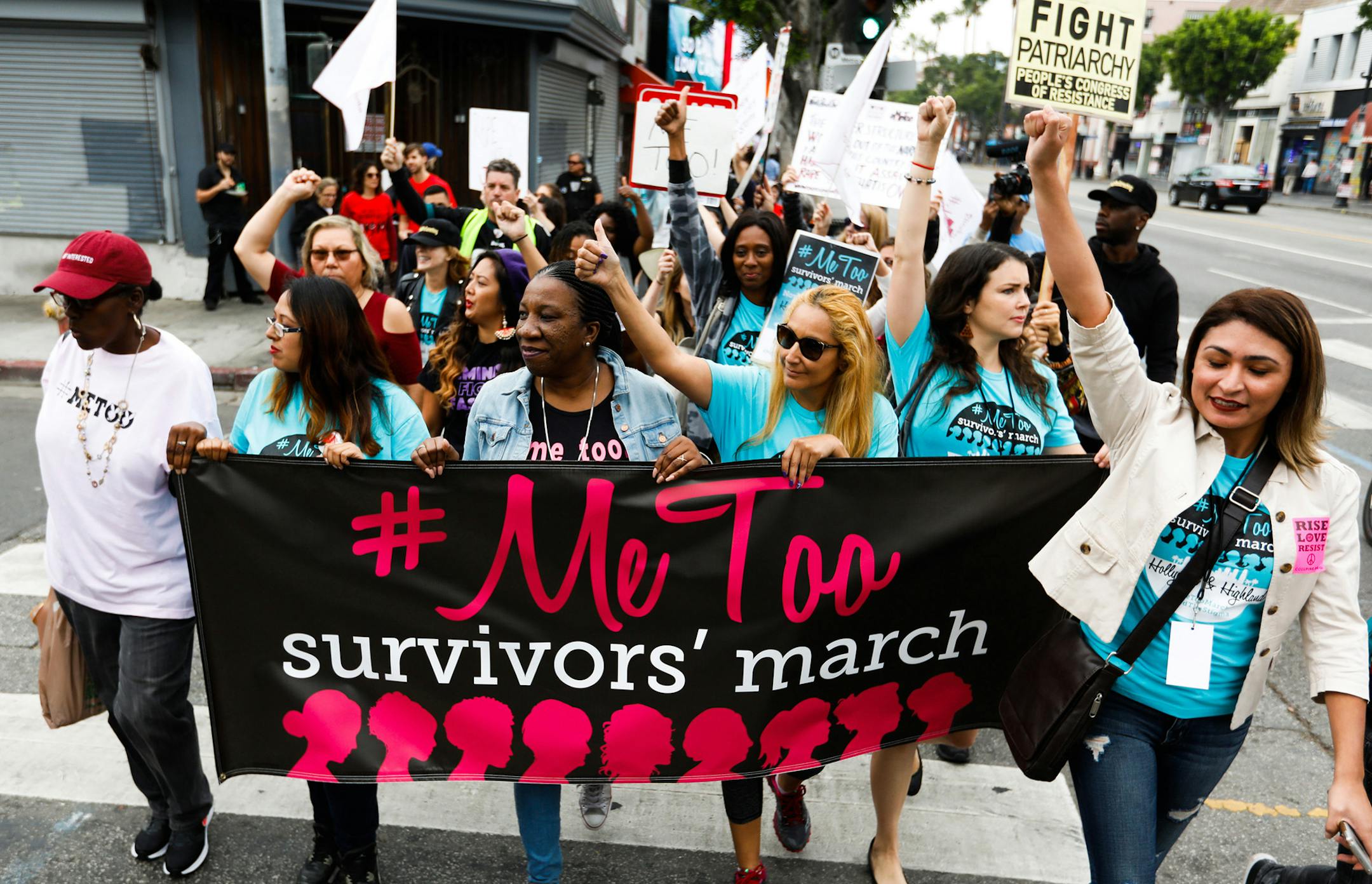
I'm not ready to divorce from the #MeToo movement, but I might want a trial separation. The spark of love I felt at the beginning is now growing pale. The promise of the initial romance has not been borne out. You know that story? But let me explain.
Sitting around the table at the Minneapolis Club meeting room discussing #MeToo, my colleagues and I felt the power as we all acknowledged "yes, me too!" There we were — professional women, attorneys, nonprofit CEOs, academics. We didn't even know yet that we were a movement, but every one of us shared stories of having men "hit" on us during our careers.
The movement burgeoned into an astonishing national wave of change. One by one, male predators who had harassed and humiliated women who worked for them fell: Harvey Weinstein, Matt Lauer and many other big names.
I cheered along with my colleagues and friends. And then, I began to have my doubts. Perhaps it was when Al Franken, friend of women's issues and heretofore honorable man, was jettisoned by six of his female U.S. Senate colleagues over some allegations by a few anonymous persons (and a Roger-Stone-coached LeeAnn Tweeden) without a hearing or review of the evidence. Maybe it was the dumping of Garrison Keillor after many years for allegations that turn out to have been initiated by a disgruntled male employee on behalf of a female colleague, if news articles are to be believed.
I'm not defending these men, because I don't know the particulars. But neither do most of you readers. And that is exactly my point. What is happening around us? As JoAnn Wypijewski writes in a recent issue of The Nation: "Sex panic reverses the order that governs law where, formally at least, innocence is presumed. In panic, the stories are all true and the accused are guilty by default."
What would be a useful outcome from the national attention that has been now directed at sexual harassment and coercion? Maybe it's time for some concrete actions. Here are some ideas for the #MeToo-ers:
1) Stop infantilizing women. We are not all victims and we are able to stand up for ourselves. Clumsy overtures by males, well-meaning or not, can often be deflected with a firm "no." That was my experience, and other women have said the same. (This does not apply to sexual harassment in the workplace, where employees may feel coerced. There are legal remedies for that when employers do not put a stop to the problem.)
2) Stop trivializing rape and sexual harassment by conflating it with other, less invidious forms of sexual approaches. Everything is not the same. Specifics matter, or we are lost, in danger of drowning in peanut butter.


