
Meth cooks can't get chemicals, so lab contamination drops

Reported methamphetamine labs dropped 87 percent in 4 years, saving taxpayers millions of dollars.

June 18, 2008 at 4:49AM
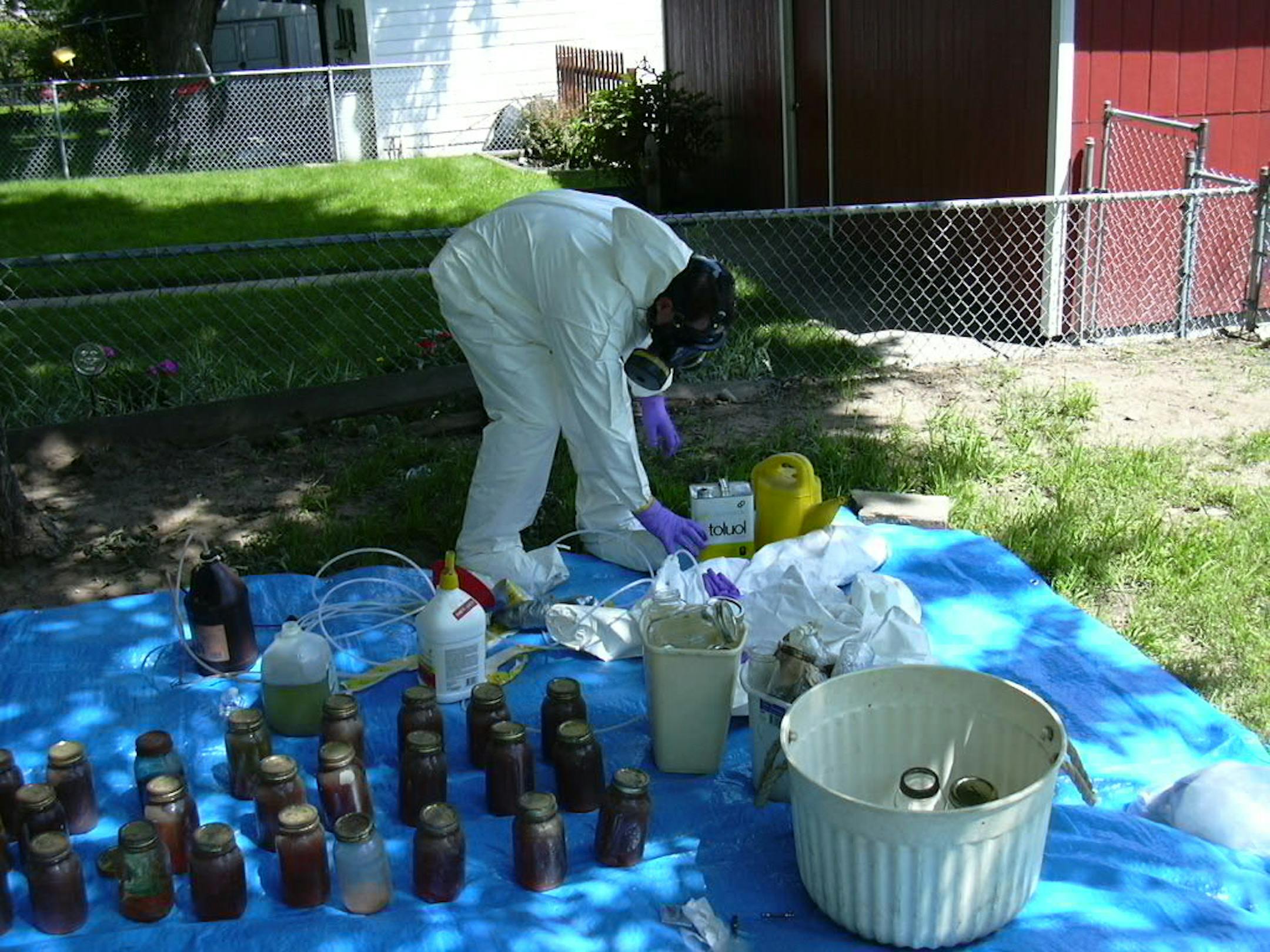
Authorities arranged the removal of numerous chemicals, some volatile or carcinogenic, from a West St. Paul house that was heavily contaminated by meth-making in 2005. Near the entrance to a cellar, where the makeshift lab was set up, police found boobytraps made with a bear trap. They also found six guns and six pipe bombs in the house, along with three young children and their parents. The father went to prison after the raid, just weeks before a new state law restricted sales of pseudoephedri
A hazardous-materials specialist arranged the chemicals, some volatile or carcinogenic, removed from a booby-trapped West St. Paul house that was contaminated by meth-making in 2005. (Dml -/The Minnesota Star Tribune)

When authorities raided a West St. Paul house that had a methamphetamine lab in the cellar in 2005, they found three children who had been exposed to the toxins used in meth production. They also found bear traps set as booby traps and a dozen guns and pipe bombs.

The raid occurred only weeks before a state law went into effect to restrict over-the-counter access to pseudoephedrine, a key ingredient needed by meth cooks. Nearly three years later, law enforcers and health experts are expressing relief.

A state report being drafted says Minnesota saw an 87 percent decrease in the number of meth labs reported since 2004. The law took effect on Aug. 1, 2005.

Experts say the law has saved taxpayers millions in cleanup costs, as well as reduced toxic sludge and gases made during meth-cooking.

"That's the good news," said Dakota County Attorney Jim Backstrom.

"The bad news," Backstrom said, "is that meth is still a significant problem."

The addictive, finished drug continues to be available from drug dealers whose supplies are smuggled in, mostly from Mexico.

"Meth is still a serious problem in Minnesota, but we have a good law and a good foundation in place, and there are some hopeful indicators," said Chuck Noerenberg, drug policy and methamphetamine coordinator for the state.

"This law has been effective," he said. "It's some inconvenience to people who have severe allergies, but the tradeoff seems to be very positive, and people have adjusted to it."

Noerenberg, formerly senior policy adviser to Gov. Tim Pawlenty, had worked with lawmakers on the 2005 legislation, following the lead of Oklahoma lawmakers.

"It is a success story in not only the response at the legislative level but in communities across Minnesota," Noerenberg said.

Since 2006, a federal law, the Combat Meth Act, also has helped, fueling a 70 percent decrease in meth labs nationwide.

That doesn't mean they're gone completely. Anoka-Hennepin drug task force investigators busted a meth lab in Fridley this month, saying it was the fifth such bust in the area this year -- an uptick that counters the general downward trend across the state.

In Minnesota, consumers must show identification and sign to buy pseudoephedrine, which is kept behind counters. Up to six grams can be sold to a person, in two three-gram packs, within 30 days.

Backstrom recently went through the process to buy a decongestant.

He didn't mind. Dakota County had been hit hard by the meth epidemic of the early 2000s. He estimates that a third of Dakota County's crime is tied to meth.

"It's not just the drug itself that's the danger," he said. "The production process in these labs is extremely hazardous. The volatility of these chemicals is enormous. There's potential for disaster with explosions and fires."

Meth labs pose serious health risks from the toxic chemicals used and the residue that remains after the meth is cooked, state health officials said.

Children, such as those in the West St. Paul meth house, come into contact, directly and indirectly, when playing on carpet in a meth house. Chemicals also are absorbed into furniture, sheetrock, babies' blankets and many other things.

Health effects can be severe

Potential health effects depend on the chemical and the length of exposure but can include skin and eye irritation, difficulty breathing, nausea, headaches, and dizziness. Prolonged exposure to high concentrations of these toxins and meth residue can cause liver, kidney and lung damage and increased risk of cancer. Infants exposed to meth residue can experience feeding difficulties, slow growth, neurological damage and other abnormalities.

Meth cooks use hydrochloric acid, acetone, phosphine, iodine, red phosphorous, methanol, lye, and anhydrous ammonia, among other toxic materials.

In 2004, there were 28 meth labs reported in Dakota County and Savage. So far this year, there's been one.

Altogether since 2000, 90 meth labs have been discovered in Dakota County, including six in 2007, said Howard Epstein of the Dakota County Public Health Department.

Property owners have paid for cleanup of all but three labs, he said.

For those three properties, since 2003 Dakota County has spent $21,206 in direct costs, excluding staff time, on cleanup, he said. So far, $1,370.92 of it has been paid back through assessments and restitution.

More difficult to calculate are the state's costs. Cleanups generally cost from $6,000 to $11,500 per lab, according to the Department of Public Safety.

"Given that there have been at least 1,200 to 1,500 reported meth labs in Minnesota, this suggests a rough estimate of at least $10 to $15 million for cleanup," Noerenberg said, some of which has been paid by the U.S. Drug Enforcement Administration.

Sellers must disclose meth use

Minnesota's strong disclosure law requires sellers to reveal if property was used for meth-making, Now, with meth cooks' main ingredient restricted, fewer homes or buildings will be contaminated, Backstrom said.

"It's a good thing, because there's a lot of unaware [home] buyers out there," he said.

"And it's not just homes. People produce this stuff in hotel rooms. A few years ago, you wouldn't know if you were sleeping in a room where meth had been produced. The chances of that today are significantly less than they were in 2005," Backstrom said.

Sometimes the contaminants can be smelled afterward and other times not. "But the residue doesn't go away," Backstrom said. "It's there and it's a danger."

Joy Powell • 612-673-7750

about the writer

about the writer

JOY POWELL, Star Tribune