

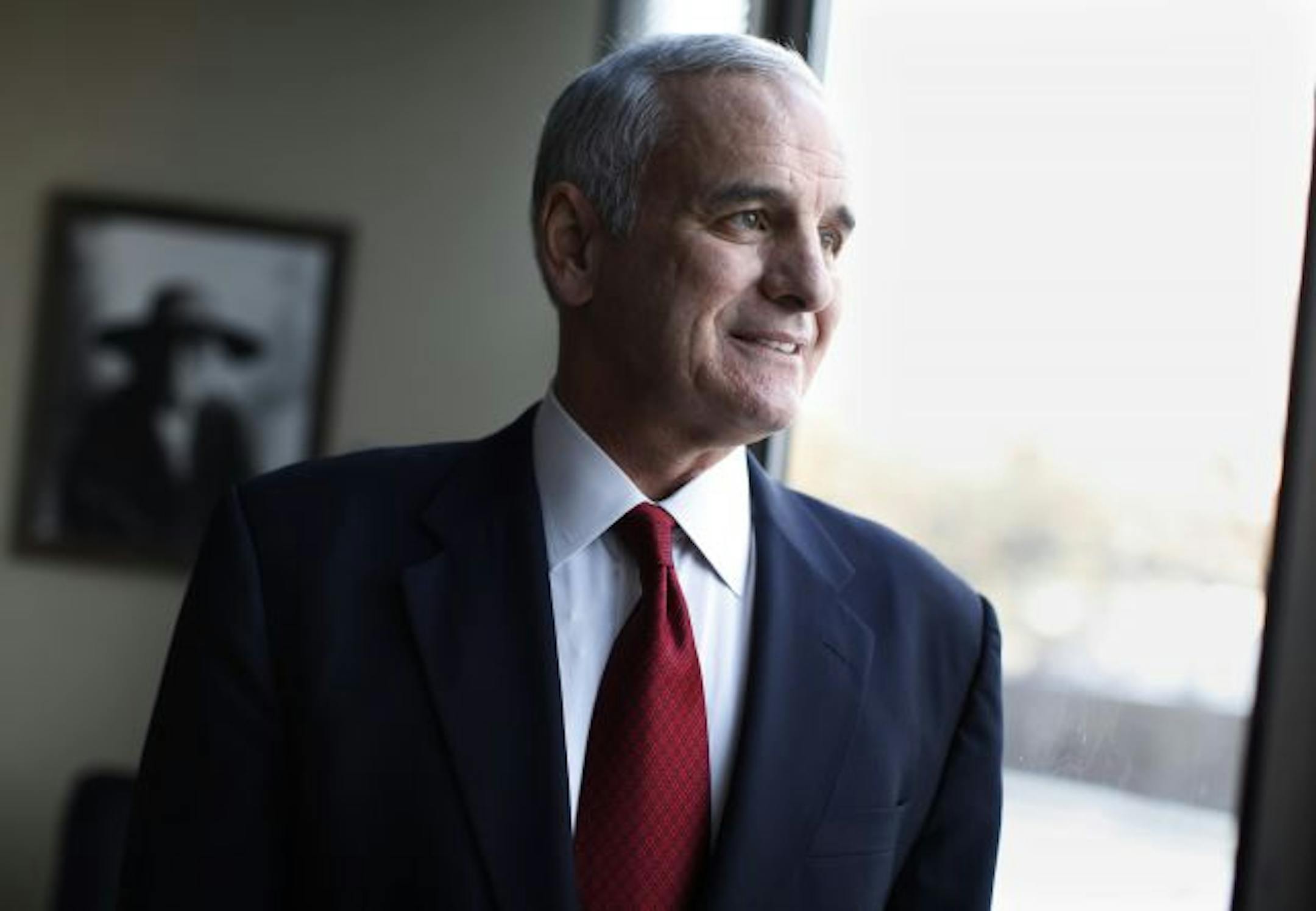
There was a time when the public admission of mental illness could derail a candidate's political career.
That could still happen to Mark Dayton, the Democratic candidate for governor who went public this week with his history of depression. But if so, experts say, it's the stigma -- not the disease itself -- that would sabotage his run for office.
Today, more than a decade into Prozac Nation, there is no reason why someone being treated for mild to moderate depression shouldn't hold a job with enormous responsibility, doctors say. Abraham Lincoln and Winston Churchill both suffered from depression, they say, and that was long before Prozac and even more effective medications that are available now.
"It's just a disability," said Dr. Steve Miles, a bioethicist at the University of Minnesota and former candidate for the U.S. Senate who has bipolar disorder. "I take medicines. I show up for work. If depression disqualified people, we'd have to put 20 percent of [the population] on welfare."
Mental illness is not the political kiss of death it once was, partly because it's now more widely recognized as a treatable brain disease. Depression is now regarded as one of the most common medical conditions, affecting as many as one in five people at some point in their lives, by some estimates.
But there is still enough stigma that many people commended Dayton for disclosing his history with both depression and alcoholism. On Sunday the former U.S. senator confirmed in an interview in the Star Tribune's opinion section that he has long been medicated for depression. A recovering alcoholic, Dayton also said he relapsed before the end of his Senate term, but has remained sober since 2007.
Back in 1972, Sen. Thomas Eagleton of Missouri was forced to drop out as the Democratic vice presidential nominee after reports surfaced that he had had electroshock treatment for depression.
Since then few politicians have admitted their battles with chemical dependency or mental illness.


