

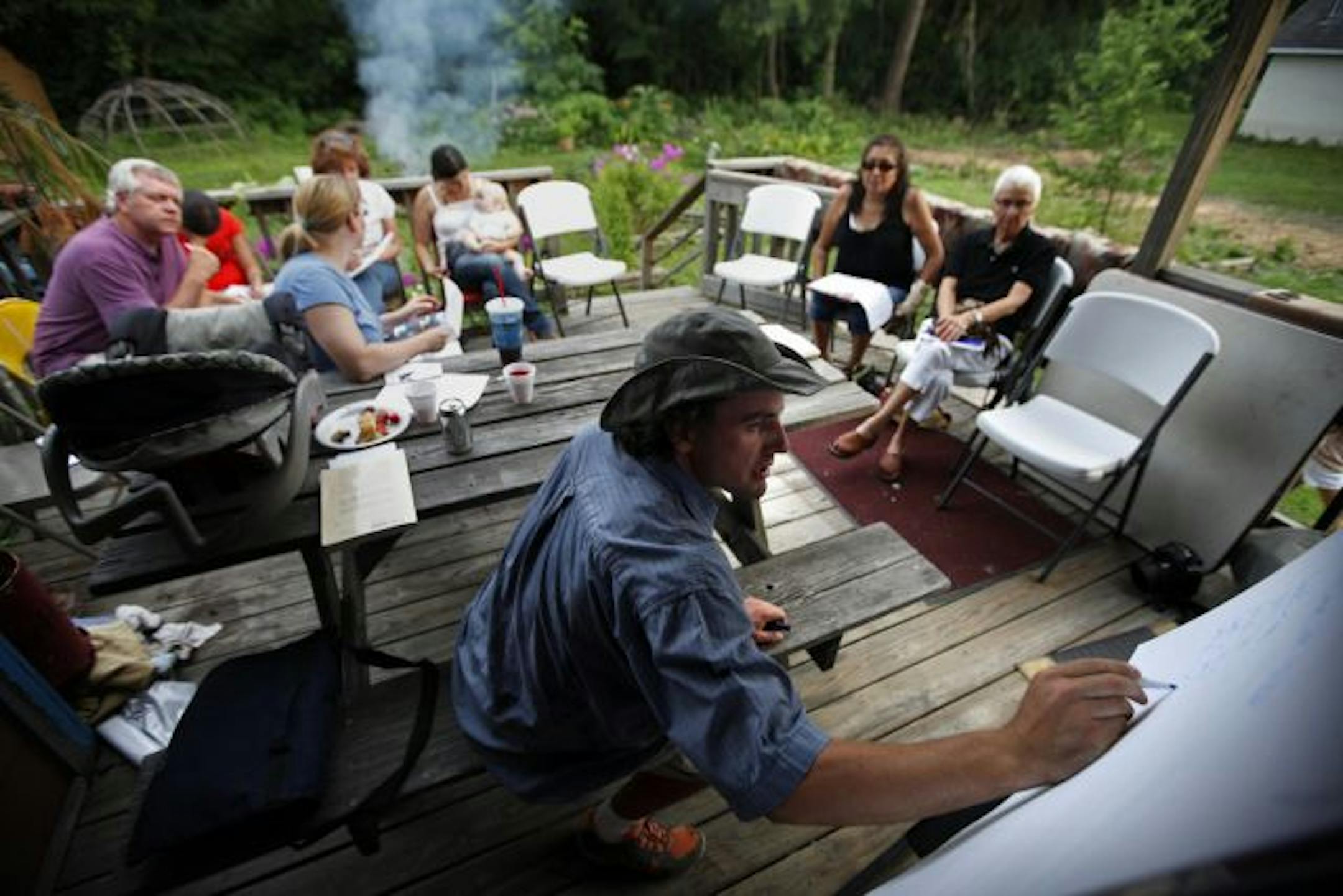
The two-story house in dot-on-the-map Mendota (population: 197) is more ragged than rustic.
White paint is peeling off doors. A side porch has collapsed. On the front lawn, weeds have won the turf war against grass.
But on Wednesday nights, supporters of the Mendota Mdewakanton Dakota Community try to forget they have trouble making rent on their ramshackle community center. There is important work to do here along Hwy. 13: There's a language and culture to preserve.
The band of 200 to 300 people is working locally to increase the dwindling number of people who know the Dakota language and nationally to gain federal recognition as an independent tribe, a designation that would bring much-needed financial help.
Fewer than 10 Minnesotans speak fluent Dakota, tribal leaders and academics estimate. In a state with more than 5 million residents, that means one in every 500,000 people, at best, have command of the indigenous language whose roots date back centuries.
The weekly Dakota language classes are attended by five to 30 people, and the Mendota Dakota are trying to increase that number. Dakota speakers also teach weekly courses at Little Earth Neighborhood Education Center in Minneapolis on Mondays and American Indian Family Center, in St. Paul, on Fridays during the school year.
"It's a very hard language," said tribal council member Sharon Lennartson. "My brain just does not comprehend."
The Mendota Dakota trace their plight back to the Dakota Conflict of 1862, when the Dakota waged war to protest unfair treatment. Afterward, the United States exiled most of them, removing their reservations in the process.


