

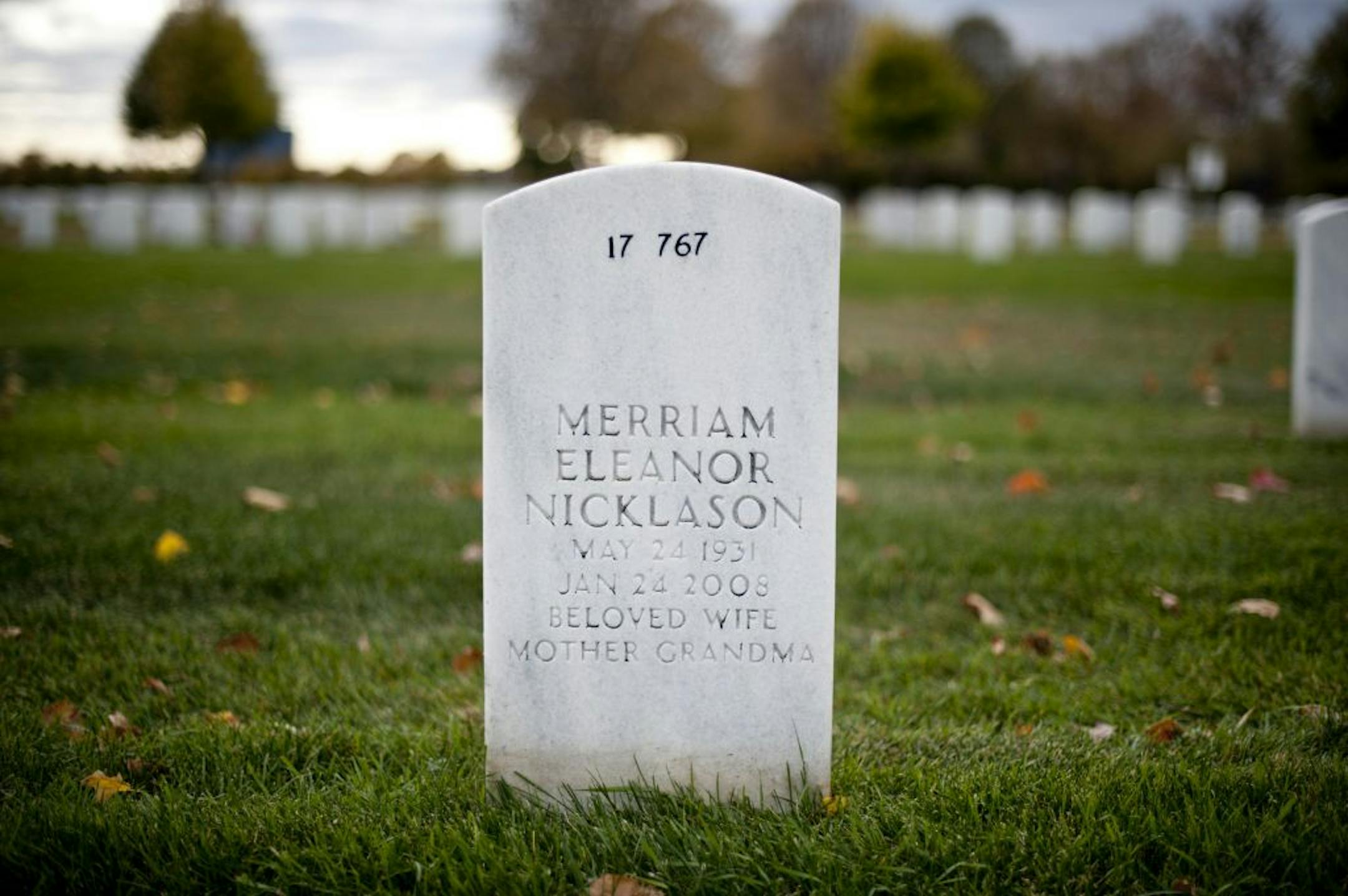
Something strange was going on in Section 17 at Fort Snelling National Cemetery.
Gail Nicklason noticed the letters on her mother's marble headstone were starting to fade. But the black letters on her father's side of the same stone remained bold and clearly visible, even though he had died the year before his wife. Nicklason noticed the lettering on a number of stones placed in Section 17 after her mother was buried in 2008 were fading, as well.
Turns out that is the plan. Fort Snelling officials say the black lettering, using a special type of water-resistant paint called lithochrome, was never expected to be permanent. As new sections are used throughout the national cemetery system, the new headstones will not have the lithochrome paint on them, part of a national policy established in 2009 to give more uniformity to cemetery sections.
A November 2009 memo from the Advisory Committee on Cemeteries and Memorials in Washington, D.C., addressed the change in policy.
"As lithochrome ages, it fades and becomes unsightly," it warned.
Brad Butler, Fort Snelling's office supervisor, acknowledges he's received some complaints, particularly about pesky Section 17, but there is nothing the cemetery can do. When the lettering on some stones in older sections was replaced, the lithochrome process was also used, making the painted stones stand out and raising issues of aesthetics. Variations in batches of lithochrome, different contractors, the weather and even which direction the stone faces has often meant the lettering faded differently, even in the same sections and even on different sides of the same stones, Butler said.
"I've gone out to 17," he said. "I can look at the stone that has started to fade. I don't understand it. Some of them weather quicker than others. Seventeen is one of the most prevalent sections where that happens."
The cemetery isn't likely to change the stone or have it repainted just because the lettering has faded, even if a family member requests it. "We'd have to say no," Butler said.


